

Slavery, Scripture, and the Church: human dignity in Catholic historical perspective
The publication of Magnifica Humanitas (2026), the first encyclical of Pope Leo XIV, has renewed global discussion on the Catholic Church’s historical relationship with slavery....
In the Stillness, We Find Christ
Seeking God Through the Wisdom of St. Anselm and Blaise Pascal
St. Anselm of Canterbury stands as one of the great minds of Christian history....

The Letter, the Grotto, and the Promise of Lourdes
Throughout my life, I often witnessed my father turn to the Blessed Mother in prayer. It was not something he did only in moments of fear or uncertainty—it was a relationship that seemed to accompany him through every season of his life. Even in his youth.

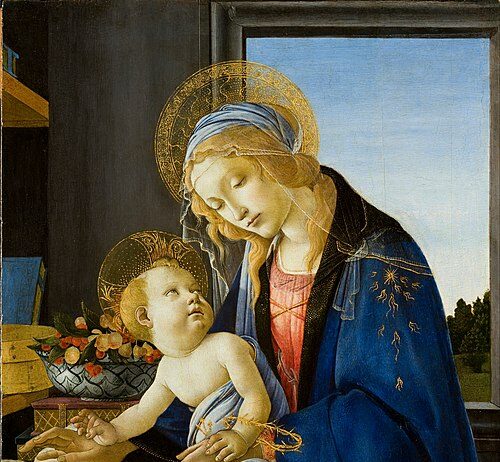
Solemnity of Mary, Mother of God
When the fullness of time had come, God sent his Son, born of a woman…so that we might receive adoption as sons (Gal.4:4).⧾
On this...
The Danger of Therapy Without the Cross
As a psychology graduate, I do not dismiss the benefits of this discipline, along with psychotherapy, which can help us understand behaviour, wounds, fear, grief, family patterns, and suffering. But something changes when psychology stops being a tool and becomes a worldview. One of the great temptations of our age is the belief that therapeutic language alone can tell us who we are, what is wrong with us, and how we are to be healed.

Cardinals in Consistory
The 245 cardinals of the Catholic Church - give or take a few - are gathering today and tomorrow in consistory to discuss various...

At the Roots of the Mountains: J.R.R. Tolkien’s Contributions to The Jerusalem Bible:...
(Contributor Kaleb Hammond offers here an intriguing historical analysis of J.R.R. Tolkien's small but significant role in the work on the Jerusalem Bible. His...

The Long Shadow of Hiroshima
I post this again, indeed each year, in light of 'never forget', so that evil will 'never be repeated. For on this feast of...
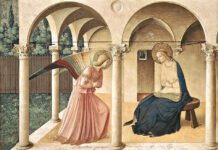
CST Rosary: the Annunciation
In the first installment of a series of Rosary reflections highlighting the principles, values, and virtues of Catholic Social Teaching, the civic evangelization organization...
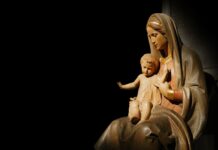
The Interior Furnace: Reclaiming our Burning Love for Jesus and Mary
In our modern, fast paced world, there is a dangerous tendency to turn our Catholic faith into a cold, dry routine. We easily look...