
In response to Catholic Insight’s post of Carl Sundell’s list of 39 essential questions Catholics should be prepared to answer about our faith, I have been responding to them one-by-one to equip you with clear, concise and (hopefully) well-reasoned answers to help you grow and share your Faith.
None of these answers can be conclusive. They simplify answers and provide a framework to approach these questions. You can find links to previously published articles in this series at the bottom.
12. How do you know the apostles were not fakers?
The answer to this question was briefly introduced in part 11 of this series. However, because it was written in conjunction with another question (“did the Apostles hallucinate the Resurrection of Jesus?”), it could only be considered briefly. This article will explore the sincerity of the Apostles and their belief in the Resurrection and the divinity of Jesus.
There are two approaches one can take to this question: the evidence within the New Testament itself and the historical evidence extrinsic to the Bible.
Evidence within the Bible
Beginning with the evidence within the Bible that points to the sincerity of the Apostles, one can look at the portrayals of sincerity of the Apostles concerning their belief and determine fairly quickly that they, at least as characters in the story, believe in the Resurrection of Jesus.
Assuming the legitimacy of the events themselves, one cannot help but recognize the sincerity of the Apostle Thomas in his exclamation, “my Lord and my God” in John 20:28. Because it covers the events of the early Church after the Resurrection, Acts of the Apostles is perfect for examining the sincerity of the early Christians.
St. Peter famously says that he and his fellow Apostles are “witnesses” to the events they proclaim concerning the life, death, and Resurrection of Jesus. The significance of this being that they are not simply believers taking the word of someone else, but witnesses. Christians are described as happy specifically for having suffered for the sake of preaching the Gospel.
A final example worth considering from Acts is the turn to the Gentiles in Acts 10. This communicates the sincerity of the Apostles because God was asking Peter to re-imagine his understanding of his entire religious upbringing in order to remain faithful to the new covenant Jesus had established. The example of Cornelius and entrance of the Gentiles shows a profound sincerity on Peter’s part to “betray” the commonly accepted understanding of Jewish old covenant religious adherence.
The second question considers everything that is reported to have happened to the Apostles after the writing of the New Testament. The only martyrdom of the Apostles covered explicitly in the New Testament is St. James in Acts 12:1-2. However, there is also an allusion to “two witnesses” in Revelation 11:7-13, which many have historically speculated to be Sts. Peter and Paul.
These notable absences of the apostolic deaths have long been considered evidence of the early construction of the New Testament documents. Why would Acts, for example, make nearly its entire focus on Peter and Paul and then not include their deaths, especially if they were in imitation of Jesus (like St. Stephen’s depicted in Acts 7). It is also worth noting that John 21:18-19 prophetically alludes to St. Peter’s martyrdom.
Evidence outside the Bible
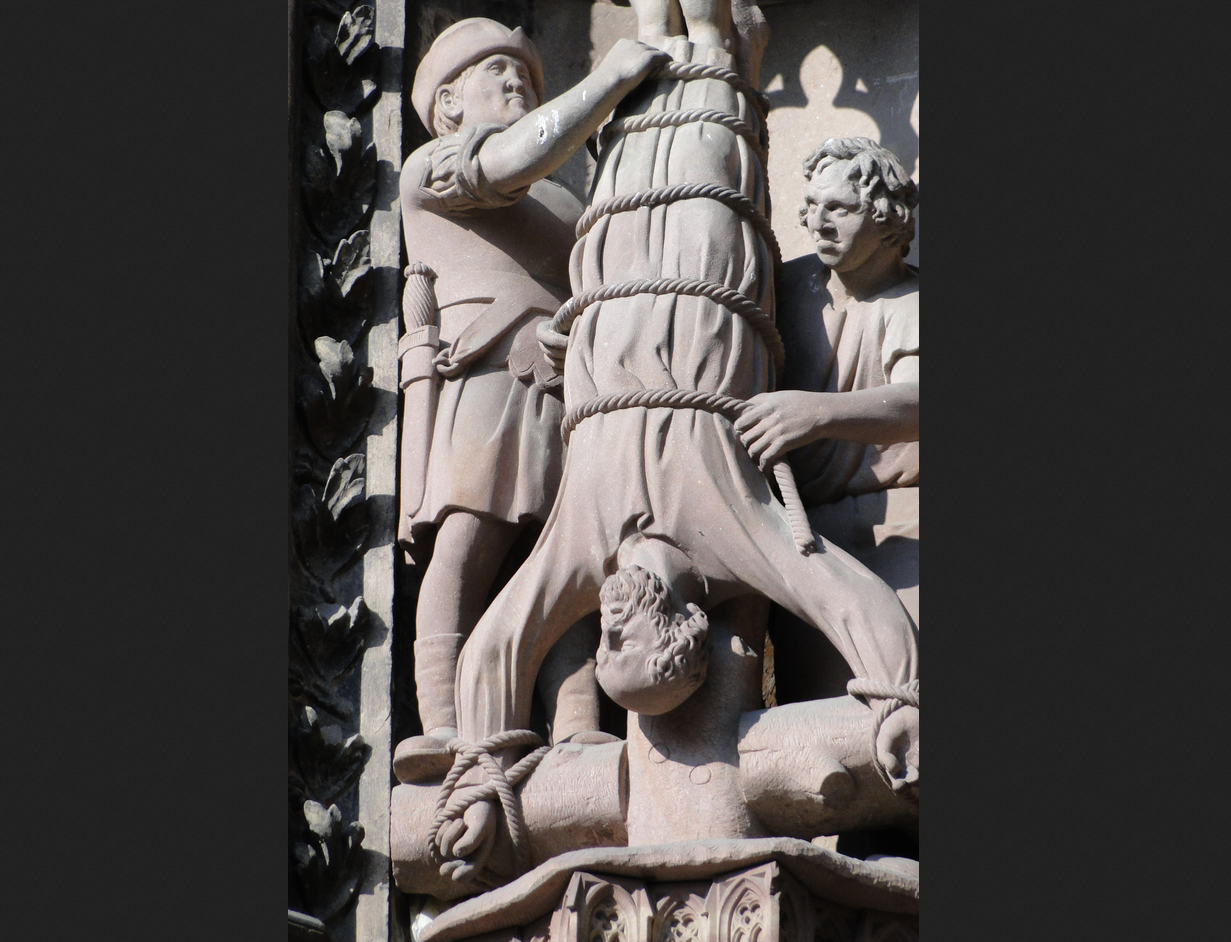
Tradition has long attested to the physical martyrdom of eleven of the twelve Apostles (including Matthias in place of Judas). Because it go far beyond the space for one article to walk through every Apostle, it will suffice to focus on Sts. Peter and Paul. One of the earliest, post-biblical accounts of Peter’s and Paul’s martyrdoms comes from chapter five of 1 Clement (AD 96). In Ignatius of Antioch’s Letter to the Romans, he compares himself to Sts. Peter and Paul in addressing his upcoming fate, alluding to their own martyrdoms.
Weighing the evidence
The significance of these biblical and biblical-adjacent martyrdoms show more than mere sincerity. The willingness to die for a belief certainly does not prove the belief true. However, it absolutely shows sincerity, which is the primary point being addressed in this question. Yet, sincerity can often be misguided. While fervor can carry rhetorical weight, it should not be intellectually satisfying. The difference that the sincerity of the Apostles makes, especially of the ones attested to here, is the proximity to the Resurrection, Ascension, and other important events that accompanied their sincerity.
As stated, feelings of strong conviction do not prove whether a thing happened. A deeper importance to the martyrdoms of the Apostles is found in the etymology of the word itself. Martyrdom means “witness” and what made the witness of the Apostles so important to the growth of Christianity is exactly what makes it so important to the veracity of Christianity two-thousand years later.
Saints James, Peter and Paul, as well as the other Apostles, did not die because of the intensity of their belief in something they had learned second-hand. They died because they witnessed the risen Jesus. Their public witness, shown by their deaths, was a reflection of the witnessing they had already participated in.
While the Church has boasted martyrs in every century since her birth at Pentecost, the first group proves especially important due to their proximity to the Resurrection. This shows a deeper level of legitimacy to the sincerity that is clearly evident in the examples provided.
One final consideration that adds legitimacy is the variety of experiences amongst the Apostles. Briefly contrasting Peter and Paul, they both came from different starting points in their willingness to accept the Resurrection of Jesus, and they both had very different experiences of the Resurrection of Jesus. This differentiation avoids the “plagiarism hypothesis” that one person made up the story and other copied from it with only slight variations. These examples could also be contrasted slightly with Thomas’s previously mentioned.
Like any of the questions proposed in this series, the sincerity of the Apostles is just one small piece that seeks to contribute toward a comprehensive case. The Faith itself must always been taken according to the whole. The Resurrection of Jesus legitimized his claim to divinity as well as his establishment of a Church, which will be the subject of the next question.
Want to catch up on the previous questions? You can find parts one, two, three, four, five, six, seven, eight, nine, ten, and eleven here!