
Holiness is rooted in the life we live each day, offering it to God. Within families, this means loving one another through the demands and trials of daily life. The newly beatified Georgia Martyrs offer a distinctly Franciscan witness to holiness: a life of penance expressed through prayer and service to others. Their example invites us to consider how that spiritual inheritance can take root within our homes.
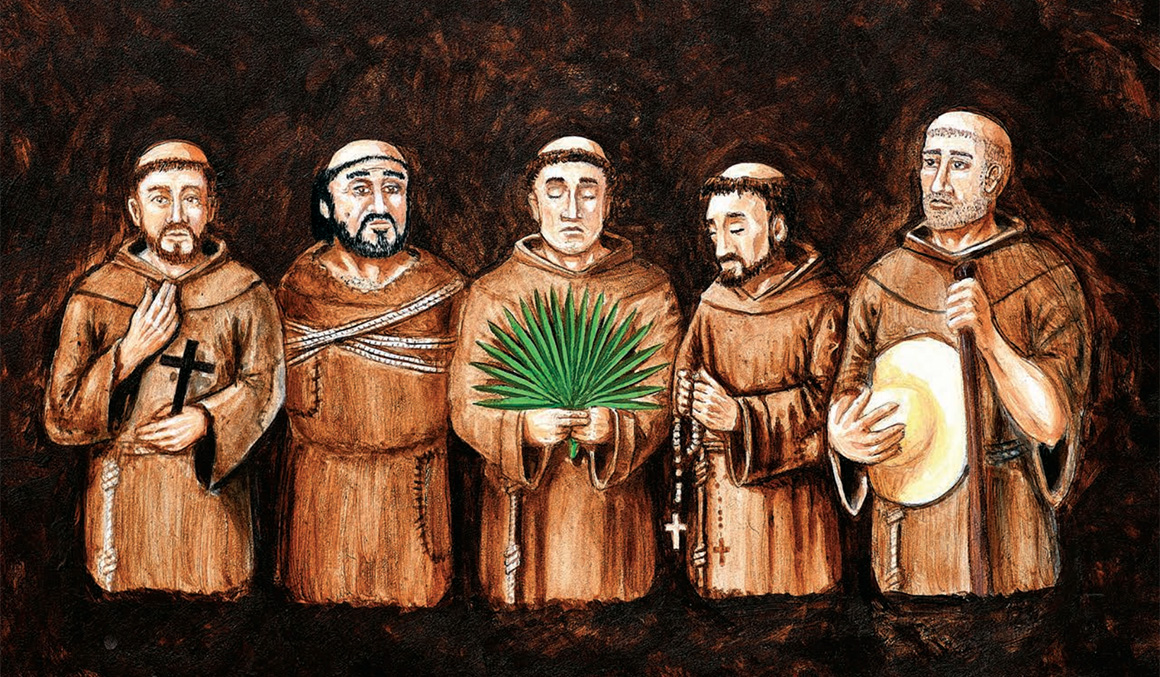
Pedro de Corpa, Blas Rodríguez, Miguel de Añon, Antonio de Badajoz, and Francisco de Veráscola were proclaimed Blessed on October 31, 2026, in Savannah, Georgia. These five Spanish Franciscans were killed in 1597 while ministering among the Indigenous Guale people along the coast of present-day Georgia. Their beatification falls in the year marking the eight hundredth anniversary of the death of St. Francis of Assisi, whose example inspired their vocation. (Vatican News) Brother Antonio de Badajoz offers a glimpse of how practical service and devotion shaped their lives. A lay brother, he was the only one of the five who was not a priest. He learned the Guale language and served as interpreter for Father Miguel de Añon.
According to the diocesan account, Antonio prayed the Rosary while awaiting his death. His patient work of learning another language had enabled him to serve the people entrusted to his care. His prayer sustained his fidelity to Christ. (Diocesan biography) Families can recognize their own calling in this relationship between service and prayer. The Catechism describes the home as a place where family members exercise their baptismal priesthood through sacramental life, prayer, thanksgiving, and active charity (CCC 1657). Preparing meals, listening to a troubled child, or accompanying an ageing parent can become offerings to God. Through these ordinary responsibilities, we learn to give ourselves in love.
A contemporary expression of this Franciscan inheritance appears in the Rule and Life of the Brothers and Sisters of the Third Order Regular of St. Francis, approved by St. John Paul II in 1982. Although this is not the historical Rule followed by the martyrs, it draws upon the same Franciscan spiritual tradition. Written for religious men and women, it also offers wisdom that families can apply within their own vocation. Section 2 connects conversion of life with prayer, poverty, and humility. (Third Order Regular Rule) Section 18 calls the brothers and sisters to work faithfully and conscientiously without allowing their activity to extinguish prayer and devotion.
Families know how easily responsibilities can fill every available moment. A prayer before leaving home, thanksgiving at meals, or a few quiet moments together at the end of the day can help us offer those responsibilities to God. Such practices remind us that we need His grace to love patiently and begin again when we fail. That willingness to begin again becomes concrete in forgiveness. Section 24 directs the brothers and sisters to ask forgiveness promptly and humbly when discord arises. Parents who apologize after speaking harshly teach their children that everyone needs mercy. Spouses who acknowledge their faults make room for renewed trust. These small acts of humility can change the atmosphere of a home.
Simple living offers another expression of conversion. Section 19 directs the religious to give to the poor what exceeds their needs. Families must provide responsibly for their members, yet they can also consider what they might share. Could a simpler celebration make it possible to help another household? Could children participate in choosing a charitable cause? Such decisions can teach gratitude and generosity through experience.
The Georgia Martyrs’ defense of Christian marriage gives their witness a further connection to family life today. Fidelity takes shape in daily commitments, sometimes under difficult circumstances. A husband or wife caring for a seriously ill spouse may need meals, companionship, or time to rest. The Catechism calls for the Church’s gratitude and support for spouses who persevere faithfully through hardship (CCC 1648). Their commitment deserves practical help from the community. This care reflects the fraternal love described in section 23 of the Rule: love expressed through deeds and extended to others in sickness as in health. The Georgia Martyrs invite us to consider what such faithfulness asks of us. Nourished by the sacraments, we receive God’s mercy, seek forgiveness, share our blessings, and return to the work of loving one another. In these ordinary acts, offered to God each day, their Franciscan inheritance can find a home.