
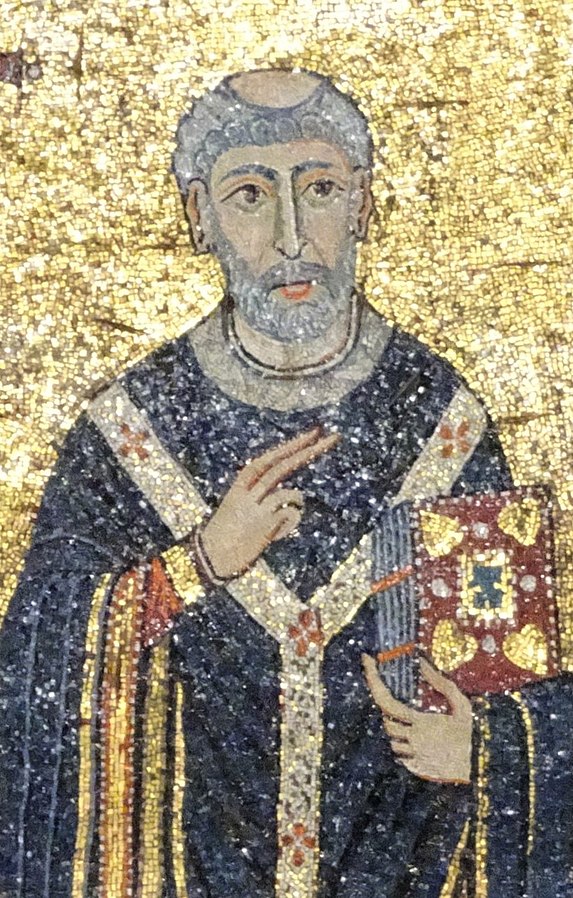
October 14th is the memorial of Saints Callixtus, (+222-223) (also spelled Callistus), whose life is historically shrouded, as are many of the early Christians. Some say he was a reformed slave who lived a rather dissolute and rebellious life in youth, with stealing and street fighting as part of his resumé – or rap sheet. if you will. Others say he was falsely and unjustly convicted and his real ‘crime’ was his Christian Faith.
One way or the other, he was eventually arrested and sent to the mines of Sardinia, which was a near-certain death sentence. Providentially, and mercifully, Callixtus was released sometime before the turn of the century.
In the midst of all this, he had undergone a deep(er) conversion, being ordained a deacon in 199 and put in charge of the cemetery on the Appian Way, the first plot of land officially owned by the Church, apparently. The catacombs there still go by his name. Callixtus’ talent and energy were quickly recognized, and in 217 he was elected Pope, in which pastoral role he extended the mercy that had been shown to him by others, allowing schismatics and others into the Church with what some thought too little penance.
The rigorists became restless and rebellious, Tertullian amongst them, and banded together to choose Hippolytus as anti-Pope. Hippolytus was also later was sent to Sardinia, repented and reconciled with the Church, and was also later canonized – his feast is on August 13th, with his fellow martyr Pontian.
Callixtus himself died a martyr, according to the legend, by being cast into a well during an uprising.
There’s something about suffering, which, as Pope John Paul teaches in his profound letter on this theme, prompts an openness to God’s mercy and His salvific grace within the soul. All God needs is a movement of the heart towards Him, just a nudge; that is enough, to move the soul to sanctity, which is what it’s all about.
Saint Callixtus, ora pro nobis!