
There are very good reasons why so little good Christian poetry is any longer being written. There is a decreasing supply of good writers and a dwindling demand for religious verse. Christianity generally has been losing ground in the West for the last three centuries, but the failing pace has increased dramatically in the last century. Moreover, with the decline of religion, many who now live in a spiritually bland and dreary world see no reason to be spiritually uplifted, which once upon a time was surely the poet’s great vocation. But if, as the saying goes, nature abhors a vacuum, the spiritual emptiness of modern life cannot last forever.
Of all the literary arts, Poetry used to be on a pedestal by itself. Now it is prose that rules. Turgid, dull, and mostly distracting, modern prose exults in turning us away from our spiritual selves and toward our animal side. This has been true especially since Darwin and the rise of materialistic Naturalism (the denial of spiritual values). Nietzsche, declaring the death of God, incited the new rebellion against Judaeo-Christian values. The West ever since has been sliding toward the existential angst of atheistic nihilism. Ancient France, once the boldest defender of Christianity, has now virtually collapsed under the combined attacks of secularism and the aggression of radical Islamists dedicated to displacing Christianity throughout the West. Hilaire Belloc a century ago warned there could well be brewing another invasion of Europe from the Mideast. His insight is currently on target.
As the influence of Christianity fades, everything that opposes it seizes the space it once occupied. Traditional morals in particular begin to flee; everything is permitted. The free-to-be-me ethic spreads exponentially into the lives of individuals and societies. As purity and kindliness fall away, pornography and brutality advance. This we have seen in real life but also in the arts. Movies, for example are made in ways that, for their depictions of sex and violence, would have shocked movie censors and the general public, seventy years ago. Likewise, censorship has virtually disappeared on the principle that free expression trumps all else, even truth and decency.
Ars Poetica
Along with the failure in public morals, Christian traditional poetry has faded. In its wake we see, in Whitmanesque delirium, a new and allegedly better way to restore the Muse of poetry on her pedestal: namely, advocating the poet as self-centered Solipsist. Much of this development in poetry is accompanied by the increasingly difficult problem of distinguishing poetry from prose. Traditional poetic devices, because it takes time and labor to learn them, fall by the wayside. Rhyme, rhythm, metaphor, allegory, alliteration, imagery are increasingly in retreat, displaced by what is called free verse, too often much like flat prose, sometimes superior in some ways, yet at its best hardly distinguishable from eloquent prose. The poet Robert Frost summed up free verse with a clever simile: “like playing tennis without a net.”
This is not to say that free verse is not legitimate poetry, but rather that great free verse poems are more difficult to write, harder to find, and more rarely rated four-star compared to the world’s great treasury of traditional poems. Take any fourteen consecutive lines of the best free verse ever written, set them beside fourteen lines of the best traditional verse, and the contest is easy to judge.
Is Catholic poetry in for a Renaissance? If so, it will need a venue in which to emerge. Dante Alighieri, Thomas Aquinas, St. John of the Cross, St. Ephram the Syrian, Alexander Pope, Gerard Manley Hopkins, G. K. Chesterton and Hilaire Belloc are worthy models for Christian poets to follow. Their venues were limited, to say the least, and today their work is barely remembered except in special circles.
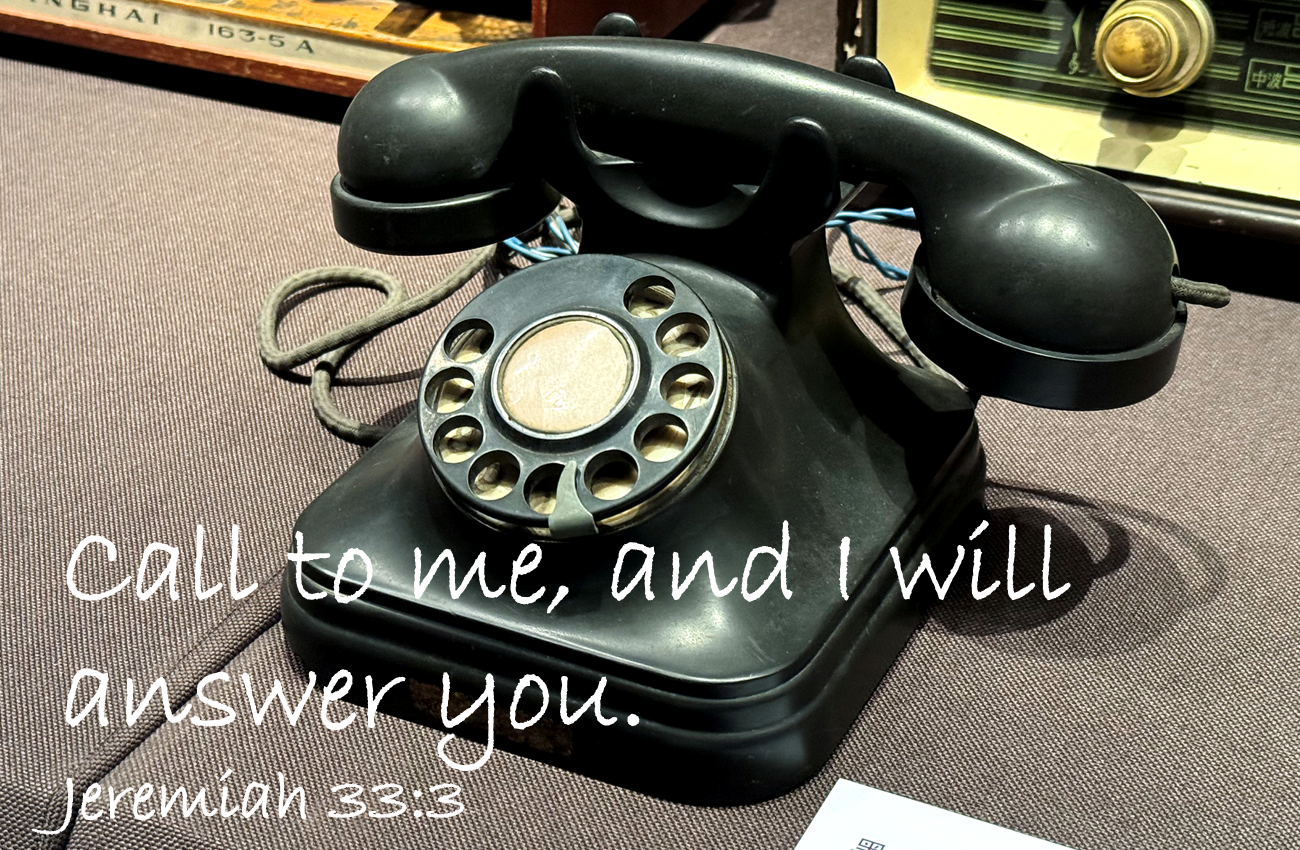
The full passage above cited from Jeremiah is as follows: “Call to me, and I will answer you; I will tell you great things beyond the reach of your knowledge.” This could be the Mission of Catholic Insight, to help Christian poets who call for inspiration in their own special way and hear answers that are beyond the reach of common knowledge. Catholic Insight could offer a free and easily accessible venue for sacred verses far exceeding anything available to earlier Christian poets.
Do poets lie?
Plato, who was a philosopher, did not like poets and called them liars. The poet Emily Dickinson was surely more truthful.
Tell all the truth but tell it slant —
Success in Circuit lies
Too bright for our infirm Delight
The Truth’s superb surprise
As Lightning to the Children eased
With explanation kind
The Truth must dazzle gradually
Or every man be blind
Yes, it is the obligation of the poet to tell the truth, but to do so in a way transcending more pedestrian prose. Poetry contains not only revelation, but also concealment, in such a way that the deeper strings of the psyche are plucked to our delight. The more musical poetry is, the closer it comes to music itself, which we know touches us powerfully and in ways sometimes difficult to describe. We do know that music unleashes our emotions in ways no other art form can, bringing to surface emotions otherwise concealed within ourselves. Good music, like good poetry, uplifts. Bad music, like bad poetry, irritates. As I believe Alexander Pope put it, the fans of bad poetry and bad music are a motley crew of dunces.
Catholic Insight is already a welcome platform for posting poems. The editors are careful to insist that poems should be consistent with, not opposed to, traditional Catholic teachings.
Suggested poetic themes might include, among others:
God the Father Church Teachings
Holy Spirit Conversion
Jesus Christ Personal Experience
Mary Heaven
Saints Hell
Sinners Marriage
Morality Children
Gospel stories Death
Bible Characters Spirituality
Martyrs Patriotism
Suffering Sacraments
Orthodoxy Heresy
Angels Devils
In closing, here are some stanzas by Catholic poet G. K Chesterton concerning one of the ugliest and luckiest animals who ever lived.
The Donkey
When fishes flew and forests walked
And figs grew upon thorn,
Some moment when the moon was blood
Then surely I was born.
With monstrous head and sickening cry
And ears like errant wings,
The devil’s walking parody
On all four-footed things.
The tattered outlaw of the earth,
Of ancient crooked will;
Starve, scourge, deride me: I am dumb,
I keep my secret still.
Fools! For I also had my hour;
One far fierce hour and sweet:
There was a shout about my ears,
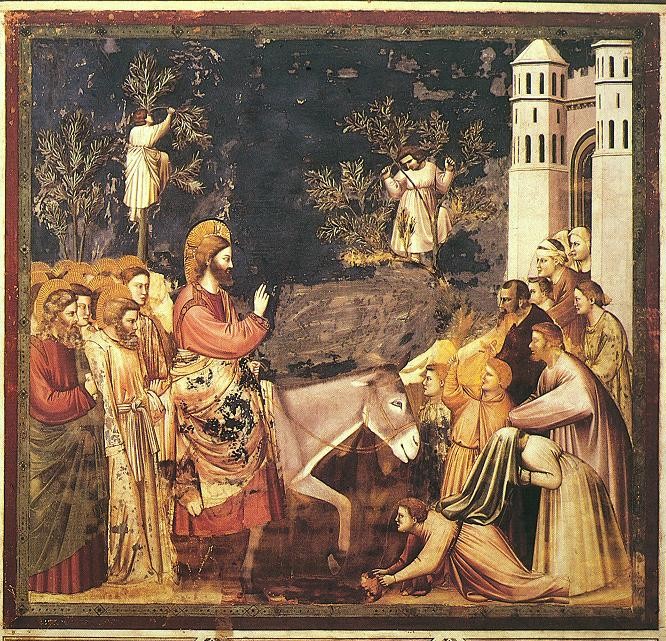
And palms before my feet.