
The publication of Magnifica Humanitas (2026),[1] the first encyclical of Pope Leo XIV, has renewed global discussion on the Catholic Church’s historical relationship with slavery. In the document, Pope Leo expressed deep sorrow and asked forgiveness for the direct and indirect support that certain members and institutions of the Church extended to slavery, describing it as a “wound in Christian memory.” In some contexts, these discussions have led to claims that the Holy Bible and the Catholic Church supported or promoted slavery. However, such interpretations often fail to distinguish between historical social realities and the authentic moral vision of Scripture and the Church’s doctrinal tradition. This article argues that neither Scripture nor Catholic doctrine established slavery as a moral ideal; rather, both contain a gradual but enduring affirmation of human dignity, even while Christians and Church institutions have at times failed to live fully according to that vision.
Historical and biblical reality
At the outset, neither Moses nor Jesus instituted slavery. It already existed as a deeply embedded social institution long before the calling of Abraham. Genesis 17:23 records Abraham circumcising all the males in his household, including those born in his house and those acquired with money. By receiving the sign of the covenant, these individuals became part of Abraham’s covenant community, indicating that they were not regarded merely as property but as participants in a relationship with God. While this did not abolish slavery, it reflected a significant departure from many surrounding cultures by recognizing the spiritual status and dignity of enslaved persons.
Biblical legislation gradually introduced moral constraints within this system. Slaves were included in Sabbath rest, affirming that they too shared in the dignity bestowed by God. The Decalogue also prohibited coveting a neighbour’s wife, male slave, female slave, livestock, or possessions, placing slaves within a protected moral framework and under God’s concern. Thus, the biblical narrative does not present slavery as a divinely instituted structure but engages with an existing social reality while progressively affirming the dignity of every human person created in the image of God (Imago Dei)[2]. The presence of the term “slave” in Scripture reflects historical terminology rather than doctrinal endorsement. While many Catholic translations retain the term, some modern translations use “servant” or “bondservant.” These translation choices do not alter the broader biblical affirmation of human dignity.
Why slavery was not immediately abolished
Slavery in the ancient world was a deeply entrenched economic and social institution, widely regarded as necessary for labour and survival. Across civilisations, such systems were justified by the belief that society could not function without forced labour. Similar dynamics can be observed in historical caste systems in parts of Asia and other forms of social hierarchy, where inequality became normalised and sustained across generations. Because these practices were deeply rooted in society, they could not be dismantled overnight.
For this reason, biblical revelation often worked progressively within existing social conditions, not through immediate structural revolution, but through gradual moral transformation. Slavery, therefore, is not presented as part of God’s original design but as a human institution shaped by historical limitations and the realities of a fallen world.
Israel’s experience of slavery: A theology of liberation
The experience of slavery in Egypt forms a central theological memory in Scripture. Rather than presenting slavery as divinely approved, the Exodus narrative reveals God as the liberator who hears the cry of the oppressed and restores their dignity. Israel is called to remember its own suffering and liberation so that it may uphold justice, show compassion toward others, and become an instrument of God’s saving plan for all peoples. In Christian understanding, this salvific journey reaches its fulfilment in Jesus Christ, who breaks down barriers of division and reveals the universality of salvation.
Slavery in the New Testament context
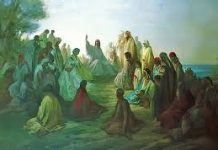
In the time of Jesus, slavery was widespread throughout the Roman Empire and surrounding societies[3]. While Jesus did not launch a political movement to abolish slavery, His ministry consistently affirmed the dignity of the marginalised and challenged attitudes of exclusion and domination.
The Apostles continued this vision by welcoming both slaves and free persons into the Christian community. A key example is Saint Paul’s Letter to Philemon, where Onesimus is received “no longer as a slave, but more than a slave, a beloved brother” (Philemon 1:16). This reflects a profound theological shift toward a Christian understanding of humanity grounded in fraternity, equal dignity, and shared membership in the Body of Christ.
The witness of the Church Fathers and magisterial teaching
Many Church Fathers reflected critically on slavery, including Gregory of Nyssa, John Chrysostom[4], Augustine of Hippo, and others. Saint Gregory of Nyssa[5] offered one of the earliest and strongest condemnations, questioning the legitimacy of human ownership over persons created in the image of God. Saint Augustine[6] viewed slavery as a consequence of sin and the fallen condition of humanity rather than part of God’s original plan. Later theologians such as Gregory the Great[7], Anselm of Canterbury[8], and Thomas Aquinas[9] also engaged critically with the institution within the limits of their historical context.
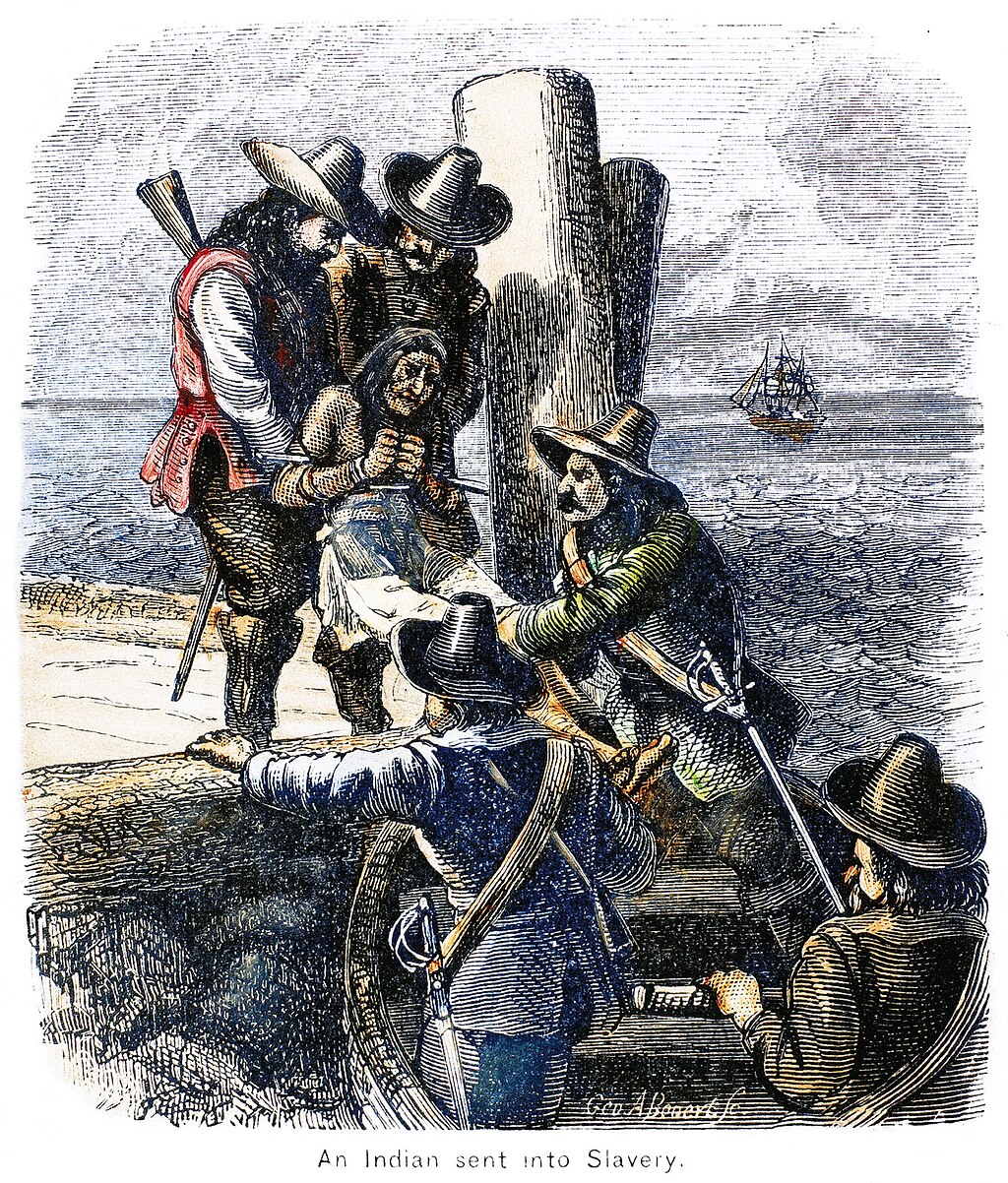
In 1435, Pope Eugene IV issued Sicut Dudum[10], ordering that the Indigenous inhabitants of the Canary Islands who had been enslaved be restored to their freedom and property within a specified period, under penalty of excommunication for those who refused to comply. In 1537, Pope Paul III, through Sublimis Deus[11], affirmed the full humanity of Indigenous peoples and rejected their enslavement.
Crusades and slavery in historical context
During the Crusades (11th–13th centuries), slavery existed in both Christian and Muslim societies as part of the longstanding practice of war captivity[12]. It was not introduced by the Crusades but reflected broader medieval social and military realities. Although Christian moral reflection increasingly emphasised the dignity of captives, slavery and captive-taking continued throughout the medieval period.
Despite important papal condemnations of slavery, the historical relationship between some Church members, ecclesiastical institutions, and European colonial powers such as Portugal and Spain was complex and at times involved cooperation with imperial structures[13]. Some fifteenth-century papal documents, including Dum Diversas (1452)[14] and Romanus Pontifex (1455)[15], issued within specific political and military contexts, have been criticised for language that was later used to justify conquest and forms of enslavement. Their interpretation remains a subject of scholarly discussion[16].
At the same time, Popes such as Eugene IV[17], Paul III[18], Gregory XVI[19], and Leo XIII issued teachings condemning various forms of enslavement or supporting efforts that contributed to the broader abolitionist movement. The Church’s historical witness on slavery was therefore neither uniform nor free from contradiction, reflecting both courageous defence of human dignity and failures to live fully according to Gospel values. It is also true that some critics have argued that the Holy See’s opposition to slavery did not always develop as quickly or as explicitly as modern readers might expect. By the time Pope Leo XIII issued In Plurimis (1888)[20] and Catholicae Ecclesiae (1890)[21], slavery had already been abolished in several major Christian nations, although it continued elsewhere, particularly in Brazil. Nevertheless, these documents marked an important stage in the Church’s increasingly explicit condemnation of slavery and affirmation of human dignity.
Likewise, the residential school system in Canada[22], in which some Catholic institutions participated, left lasting wounds on Indigenous communities. During his 2022 visit[23], Pope Francis expressed sorrow and asked forgiveness for this suffering. These realities remind us that while the Church is holy in her divine constitution, her members remain historically conditioned and capable of moral failure.
Reparation and healing: global and Catholic models of justice
The Church today increasingly recognises that reparation is an essential dimension of her moral mission. As the Body of Christ, she is called not only to remember historical wounds but also to participate actively in healing and restoration.
Several models offer valuable insights into this process. The Truth and Reconciliation Commission of South Africa (1996–2001)[24], led by Archbishop Desmond Tutu, emphasised truth-telling, moral accountability, and restorative justice, giving victims a public platform to share their experiences and recommending practical measures such as financial reparations, education, healthcare, and community rehabilitation.
Similarly, the Truth and Reconciliation Commission of Canada (2008–2015) [25]addressed the legacy of residential schools, centring survivor testimony and promoting educational opportunities, mental health support, cultural revitalisation, economic empowerment, and greater Indigenous participation in public life.
The reconciliation and restorative justice initiatives of the Society of Jesus[26] provide another important model. Inspired by their mission of accompanying the marginalised and promoting justice, Jesuit institutions across Latin America, Africa, Asia, and North America have supported Indigenous peoples, migrants, survivors of violence, and historically excluded communities through education, scholarships, leadership formation, trauma healing, advocacy, and community-based development programmes. Together, these models demonstrate that genuine reparation requires more than acknowledging past injustices; it demands a sustained commitment to truth, healing, empowerment, reconciliation, and the restoration of human dignity.
Conclusion
The history of slavery reminds us that the Church’s witness has been shaped by both human weakness and courageous fidelity to the Gospel. While some members of the Church failed to oppose injustice consistently, many others defended the dignity of the human person and contributed to the gradual rejection of slavery. More recently, Pope Leo XIV has called the Church to reflect honestly on past failures and seek reconciliation. By acknowledging historical shortcomings, honouring those who worked for justice, and renewing her commitment to the dignity of every human person, the Church continues her mission of proclaiming the freedom, dignity, and salvation revealed in Jesus Christ, in Whom all people are called to communion as children of God.
_______________
[1] Pope Leo XIV, Magnifica Humanitas (Vatican City: Libreria Editrice Vaticana, 15 May 2026), §§176–177.
[2] Catechism of the Catholic Church, 2nd ed. (Vatican City: Libreria Editrice Vaticana, 1997), §1700.
[3] Jennifer A. Glancy, Slavery in Early Christianity (Minneapolis: Fortress Press, 2002), 1–20.
[4] John Chrysostom, Homilies on Ephesians, Homily XXII (on Ephesians 6:5–9).
[5] Gregory of Nyssa, Homilies on Ecclesiastes, Homily IV (on Ecclesiastes 2:7), trans. Stuart G. Hall, in Gregory of Nyssa: Homilies on Ecclesiastes: An English Version with Supporting Studies (Berlin: Walter de Gruyter, 1993).
[6] Augustine, The City of God, XIX.15.
[7] Gregory the Great, Registrum Epistolarum (Register of Letters), bk. VI, letter 12.
[8] Anselm of Canterbury, The Letters of Saint Anselm of Canterbury, trans. Walter Fröhlich (Kalamazoo, MI: Cistercian Publications, 1990), Letter 169.
[9] Thomas Aquinas, Summa Theologiae, I, q. 96, a. 4; II–II, q. 57, a. 3.
[10] Pope Eugene IV, Sicut Dudum (1435), in Bullarium Romanum, ed. Tommaso Cocquelines, vol. 5 (Luxembourg: Andre Chevalier, 1727), 25–27.
[11] Pope Paul III, Sublimis Deus (1537), in European Treaties Bearing on the History of the United States and Its Dependencies to 1648, ed. Frances Gardiner Davenport (Washington, DC: Carnegie Institution of Washington, 1917), 75–78.
[12] Jonathan Riley-Smith, The Crusades: A History, 3rd ed. (New Haven, CT: Yale University Press, 2014), 250–260.
[13] Panzer, Joel S. The Popes and Slavery. New York: Alba House, 1996.
[14] Nicholas V, Dum Diversas, June 18, 1452, in Bullarium Romanum, ed. Tommaso Cocquelines, vol. 5 (Luxembourg: Andre Chevalier, 1727).
[15] Nicholas V, Romanus Pontifex, January 8, 1455, in Bullarium Romanum, ed. Tommaso Cocquelines, vol. 5 (Luxembourg: Andre Chevalier, 1727).
[16] John T. Noonan Jr., A Church That Can and Cannot Change: The Development of Catholic Moral Teaching (Notre Dame, IN: University of Notre Dame Press, 2005), 115–145.
[17] Pope Eugene IV, Sicut Dudum (1435), in Bullarium Romanum, ed. Tommaso Cocquelines, vol. 5 (Luxembourg: Andre Chevalier, 1727).[18] Pope Paul III, Sublimis Deus (1537), in European Treaties Bearing on the History of the United States and Its Dependencies to 1648, ed. Frances Gardiner Davenport (Washington, DC: Carnegie Institution of Washington, 1917), 75–78.
[19] Pope Gregory XVI, In Supremo Apostolatus (1839), in Acta Gregorii Papae XVI, vol. 1 (Rome: Typographia Reverendae Camerae Apostolicae, 1901).
[20] Pope Leo XIII, In Plurimis (May 5, 1888), in Acta Sanctae Sedis 20 (1887–1888): 593–598.
[21] Pope Leo XIII, Catholicae Ecclesiae (November 20, 1890), in Acta Sanctae Sedis 23 (1890–1891): 257–270.
[22] The Final Report of the Truth and Reconciliation Commission of Canada, vol. 1, Summary: Honouring the Truth, Reconciling for the Future (Montreal and Kingston: McGill-Queen’s University Press, 2015).
[23] Address of His Holiness Pope Francis at the Former Ermineskin Indian Residential School, Maskwacis, Maskwacis, Alberta, Canada, July 25, 2022 (Vatican City: Libreria Editrice Vaticana, 2022).
[24] Truth and Reconciliation Commission of South Africa. Truth and Reconciliation Commission of South Africa Report. 7 vols. Cape Town: Juta & Co., 1998–2003, vols. 1 and 5.
[25] Honouring the Truth, Reconciling for the Future: Summary of the Final Report of the Truth and Reconciliation Commission of Canada (Montreal and Kingston: McGill-Queen’s University Press, 2015), 183–202.
[26] General Congregation 36: Decrees (Rome: General Curia of the Society of Jesus, 2016), Decree 1, “Companions in a Mission of Reconciliation and Justice.”