
We need to take a hard look at Catholic higher education in Canada
The late American priest and sociologist Fr. Andrew Greeley is alleged to have quipped that you couldn’t find an article about Catholic higher education in his country that didn’t include the word “crisis” in its title. That may be true, but Canadians can only envy the amount of high-level time and attention devoted to diagnosing and addressing problems in Catholic higher education south of the border.
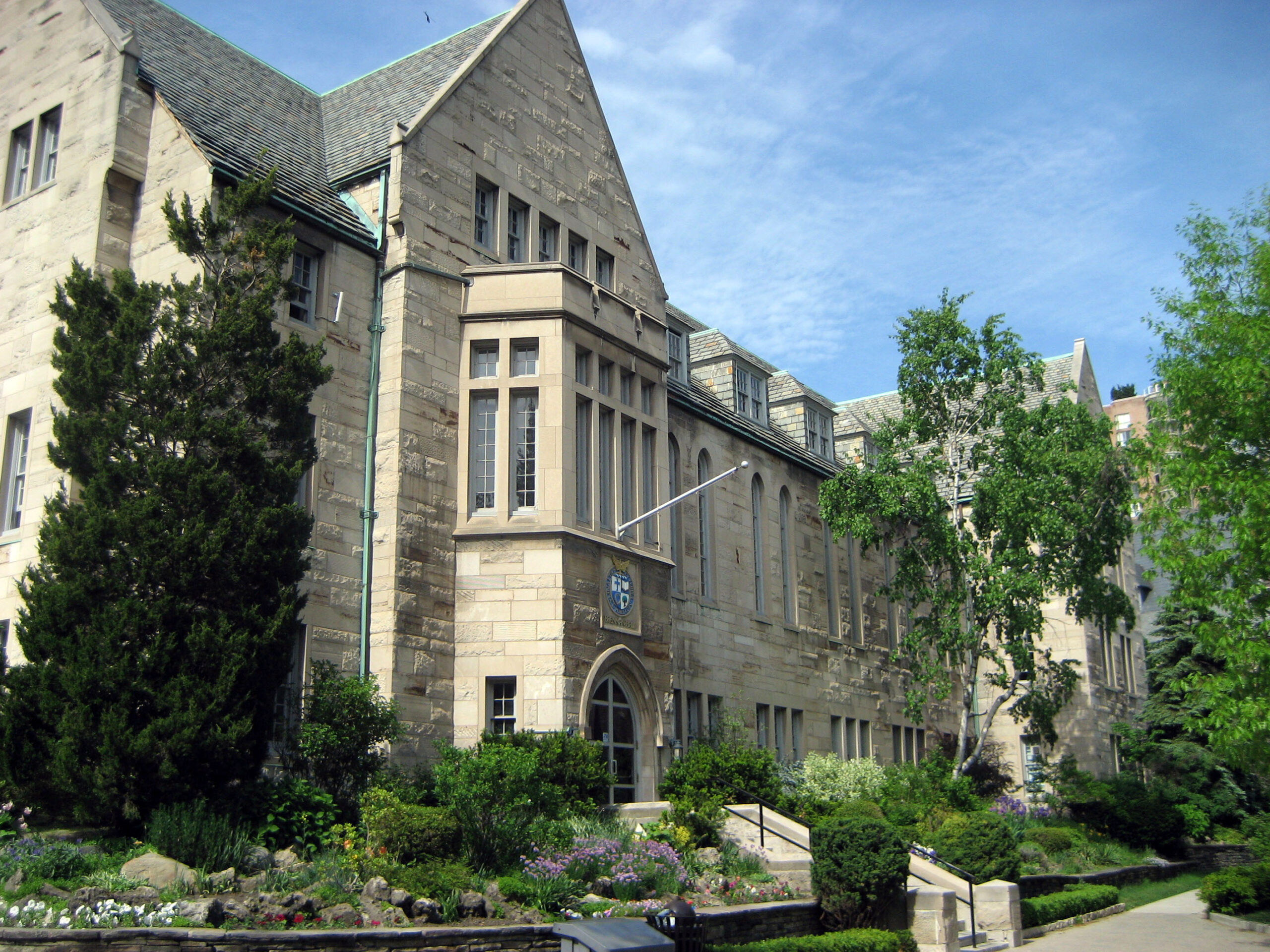
My interest in the sector here in Canada flows from my experience as President of the University of St. Michael’s College in Toronto, a responsibility I took up, quite unexpectedly, following my retirement from the Federal Public Service. I spent 3 years working with talented colleagues to correct some serious problems that had led to the decline of a once great institution. And while this provided me with in depth experience at the level of a single university, I also learned some things about the broader sector from meetings with counterparts across the country. It left me with some serious concerns, particularly about the struggle lay leaders face in articulating and living the sacred and supernatural context of the mission.
This is the unfinished business of the great transition from an era when our universities were owned and largely staffed by the religious orders that founded them, to the situation we have today, in which lay boards oversee universities mainly staffed by lay people. In their 2006 book Catholic Higher Education: A Culture in Crisis American authors Melanie Piderit and Fr. John Morey S.J. speak frankly about the crisis of confidence lay people continue to face when it comes to speaking, as they must, about issues of faith and morals on campus. They also remind us that consecrated religious had the benefit of years of preparation and the support of vibrant communities for whom faithful service in Catholic education was a long-established vocation. It still is a vocation, although hiring committees sometimes fail to rise to the very real challenge that this represents.
In 2008 Pope Benedict reminded Catholic educators in the U.S. that “every Catholic educational institution is a place to encounter the living God who in Jesus Christ reveals his transforming love and truth.” 1The mission of a Catholic university, the mission we should be recruiting Catholic university presidents to carry out, is to create the conditions necessary for this to happen. This requires people of exceptional faith, integrity, and moral courage, people who are compelling catechists and communicators. It is a hiring challenge beyond the skills of the typical corporate head-hunter. But the fact that it’s hard to find the leaders we need doesn’t make the task any less essential.
Adding to the challenge is the extent to which Catholic universities are now partnered with or embedded in larger secular institutions. This means that in addition to courageously upholding Catholic values, leaders in many Catholic universities must also be able to interact confidently and effectively in the secular space. This can become problematic when Catholic leaders get too comfortable in that space. And some do succumb to the temptation to adopt popular secular values in place of a Catholic agenda that is counter cultural and controversial. This can result in advocacy of causes that sound admirably charitable and tolerant but that end up being confusing and misleading for students struggling to navigate late adolescence. Think, for example, of the enthusiasm at some of our Catholic universities for the Pride agenda. Pride views life through a lens that is sexualized, commercialised and, when we consider the enduring popularity of Drag Queen events on campus, infantilised. While support for Pride no doubt represents an attempt, albeit misguided, to reach out to students who feel isolated, misunderstood, and rejected, it is also, conveniently enough, the currently approved means of establishing one’s bona fides as a Progressive. Pride offers its vulnerable young followers an anthropology that is dangerously confused about who and what we are, and about the consequences flowing from our embodied nature. Students at a Catholic University, where ideas matter more than flags and rainbows, deserve better.
During my tenure at St. Michael’s, I observed what seemed to be a degree of disaffection between our teaching staff and our undergraduate students. It was as if the teachers were unwilling to meet these younger students where they were. The faculty seemed to privilege the somewhat recondite interests of our 90-student theology school over the needs of our 5000 undergraduates, some of whom were lost, wandering, untutored in any faith. Meanwhile, campus life was under the sway of a corrupt student government culture that preyed on our students, and whose tawdry “club nights” had earned for St. Michael’s, once home to Jacques Maritain, Etienne Gilson and Marshall McLuhan, a reputation as a “Party School.”
It was, if anything, somewhat worse for students whose Catholic faith was judged too traditional. It often seemed that they were being marked down as people, as if they were judged as perpetually coming up with the wrong answer.
Early on I was surprised to see how much larger Saint Michael’s was than the University of Toronto’s two other “Federated” universities. These were religiously affiliated Protestant institutions that had partnered with the University of Toronto in the 19th century. Largely secular now, they are mainly distinguished by academic excellence maintained through carefully planned and managed student recruitment. This was not the case at St. Michael’s, where we seemed to have given up on recruitment altogether, even from Toronto’s Catholic High Schools, which had previously supplied much of our intake. Instead, unlike our Federated counterparts, we drew randomly from the University of Toronto’s much larger pool. This prompted speculation by staff members, at times expressed with a strange degree of enthusiasm, that we were no longer a Catholic university.
As part of our recovery plan, our new Principal replaced a jargon-filled and impenetrable introductory course for incoming students with a lively and imaginative weekly introduction to the giants of Catholic literature. The new course ended with an immersion in art, faith and ideas in Rome. Demand for it was brisk, and the quality our applicants was remarkable. We didn’t really think about it at the time, but we were reseeding the university with a vibrant Catholic community whose members would enrich campus life socially, academically and spiritually.
I attended St. Michael’s as an undergraduate in the 1970s. It still resonated to the motto of the Basilan Fathers who had founded it more than a century earlier: Teach me Goodness Discipline and Knowledge. The University saw its role as preparing its generation of young Catholics for adult faith life and adult intellectual life, for marriage and family, and for meaningful participation in the society around them. St. Michael’s was then an intentional community, very much in touch with its Catholic faith, an atmosphere that attracted more than a few non-Catholic students to our classes, our events and our residences. Undergraduates were neither ignored nor infantilised. The University loved us enough to be honest with us, to engage us in frank conversations about sexual morality, marriage and family, about what constitutes a life well lived.
I worry that our Catholic universities are becoming less focussed on the great mission they are called to serve, less likely to be places where students encounter the living God. We need to think more carefully about the price we continue to pay for assuming the transition to lay leadership has come and gone without a ripple. The formation of Catholic leaders in this country, such as it is, is worthy of renewed attention at the level of the Canadian Conference of Catholic Bishops. We would also do well to learn from efforts being undertaken in support of Catholic higher education in the United States, particularly when it comes to leadership training programs for those who aspire to lead universities or to serve on their boards. Quiet complacency is getting us nowhere.