
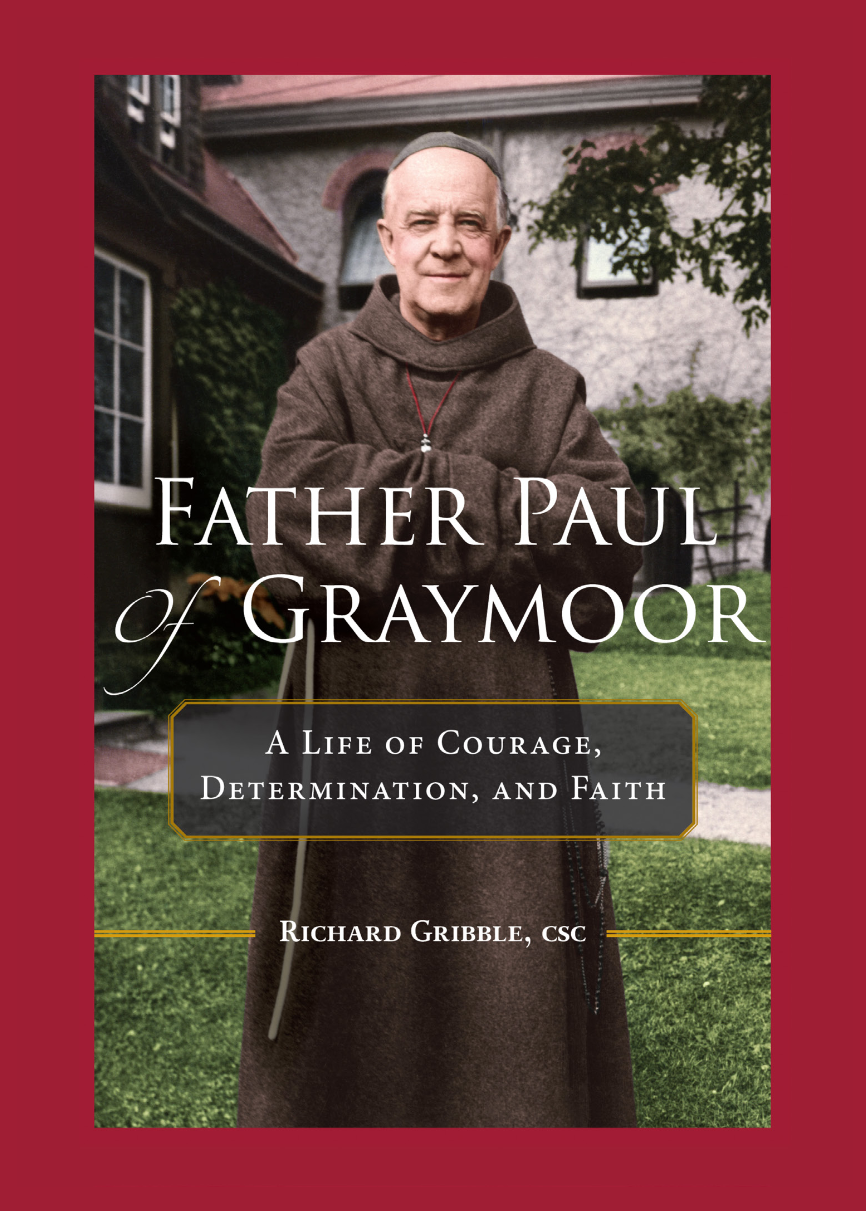
A Review of Gribble, Richard, C.S.C. Father Paul of Graymoor: A Life of Courage, Determination, and Faith. Paraclete Press, 2026.
Christian unity belongs in the prayer and life of every Catholic parish. Richard Gribble’s Father Paul of Graymoor: A Life of Courage, Determination, and Faith gives that responsibility a human face through the story of a priest who devoted his life to it. My ministry as Chief Charism Officer with the Franciscan Friars of the Atonement shapes my reading of this biography, particularly my appreciation for the Week of Prayer for Christian Unity and the small community of friars and sisters that continues to advance its mission. Gribble, a Holy Cross priest, traces the life of Paul Wattson, an Episcopal priest who cofounded the Society of the Atonement with Mother Lurana White in 1898. In 1908, Wattson and Anglican priest Spencer Jones inaugurated the Church Unity Octave, an important foundation for our modern Week of Prayer for Christian Unity. The following year, the Graymoor community entered the Roman Catholic Church. This journey gives the book much of its interest: readers encounter a founder whose desire for Christian unity involved difficult decisions about his own ecclesial home.
Drawing extensively on correspondence and archival records, Gribble shows how that desire shaped the development of a religious community and its ministries. The book’s patient reconstruction of events helps readers appreciate the persistence required to establish and sustain this work. Its detailed institutional history occasionally slows the narrative, but those willing to stay with it will find a substantial account of the people, convictions, and difficulties behind an enduring apostolate. Some of the most compelling passages concern Wattson’s care for people pushed to the margins. As an Episcopal rector, he opposed pew rents that gave wealthy worshippers privileged seating while excluding the poor. He was willing to accept a reduction in his own salary to end the practice. At St. Christopher’s Inn, homeless men received hospitality regardless of race or religious affiliation. Wattson saw in them the presence of Christ (pp. 45–46, 227).
These episodes illuminate his understanding of “atonement” as “at-one-ment”: reconciliation with God and with one another through Christ. Gribble explains this connection in his account of Wattson’s spirituality (p. 445). The practical demands of feeding and sheltering a neighbour gave expression to the faith that sustained his prayer for unity.
The biography also acknowledges financial misjudgments that placed the community under considerable strain. These deserve recognition within an honest assessment of his life, although they need not overshadow his contribution. Gribble’s account presents material for reflecting on the responsibilities that accompany even a deeply felt religious vocation.
Wattson’s vision centred on reunion with Rome. He died in 1940, before the Second Vatican Council, and his life must be understood within that historical setting. The community’s subsequent work continued amid the developments in Catholic ecumenism articulated by the Council. Its Decree on Ecumenism, Unitatis redintegratio, identifies conversion of heart, holiness, and prayer as essential to the pursuit of unity (§§7–8). It also insists that Catholic teaching be presented fully and clearly, with truth, charity, and humility guiding dialogue (§11).
This teaching helps explain why the Week of Prayer matters. Prayer places our efforts before God and calls us to examine our own lives. The Council assigns responsibility for seeking unity to the entire Church, including both the faithful and their pastors (§5). The small size of the Atonement community makes its continuing dedication especially moving to me, but the responsibility it witnesses to extends to every parish.
Gribble’s biography deserves readers beyond those already familiar with Graymoor. It offers historical depth for Catholics who know the annual observance but little of its origins, and encouragement for those discovering it for the first time. January 18-25 provides a practical opportunity to respond. Tell your parish priest about the Week of Prayer, encourage its inclusion in parish intentions, and discuss opportunities for prayer with neighbouring Christian communities. My hope is that this book will help more Catholics make that commitment their own, carrying forward Father Paul’s devotion to Christ’s prayer that all may be one.
Editor’s note: Richard Gribble’s Father Paul of Graymoor: A Life of Courage, Determination, and Faith is available online through the Franciscan Friars of the Atonement, at https://fatherpaulofgraymoor.