
(On this memorial of Saint Jerome here is a reflection by contributor Alexa Bulman, on the ‘thumos’ of the saints, their passion and drive, who did no things by half, but always in full measure, flowing over. The good Jerome was given a fiery, choleric disposition, which he used to work prodigiously and tame his own rebellious spirit. He’s often depicted with a rock, apparently to beat himself, and one Pope quipped before one such painting, ‘if it were not for that stone, you wouldn’t have been canonized‘),
In the movie Ever After, the hero Prince Henry asks Danielle, aka Cinderella, “Don’t you find it exhausting to live with so much passion all the time?” She savagely replies “Only around you.” This scene in the movie shows us passion isn’t exhausting; what’s exhausting is being around people who are afraid to live it. In fact very often passion and holiness go hand in hand, as the saints show us. The more passionately they lived, the fewer people understood them. The saints were so fully alive that people tried to tear them down, tried to tell them to calm down, stop being so, well, much. They responded by doing more, being bolder, braver, and closer to Christ.
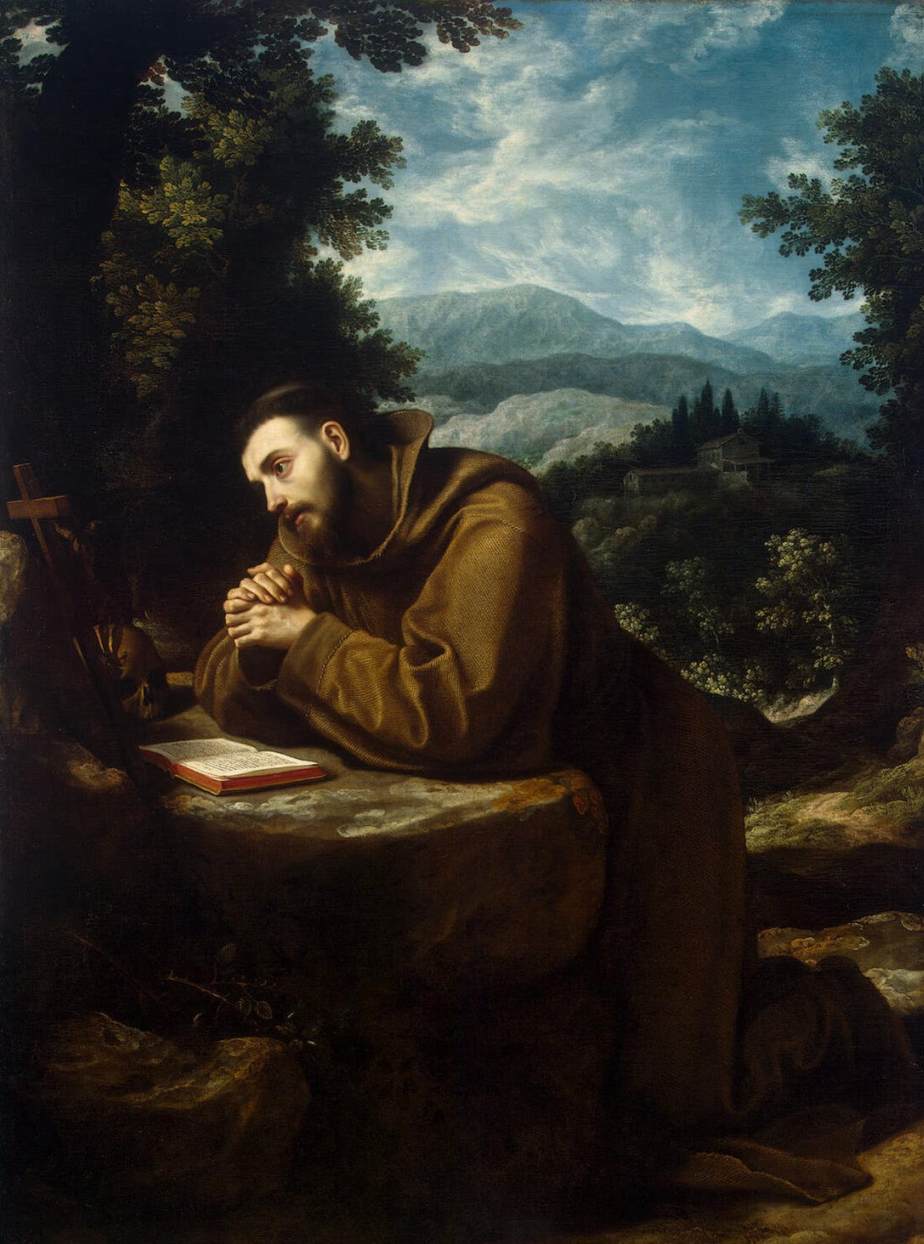
St. Francis of Assisi, the 400th anniversary of whose death we celebrate this October 4th, was told to stop living such an extreme life of poverty. His example made the opulent and extravagant Church communities of the time feel their deep lack of spiritual wealth, as well as uncomfortable with their overindulgence and lack of thought for the poor. Like the parable of Lazarus and the rich man, St. Francis preached not so much with words – although he did much of that – but even more by his life. He kissed lepers, fasted, froze in the winter, and sweltered in the summer. He lived a life that was uncomfortable to the body but indulgent to the soul.
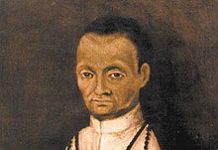
St. Joseph Cupertino was mocked for being dimwitted. His superiors asked what such a dumb boy had to give to the Church; how could he be a priest? This “dumb boy” would later show his community his spiritual depth by miracles of flying, and great spiritual insights far beyond the most “intellectual” of his community.
St. Kateri was denied the convent due to being Indigenous. The priests and sisters of the time ignored her fire and how spiritually gifted she was, in part due to her ethnicity. However, it didn’t stop her from living out the sacraments or the truth in her humble, quiet life as a laywoman within the Church. Her spiritual life and passion have blazed on in the Church for years, particularly in North America.
St. Pier Giorgio was very political, walked in marches against Mussolini, and was arrested once for such protests. He gave away his clothes to the homeless, and died ministering to the sick. Why couldn’t he just be a little less? Less opinionated, less political, less passionate about giving and living even unto death for his neighbour.
St. Padre Pio was falsely accused; many doubted his miracles and his spiritual depth. He was burning way too bright. He lived out the crucifixion of Christ in his body through the stigmata, and spiritually through isolation like Christ in the garden.
St. Edith Stein, an extremely intelligent woman, who earned a Ph.D. in Philosophy at the age of 25 – the first woman to do so in Europe. She taught philosophy, converted to Catholicism, and wrote some of the most insightful essays on women. It was all a little too much for a woman at the turn of the century.
St. Damien upset the Hawaii government and even later the Church officials who sent him to Hawaii in the first place. He didn’t care about his safety. He went and ministered for years to lepers, because their immortal souls were more important than his temporal body. But, man, that really shook up the establishment. He showed how people should and could be helping the sick, and it required passion and self sacrifice.
These saints all faced a lot of isolation and misunderstanding. The people around them, and unfortunately even some people within the Church seemed to be asking the same question as Prince Henry in Ever After. Aren’t you exhausted living with that much passion? What was their answer? Well they responded with their lives. They were only ‘exhausted’ when around people who refused to completely and freely love and serve God and neighbour. They were never exhausted in their interior lives, in prayer, in suffering, around those they served, or the few who also took up the cross with them. Whatever they lacked in their frail human nature, grace made up the difference.
We all fall into being lukewarm in our spiritual lives, we think if we just toe the line we will make it. But I am reminded of Dante’s Inferno, the place before hell for the tepid who were not great sinners or saints. Dante writes: Here are the souls of those who ‘lived without infamy and without praise’ and are rejected by Hell itself; with them are the neutral angels, who stood apart, being neither rebellious to God nor faithful to Him. (Canto III)
The lesson for us all is we can’t become a saint by halves, it’s an all or nothing endeavour. Passion and holiness go hand in hand; we need to be fully alive in virtue and not afraid to live out holiness.