
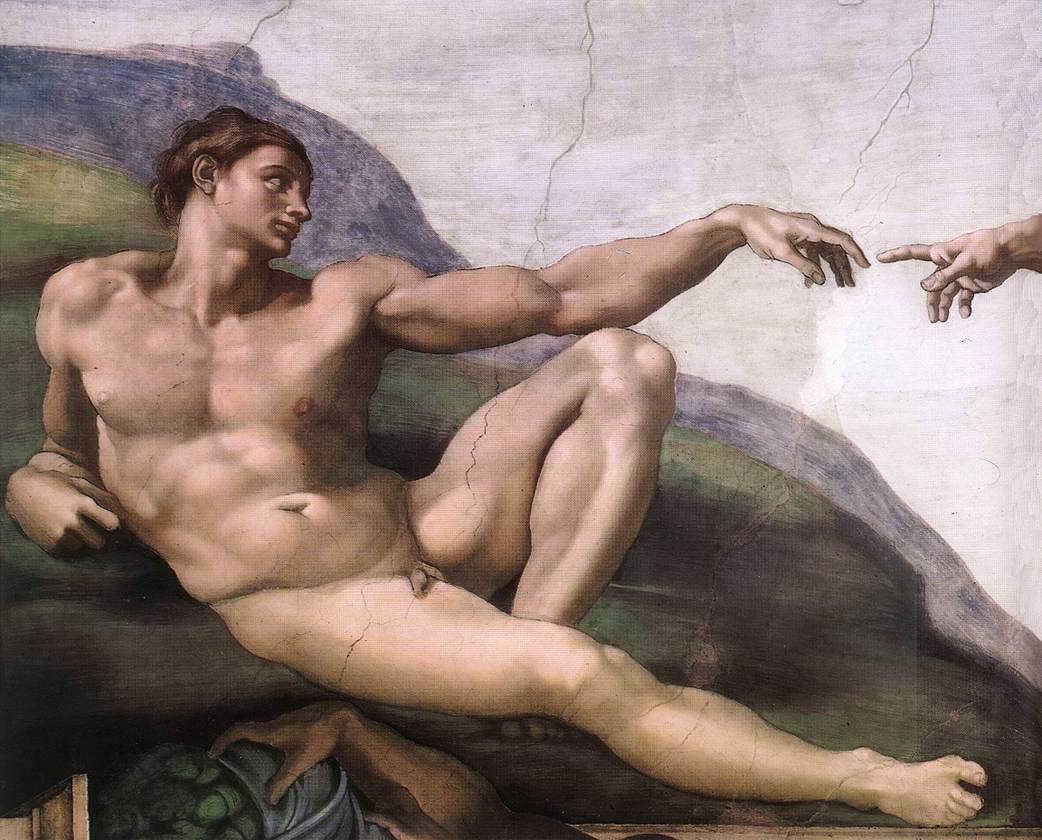
What piece of work is a man, how noble in reason,
how infinite in faculties, in form and moving,
how express and admirable in action, how like an angel in apprehension,
how like a god! (Hamlet, Act II, Scene II)
Magnifica humanitas is a long document – 43,000 words – and there is much discussed therein. Perusing the whole thing a few weeks ago, I found myself in some ways longing for the scholastic brevity of Pius XII. His 1950 encyclical Humani Generis discussed a number of topics – under the theme of Biblical exegesis – in just over 6000 words and 43 short paragraphs.
But then I thought the same when first reading John Paul II’s encyclicals. In the days since, and re-reading them many times for class, I’ve come to appreciate his own style and modus scribendi more.
All to say that Pope Leo XIV’s first encyclical is not easy to summarize, and we won’t try to do so here. Others have done that competently. For now, we will focus on the overarching theme of the document, taken from its title, which, for Magisterial documents, is always the incipit, the first words in Latin: Here, magnificent humanity.
The following thousands of words may be summed up, that if humanity is magnificent, machines and technology are not so, or, perhaps, not so much. In a whole different league, if you will.
What, then, is ‘magnificence’? We may glean some grasp from the Mother of God herself, who sang – for she must have sung her song of praise, as Juan Diego heard her sing on Tepeyac hill – ‘magnificat anima mea Dominum!’ – my soul magnifies the Lord!
To magnify is, quite literally, to make something great. This may be in the physical sense – to enlarge it, with a magnifying glass. But here the meaning is spiritual, that from Our Lady’s soul, full of grace and without sin, shines forth the greatness and glory of God.
As Saint Irenaeus put it, ‘the glory of God is man fully alive’. (Gloria Dei est vivens homo).
Here, we must go back to the purpose of creation itself. Our Tradition holds that God had no need to create, complete and perfect in Himself. He had no need of creatures outside of Himself.
This raises a paradox, for we know that God did create, ‘freely and out of love’. He did so, not to increase His own glory, but to signify His glory to others. We distinguish here God’s intrinsic glory (within the eternal life of the Blessed Trinity), from His extrinsic glory (as signified by and to His creatures).
We may think of this extrinsic glory as ‘magnifying the Lord’, not making Him any greater, but by showing forth His greatness.
Every creature – everything animate and inanimate – magnifies God: Sun and moon, bless the Lord! Stars of heaven, bless the Lord!
As created by a Being of infinite power, all creation is itself of infinite richness and complexity, the depths of which our limited brains and minds will never plumb. If Saint Thomas says that we will never know fully even the nature of a housefly, what are we to say of the more magnificent dragonflies, one of which landed on my kayak recently? They stare at you as though they know you. And don’t get me started on loons, eagles, lions, tigers and bears – oh, my.
As magnificent as such animals may be, the greatest by far of God’s creation are angels and humans, whom He made in His own ‘image and likeness’.
Unlike the rest of creation, however, rational creatures must choose to cooperate in their own perfection. Hence, although we are by our very natures more magnificent than any other creature – the only beings willed individually for our own sake – by the mystery of God’s providence we also have the capacity, by free-will, of distorting and deforming that ‘likeness and image’ of God in us.
By the gift of free-will – necessary to share God’s inner life in eternal beatitude – we can choose to mar our magnificence, to rebel against God’s order, against our own and other’s dignity.
On the other hand, we may magnify the Lord by perfecting ourselves in His grace. Either way, the choice is ours.
Which brings us to technology, and especially AI. All the ‘tools’ we make, from the simple wheel to a laptop computer, may be used to enhance our magnificence – and God’s glory – or diminish or deform this magnificence (even if our dignity is never completely lost). This, either by omission or commission.
Let’s begin with the first, not doing what we’re meant to do, wherein technology replaces – rather than assists – those skills and virtues we are meant to develop:
We may use a car to get places we could not otherwise go, or go as efficiently. But to always say ‘why walk, when I can drive?’ misses the point. Taking a taxi to the front doors of Chartres cathedral is not quite the same as arriving there after a three-day pilgrimage. Even a fifteen-minute walk to church or the store could make all the difference.
Watching sports? Sure, so long they don’t replace our own exertion, and devolving into a couch potato.
Relying upon a calculator to do your taxes is likely a good thing. But never learning how to do addition, multiplication, or long division – to say nothing of percentages – is a significant loss.
Physicians and nurses use a lot of machines, but they should keep their basic skills. When my blood pressure is taken with an automated sphygmomanometer, I sometimes inquire whether they can still do this the old-fashioned way, listening with a stethoscope for the systolic and diastolic pulses.
The telephone allowed people to connect over vast distances, alleviating loneliness and separation. But it can also be used for idle talk, gossip and wasting time. We need scarcely elaborate on how this has been ‘magnified’ – if you will – by smartphones and social media.
Recorded music and visuals allow us to hear and see great works we otherwise never would or could, but they should not substitute for the real thing. As a concert I attended recently demonstrated vividly, there is no replacement for the real human voice, to say nothing of singing or playing music oneself.
There is a benefit to having our passions moved by stories of love and adventure movies (or, better, books, which are a form of technology). But it’s a tragedy never to fall in love nor go on an adventure in what was once quaintly known as ‘real life’.
The list could go on, but you get the idea. Live, don’t wallow, insofar as what talents we’re given – one or ten – allow.
The use of such technology becomes more poignant and immediate when technology is used to do actual evil.
Just as a knife may spread butter or to kill (hopefully a different one in each case!), so too nuclear energy can power entire cities and give life or reduce them to rubble.
Photography and image-making can provide material for our memories and imagination, but also distort by pornography and violence.
Computerized algorithms can help streamline banking, economic policies and even military defence. Yet they also provide a means of authoritarian control of the economy, and can be programed to kill indiscriminately, without any human input, prudence, mercy or compassion.
‘Artificial intelligence’ brings all this to the forefront, for it may be the ‘ultimate’ replacement of human magnificence, a simulacrum of the very image of God, if not God Himself.
And the people bowed and prayed, to the neon god they’d made.
We should clarify that no technology is evil in itself. It can only be put to evil use, even if some technology may lend itself more to evil, according to the principle put forth by the poet Juvenal, corruptio optimi pessimi – the corruption of the best is the worse. To truly magnify us, technology must always help make us more who we are meant to be, to lead us to be more virtuous, more perfect and more like God.
This harkens back to the distinction made by Pope Saint John Paul II, that in any ‘work’ done by humans, there are two aspects: The objective – the good or evil done, and the subjective – what this act does, in a moral sense, to the one acting. The latter is far more fundamental and important. Will what I am doing make me better, or worse, is really the question. AI as an inexorable algorithm, just does what it does, and has no such moral responsibility, or it has no conscience. It’s what humans do with AI, or any other technology, that makes all the difference.
The Pope goes so far as to state in Evangelium Vitae that in all the crimes against life, more harm is done to those who practise them than those who suffer from the injury.
AI is a powerful tool, for good or evil, in both the objective, but more so in the subjective sense. I have my own doubts about it being put to (mostly) good use, but must agree with Pope Leo, that there are potential benefits to this powerful technology, but with many caveats. All of this goes back to the ‘two ways’ put before us by God, the way of life and the way of death.
Choose life, that you and your descendants may live.
AI, like any technology, if it it is do any good at all, should help us, at least in some small way, to become better, on the way to the only goal that counts in the end, holiness.
Read the Pope’s own words, ponder, take them to heart, and choose the path most virtuous.