
PAPAL MASS
HOMILY OF POPE LEO XIV
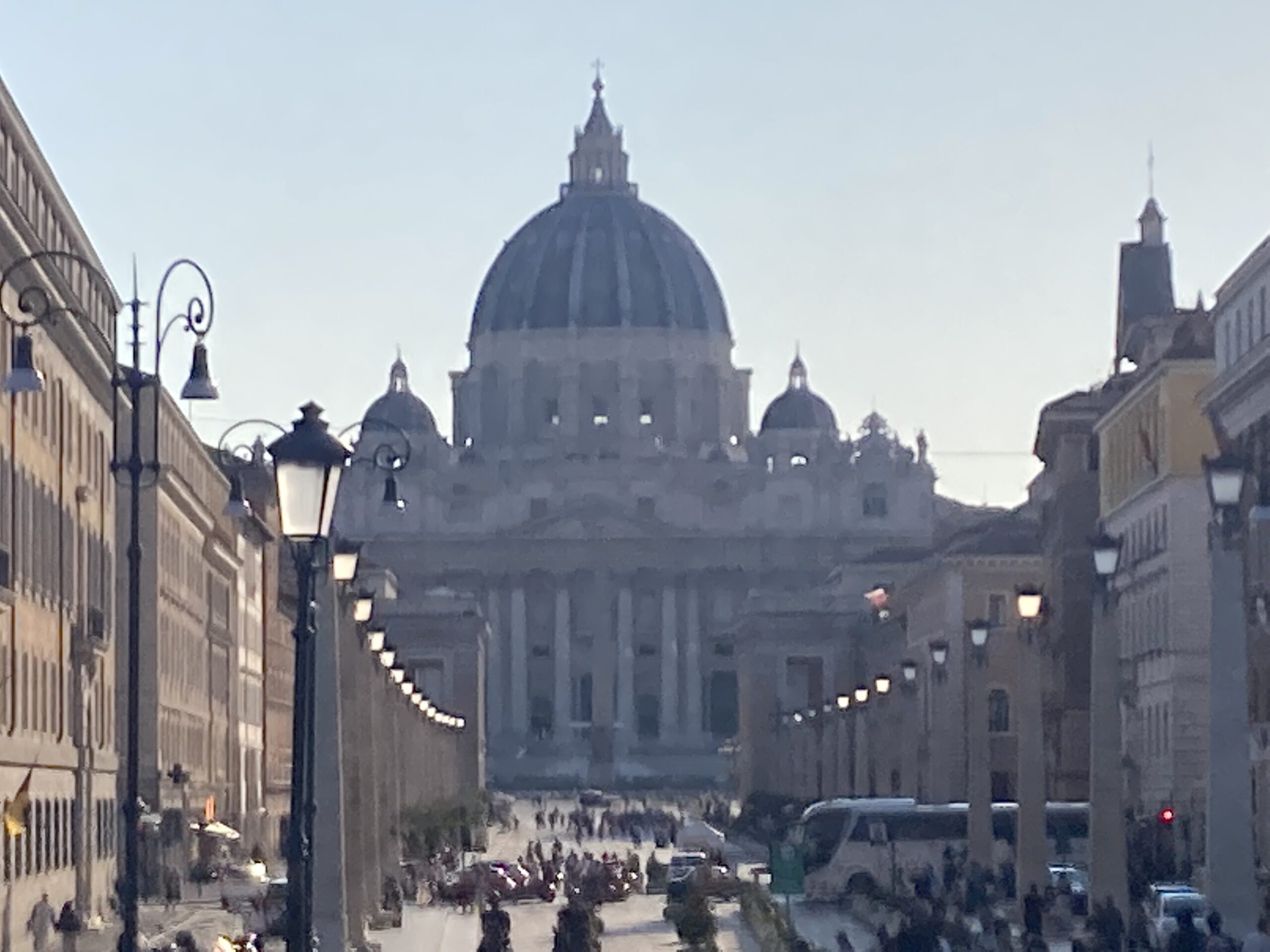
St Peter’s Basilica
Monday, 29 June 2026
________________________________________
Dear brothers and sisters,
Today, in a single Solemnity, we commemorate Saints Peter and Paul, the patron saints of the city and Diocese of Rome. One was chosen by Jesus as shepherd of his flock, and the other as apostle to the Gentiles. In them, we venerate two pillars of the Church.
Peter, guardian of the People of God, is often portrayed in the New Testament as striving to preserve communion among the brothers. It is he who, after a night of seemingly fruitless labor on the Sea of Galilee, says to the Master, “we caught nothing. But on your word, I will release the net” (Lk 5:5). He then sets sail, taking the others with him. Again, while many are turning away from the Lord after the difficult discourse on the Bread of Life, it is he who says to the Messiah, “To whom can we go? You have the words of eternal life” (Jn 6:68), and remains together with the other eleven. It is he who, at Caesarea, recognizes Jesus as the Son of God and, as we heard in the Gospel (cf. Mt 16:13–19), speaks for all in professing the one faith. Even after the Resurrection, on the shore of the lake, Peter is the first to reach Christ, jumping into the water and swimming ahead of the others to humbly renew his love and receive confirmation of his mission (cf. Jn 21:1-17).
Peter remains faithful to this mission even when, for example, in Jerusalem, the question of admitting uncircumcised Gentiles to Baptism threatens to divide the community. He gathers the brothers together, listens to them and in the end, guided by the Holy Spirit, makes a decision that preserves communion and ushers in a new era for the entire People of God. Indeed, he declares, “We believe that we will be saved through the grace of the Lord Jesus, just as they will” (Acts 15:11).
This magnanimity does not mean that Peter is perfect. During the Passion, he denies the Master, only later to shed sincere tears of repentance (cf. Lk 22:54–62); and Paul himself, in different circumstances, rebukes him for the inconsistency of some of his actions (cf. Gal 2:11–14). Yet Peter knows how to acknowledge his mistakes and repent, without becoming discouraged and without failing in his mission to proclaim the Gospel and gather Christ’s flock, even unto martyrdom — a fate which he suffered here in Rome, not far from where we are gathered.
This faithful and patient concern for unity is well expressed by the symbol of the keys, with which we often identify Peter (cf. Mt 16:19). A key does not break down doors; rather, it opens and closes them by finding the proper levers within and guiding their movements, so that locks may release, bolts withdraw, and doors turn freely on their hinges, thereby joining rooms together and transforming many isolated spaces into one welcoming home. In the same way, communion within the Church is not built by clinging rigidly to one’s own position, but by seeking, in all hearts, points of encounter in the Truth, in whose light alone each person becomes a means of growth for another.
(To continue reading, please see here).