
One for the Road is a reader-supported publication. To receive new posts and support Suzanne’s work, consider becoming a free or paid subscriber.
There’s a trend going around called “Take Your Younger Self to Coffee.” It’s a cute idea. The concept is that if you could go back in time and tell your younger self all the things you know now, you could offer a little wisdom and encouragement. “Hey, kid, I’m on your side. Let me help make your life easier.”
In my case, I know exactly what I would say, and I would start with that tragic Thanksgiving dinner.
Mom was a refined, dignified lady. We didn’t necessarily grow up poor, but what we had was cared for. Cars weren’t thrown away; they were fixed. Clothes were mended, not replaced. When there was nothing on television, we practiced our instruments or built forts outside. And in Mom’s world, having someone over for coffee was a big occasion.
But this Thanksgiving was huge. The priest had agreed to come!
In our family, that was like having the King of England himself for dinner. Mom was so honored.
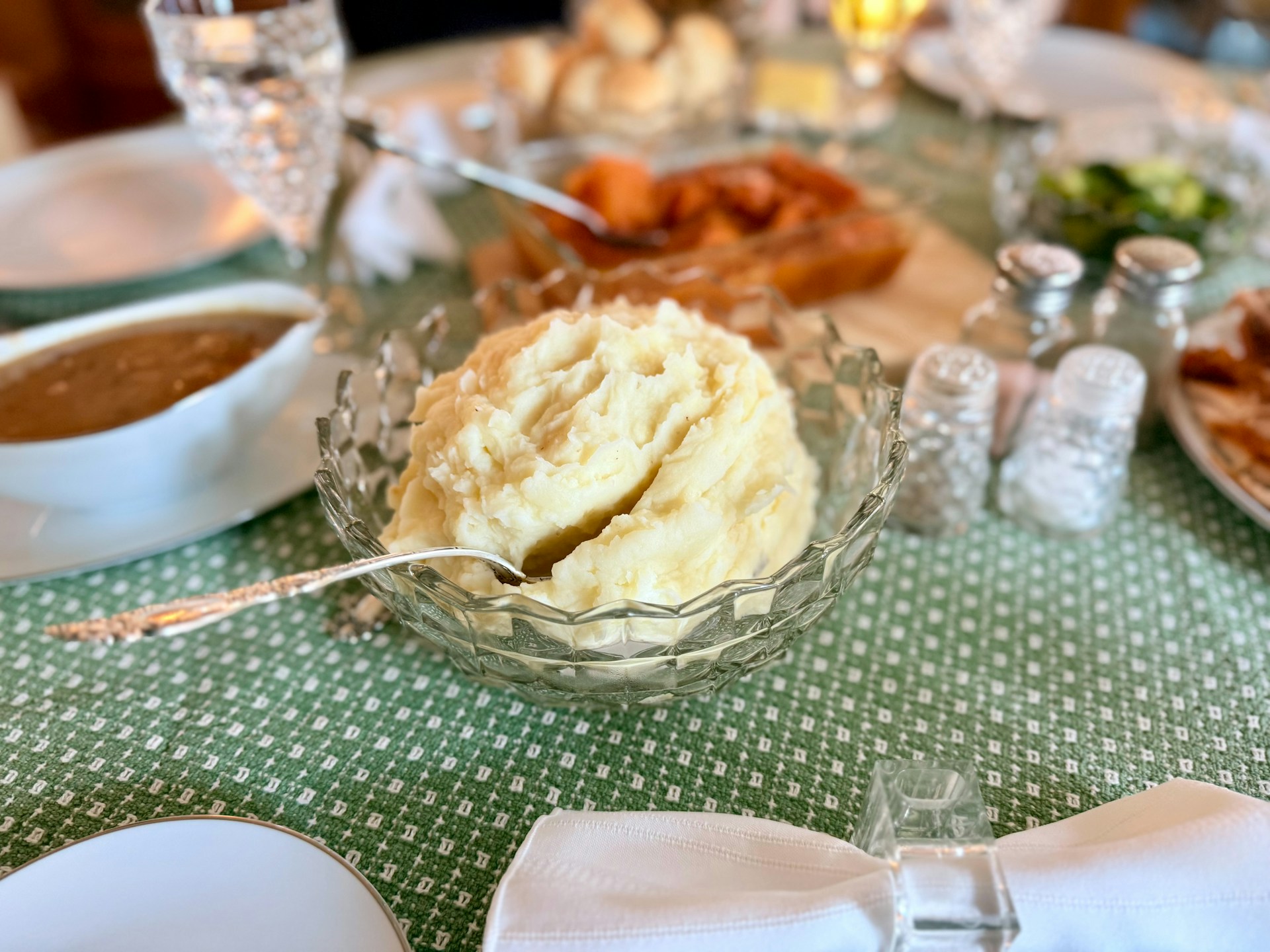
The day arrived, and the kitchen counters were filled with every imaginable trapping of a bountiful Thanksgiving feast. The hour of Father’s arrival was fast approaching. The table was set. Maybe the plates and napkins didn’t match, but it was what Mom had, and she was proud that he had accepted her invitation.
I happened to be running through the kitchen, chasing one of my five brothers, when I felt Mom’s arm grab me.
“Suzie, these potatoes need to be mashed. Here!”
And she handed me the mixer.
Shut down and put out, I grabbed the pot of potatoes. Seeing no room left on the counter, I put the pot in the sink and began to mash.
Looking sideways, bitter that the boys had escaped kitchen duty,
I mashed with abandon. So fiercely, in fact, that the metal sink vibrated, shaking loose an SOS pad I hadn’t noticed.
A few hours later, everyone was cleaned up and seated. Father said a beautiful blessing, and the meal began.
“Father, would you like some turkey, gravy, vegetables?” Mom asked, beautifully put together.
“Oh yes, please. Thank you!”
And on and on went the pleasantries.
Then came the potatoes.
Mom scooped a generous helping onto Father’s plate, and right on top sat the blue SOS pad.

Time seemed to stop as everyone stared at that gooey, blue Brillo pad.
Father looked at Mom and said, “I think I’ll pass on the potatoes.”
Mom quickly threw me under the bus. Understandably. If I had been in her place, I probably would have done the same.
Which brings me back to my original point.
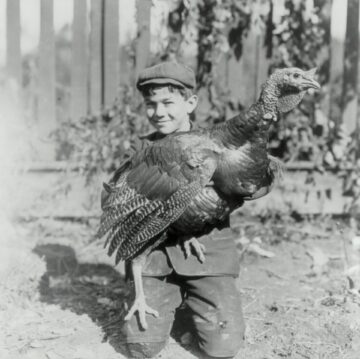
If I could go back in time and talk to my younger self, I would tell her:
“Honey, as you grow into an adult, you’ll meet people who have never learned to parent themselves, and you’ll wonder how some manage to get through life without adult supervision.
“That won’t be you, because you’ll have discovered one of life’s greatest secrets: Life is not about you. It’s about serving others.”
There’s a wonderful saying often attributed to C. S. Lewis:
“Humility is not thinking less of yourself, but thinking of yourself less.”
It speaks to a lifelong philosophy: Don’t wait for big moments to become a better person. Build character, discipline, and good habits in ordinary moments, and let those habits shape the life you lead.And if you get that right, kid, you’ll save yourself from a lot of SOS pad embarrassment!!
Proverbs 6:6–8 — Learn discipline and initiative
“Go to the ant, you sluggard; consider its ways and be wise!”