
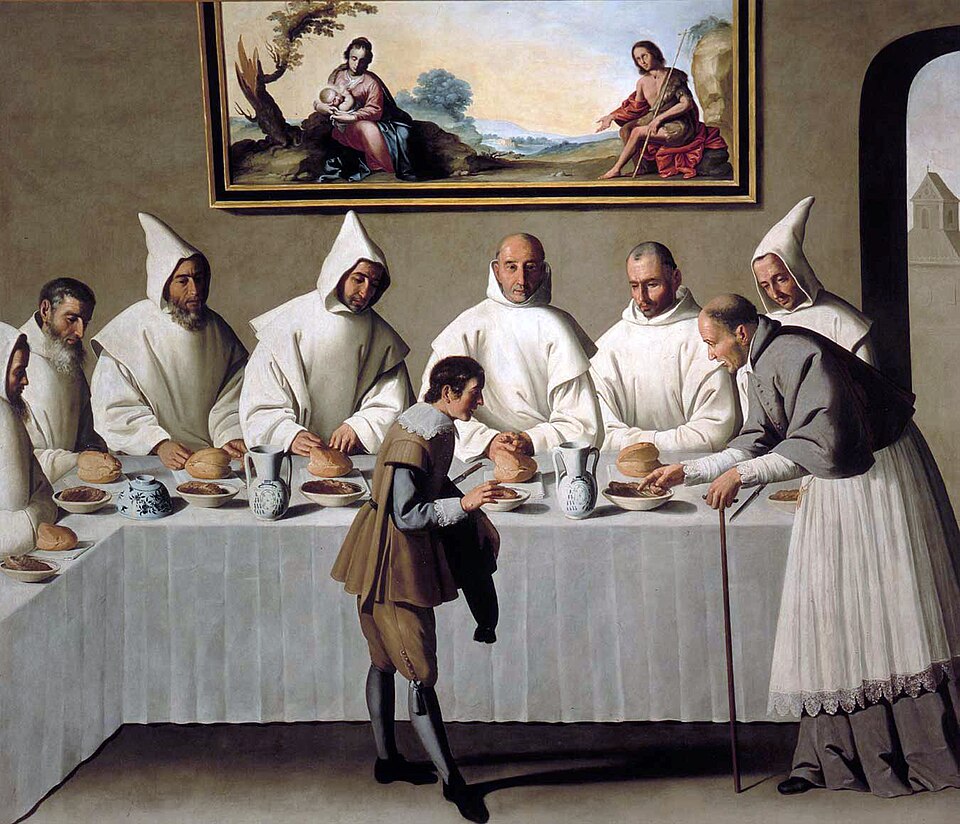
Today’s Saint Hugh of Châteauneuf (1053 – 1152) is not to be confused with Saint Hugh of Lincoln (1140 – 1200), although their life spans overlapped briefly, both were bishops and both were connected with the Carthusians. Today’s Hugh – the French one – helped to found Saint Bruno’s Order of hermits, while the other Hugh – the English one – was a member of the Order, and eventual bishop of the diocese of Lincoln in southern Britain.
Hugh of Châteauneuf was a proponent of the Gregorian reform, named after Pope Saint Gregory VII (1015 – 1085), the great Pope (whose name in life was Hildebrand) who strove to bring the Church of the ‘dark ages’ – rife with concubinage, secularism, simony and all sorts of ills – into the light. Hugh, renowned for his piety and morals, was elected bishop of Grenoble while still a layman, and set to work, battling with overbearing secular rules, not least Guigues of Avon, for the rights and freedom of the Church.
Perhaps Hugh is best known for giving land to Saint Bruno and his six companions, seeking a refuge from the world to begin their hidden Order, dedicated to prayer, the praise of God and manual labour. The good bishop spent much time with these hardy band of monks, and was said nearly to have adopted their way of life, as much as he might and still maintain his episcopal duties.
Thus it was in 1084 that the Grand Chartreuse was founded in a beautiful, snowy, rocky remote location at the base of the Alps, which still stands to this day, a thousand years later. As the Carthusian motto states, crux stat, dum volvitur orbis – the cross stands, while the world turns.
A good thought, on this last day of Lent, as we enter into the Triduum.
We adore Thee, O Christ, and we praise Thee, for by Thy Holy Cross, Thou hast redeemed the world.