
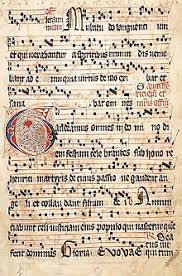
Laetare Sunday marks the halfway point of Lent. It is so named after the Introit, from Isaiah 66:10–11 and Psalms 121:1.
Lætare Jerusalem et conventum facite omnes qui diligitis eam; gaudete cum lætitia, qui in tristitia fuistis, ut exsultetis et satiemini ab uberibus consolationis vestrae.
Psalm: Lætatus sum in his quæ dicta sunt mihi: in domum Domini ibimus.
Which, in English:
Rejoice ye with Jerusalem; and be ye glad for her, all ye that delight in her: exult and sing for joy with her, all ye that in sadness mourn for her; that ye may suck, and be satisfied with the breasts of her consolations.
Psalm:I was glad when they said unto me, We will go into the house of the Lord.
We can rejoice on this day – not full Easter rejoicing, mind you, but in a subtler key, still in the spirit of Lent, but with a taste of the future resurrection. For our suffering is not – or at least, should not be, in vain. For that is a foretaste of hell itself.
This tragic and sad secular article, which sees suffering as pointless – the Nietzschean way. While Pope John Paul II’s joyful beautiful letter (which I give to students), Salvifici Doloris, has it ironically the right way around: suffering is salvific, and therefore joyful. It’s what Lent is about, and I do wonder about those who keep no Lent at all. Perhaps the greatest suffering is the attempt to avoid all suffering. Lift high the Cross! Embrace it, and it will be light as a feather, with charity and grace buoying us up. At least, so we hope…
That’s why the Marian antiphon for Lent, the Ave Regina Coelorum, is written not in a mournful mode, but one of joyful expectation:
Christopher Carson, a lawyer practising in Milwaukee, has an elegiac piece on the English angle on suffering, the ‘stiff upper lip’, keeping in secret, which has it place. He has an intriguing take of Thomas Tallis’ If Ye Love Me, which we will rehearsing with our Schola tomorrow. Keep the commandments, at least, even if ye know not fully why, and all mannter of things shall be well. There’s a truth in that.
Yet, we Catholics have more than the Anglicans, for our suffering is not just endured, but rejoiced. The saints sought it, not as masochists, but as bearing the burdens of others, as Christ did, and lightening His load, and the load of others. As Pope John Paul and many other saints saw, if we knew the value of suffering, sub specie aeternitatis, we would take all that was given us, and then some. The little seers of Fatima saw this, and their lives were never the same.
That’s not to say we don’t rejoice in all the good things of life. In fact, and au contraire, the ‘good things’ become all the better when seen in that same eternal perspective. What would Easter be without Lent? As Chesterton quipped, without fasts, there are no feasts.
Laetare Sunday offers a bit of that balance, in the narrow way of orthodoxy and orthopraxis. Easter is just three weeks away, so gird up thy loins, and see your Lent through to the end (and there’s two Solemnities on the horizon before then!). Deus bonus est.
For now, since we are permitted, by custom, to hear a bit of the organ today – normally silent in Lent – we will end off these thoughts with a little taste of the great Bach, with his fugue in G-minor: