
Nothing is more doomed to failure than a layperson trying to tell the clergy what they ought to do. Well, perhaps if such a person held several academic degrees in Theology or Mariology, or bore visible stigmata, they might garner a moment’s interest. Otherwise, in the best-case scenario, they are destined to hear those all-too-familiar words: ” We should like to hear you on this some other time.”
When speaking of the duties of the clergy, one must first refer to the Catechism of the Catholic Church. The Ministerial Priesthood has two degrees: the episcopacy (bishops) and the presbyterate (priests) (CCC, n. 1554). The Ministerial Priesthood differs not only in degree but also in essence from the Common Priesthood because it confers special powers and correlative duties upon bishops and priests.
The priestly service
In the early centuries, the conviction that the priesthood is a service was deeply ingrained among Christians. It was understood that for a community to exist and flourish properly, it required “shepherds-sacrificers.” Consequently, a local church held the right to command one of its own members to assume this sacred function.
The term minister comes from Middle English, originating from the Latin ‘minister,’ meaning “servant” or “attendant.” And it is found when St. Paul refers specifically to his ministry as an apostle. He labels to his ministry a “priestly service”: “Because of the grace given me by God to be a minister of Christ Jesus to the Gentiles in the priestly service [Greek: hierourgounta] of the gospel of God” (Rom 15:15–16).
Through both His life and His teaching, Jesus revealed that the Son of Man must suffer greatly (cf. Lk 17:25; 24:7, 26) and that He “the Son of Man did not come to be served but to serve and to give his life as a ransom for many” (Mt 20:28).
The priest is the sacramental representation of Jesus Christ—Head and Shepherd—in persona Christi Capitis et Pastoris Ecclesiae (PDV, n. 15). He is chosen from the Church, remains within the Church, and exists for the Church as a community of the People of God; he is taken from among the people and appointed for the people. Through the two pillars of preaching and the administration of the sacraments—the priest serves as a mediator between God and the people, in the person of Christ.
These pillars find expression in everything from formal homilies and teaching to personal conversation. Regarding the sacraments, this involves the interior preparation of the penitent, the fulfillment of the sacramental process, and the spiritual guidance of the individual who has received the sacrament. It is a direct response to the “spiritual hunger of the human soul thirsting for God.” Thus, leading people to God cannot be viewed as an additional or superfluous task.
Regrettably, heavy administrative and sacramental demands prevent pastors from investing deeply in their people. Realistically, a priest can only provide direct personal care to a tiny fraction of their flock—perhaps 1% to 8%, depending on the congregation’s size.
A divine call to service in the Church, whether as a diocesan or religious priest, is a summons that demands a human response. To refuse a realized vocation is a failure of the call to love, both toward Christ Himself and toward the Christian Community. This applies both to one who has already received the sacrament of Holy Orders but abandoned the gift in favour of an easier or more pleasant life, and to one who, without grave reason, abandoned the path leading toward it. In both cases—though not to the same degree—one may speak of incurring moral guilt.
The authentic servant
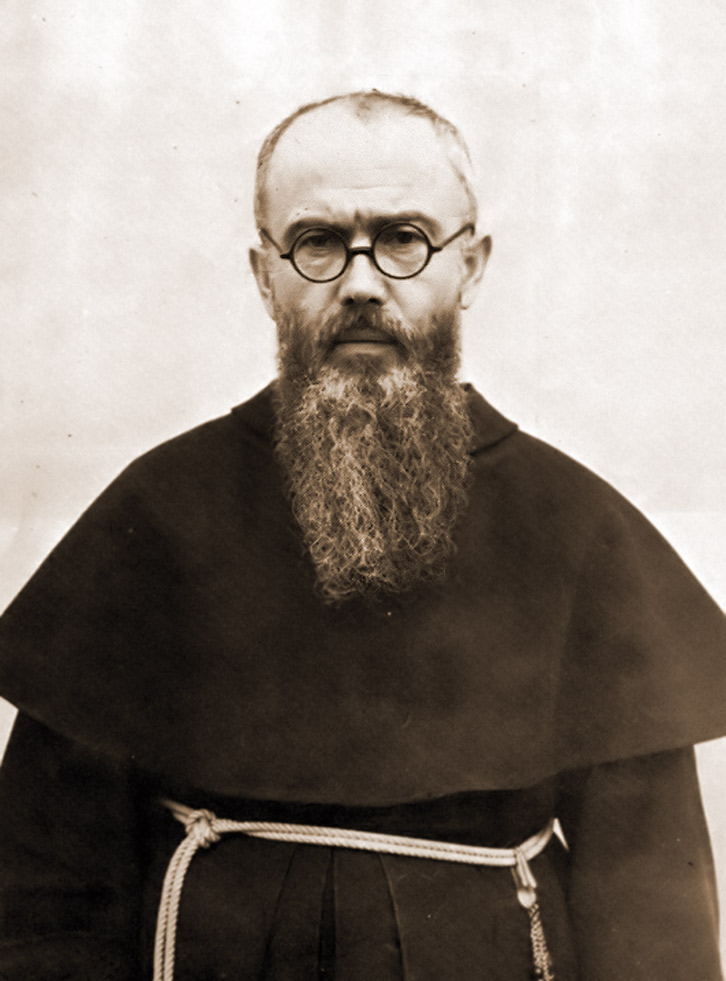
“You are the salt of the earth (…) You are the light of the world.” (Mt 5: 13-16) The priest, through a relationship with God as Father, becomes a spiritual father of all in our world. Through a relationship with Christ, the priest becomes the pastor, servant, and shepherd, who protects, gathers, teaches and leads the flock towards the Kingdom of God. St. Maximilian Maria Kolbe was such an authentic servant and a true apostle of the modern Church. The Church confirmed this through the infallible definition of his canonization.
The greatness of this Polish saint rested upon a threefold foundation: Obedience, Marian devotion, and Adoration.
“Not in mortification, not in prayer, not in labour, not in rest, but in obedience is the essence and merit of holiness.” – St. Maximilian Kolbe
“It is obedience and obedience alone that shows us God’s will with certainty. Of course, our superiors may err, but it cannot happen that we, holding fast to our obedience, should be led into error by this. There is only one exception: if the superior commands something that would obviously involve breaking God’s law, however slightly. In that case the superior could not be acting as a faithful interpreter of God’s will…He himself makes His holy will known to us through His vice-regents on Earth and draws us to Himself, and through us – for so He has willed – draws other souls too, and unites them to Himself with an ever more perfect love…” — the Office of Readings for the feast on August 14, the day of his martyrdom.
Hardly a Catholic exists who is not familiar with his undying devotion to the Blessed Mother:
The Franciscan often repeated: “The Immaculata—she is our ideal.” He emphasized that since Mary achieved such a degree of identification with the Divine Ideal that she cannot be separated from God, she is therefore the perfect model toward which all human aspirations should direct. Father Kolbe maintained that everyone should shape their personality in such a way as to resemble her as quickly as possible and, as it were, to be transformed into her. For the Immaculata responds to the immensity of God’s love with the boundlessness of her own human love. She is the “pinnacle of the creature’s love returning to God.” In no other creature was the response of love more perfect, more generous, or more heroic. “Her love,” Father Kolbe wrote, “was always the fullest, without any defect. She loved God with her entire being.”
When some of the brethren would remark that “holiness is difficult and not for everyone,” Father Kolbe, with a smile, would ask for a piece of chalk and write his ‘formula for holiness’ on the chalkboard: W + w = S > (God’s Will + our will = Sainthood). Then, he would add, “you shall become saints—and great saints at that.”
Acutely aware of his own human misery and imperfection, the recently ordained priest wrote in his diary on October 7, 1919, with an extraordinary tenderness, as if addressing a beloved earthly mother:
“Mommy, I know nothing of where this whole matter shall lead but deign to do with me and with us all whatever pleases You for the greatest possible glory of God; I am Yours, my Immaculate Mommy. You see how wretched I am, walking along the edge of a precipice, full of self-love: if You release me from Your Immaculate hands for but a single moment, I shall be the first to fall into the gravest of sins and into the depths of hell; but if You do not let go of me (for which I am entirely undeserving) and continue to guide me, I surely shall not fall and I will become a saint—a great saint.”
Adoration was the powerful engine of Kolbe`s activism:
Father Kolbe referred to Adoration of the Blessed Sacrament as an “audience with the Great King.” He would often tell his brethren: “Therein lies our strength; there is the source of our sanctification.” Watching him adore the Eucharistic Jesus, the friars could not tear their eyes away from him. Their superior usually knelt at the altar steps without any support or armrest. He was so immersed in prayer, his gaze so fixed upon the Tabernacle, that he seemed oblivious to everyone around him; one had to tap him lightly on the shoulder to get his attention for any pressing matter. Then, without the slightest hesitation, he would hasten wherever holy obedience or charity called him.
Unfortunately, it was only after his return from captivity in December 1939 that he was finally able to establish perpetual Adoration at the Friary. He emphasized that this was the most effective remedy for the needs of Niepokalanów and the Homeland at that time. He immediately announced this in the refectory and organized the brothers into groups for thirty-minute shifts. Every friar, without exception, had his assigned hour. Father Kolbe encouraged them by his own example, often stepping in several times a day if someone was missing. Even when he felt physically weak, he would take his walking stick and, leaning upon it, hasten to his encounter with Jesus.
When the Gestapo arrived at Niepokalanów on February 17, 1941, to arrest Father Kolbe, he remained in a state of perfect composure. While guiding the Germans through the Friary, he first led them to the chapel where Adoration was taking place. Pointing toward the Eucharist Jesus, he declared: “Our most important work is here.”
Two prophetic figures
At the turn of the 19th and 20th centuries, it was not uncommon that the rich became even wealthier while the poor fell increasingly into a debt spiral. Flawed legislation failed to keep pace with rapid social changes. The Church could not turn a blind eye to the unfolding situation; consequently, the encyclical Rerum Novarum proved to be a milestone in this regard. Pope Leo XIII emerged as a prophet of his time. He could support neither capitalism—which, in its 19th-century form, treated the most vulnerable social strata as cheap labour—nor the socialist class struggle with its atheistic ideological foundations.
The Holy Father paved a “third way.” In defiance of the interests of the ruling class, he demanded fair wages for workers and advocated for state interventionism in social matters. He resolutely rejected communist proposals for the abolition of private property, recognizing it as the foundation upon which the Catholic family and society develop, noting that it ‘conduces in the most unmistakable manner to the peace and tranquility of human existence.’
Furthermore, in what was a complete novelty, he encouraged Catholics to participate actively in social and political life while simultaneously highlighting the fallacy of the thesis claiming a direct link between Christianity and socialism. In this way, the Pontiff preserved a considerable number of Catholics from a dangerous ideology that might be leading their souls to perdition.
The Craft – that is, the Freemasons – under the guise of rationalism and humanism, sought to weaken the influence of the Church and facilitate the spread of false doctrines. Father Kolbe was perfectly aware of the insidiousness that Marxist ideology and the actions of the global Freemasonry posed to human souls. ‘We can build many churches,‘ he used to say, ‘but if we do not have our own Catholic press, these churches will be empty.‘ Those first seven years, during which the publishing activity was under his direct supervision, were a singular example of the work of grace. For it was not based on cold business calculations, but on trust in Divine Providence through the Immaculata. Once the publishing machine was fully in motion, God placed him elsewhere to bring human souls to Him.
For readers who have not yet encountered information regarding the Catholic press originating from the Niepokalanów printing house, it should be noted that in October 1936, Blessed Father Pius Bartosik took over the editorial office of Rycerz Niepokalanej (The Knight of the Immaculata). By 1939, the monthly circulation of the magazine exceeded 800,000 copies. Including other titles, nearly one million copies reached Catholic families in Poland, which at the time had a population of thirty million.
As is often the case with the great saints, the ‘Madman of the Immaculata‘ experienced the greatest sorrow and tribulation from those he should have least expected—from men of the Church. Even the stigmas branding Niepokalanów as a “stronghold of ignorance,” the relentless attacks of the leftist press, or even his final days in the starvation bunker, were but a mere drop in the vast sea of suffering he endured throughout his life.
Father Kolbe, first and foremost, a priest and a religious, but also a journalist, an apostle, a missionary, and an educator. It must not be forgotten that all of that was a means of attaining holiness, not an end in itself. He acted out of love for the Immaculata, in order to win as many souls for her as possible. At any moment, he was prepared to cease a particular activity if his superiors so desired.
Western observers are often unaware that his apostolic and publishing endeavours—distinctly Marian in character—reached, according to Fr. Paulin Sotowski OFMConv., at least 17% of the Polish population. In this way he laid the spiritual foundation upon which Blessed Cardinal Stefan Wyszyński could successfully shepherd the Jasna Góra Vows of the Nation (1956) and the nine-year Great Novena (1957–1966) preceding the Millennium of the Baptism of Poland. One might say, therefore, that Fr. Kolbe—this humble servant of the Immaculata—saved not only hundreds of thousands of people, but the Church in Poland from the destructive influence of Marxist ideology.
Conclusion
Long ago, I met a priest who had attended the same diocesan seminary as Blessed Fr. Jerzy Popiełuszko just a year or two before him. He confided in me that for over a dozen years, he had been a mere ecclesiastical official. Only after Jesus had touched him with His grace did he undergo a conversion, finally understanding his ministerial function on the path of love for Christ and the People of God.
My heart sank at the words of a Polish nun in South Perth, here in Australia; her community lacked a priest for Confession, while I was well aware that several were busy spending their time at golf. As we finished talking, she remarked, ‘I must go back to Poland. It is a spiritual desert here’.
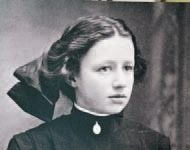
On April 14, 1997, contemporary Polish mystic, Alicja Lenczewska (+2012), recorded in her journal “The greatest threat to the Church and the force destroying its holiness lies within – in the hearts of those who, instead of being the Heart and Hands of Christ, are His Wounds.”
Both practicing and lapsed Catholics, as well as non-Catholics—be they our family, friends, or colleagues—need the chance to encounter priests who are more than just administrators or busy presiders rushing from church to church. Nor should they be seen merely as “pals.” Instead, people from all walks of life ought to know them as fathers whose fatherhood is deeply rooted in their sacramental identity. This is particularly vital given the common critique that some priests have become out of touch with the lives of laypeople, especially the young.
Reflecting on the Ministerial Priesthood through the lens of St. Maximilian Kolbe’s tireless service to the Church, I am drawn to the sobering words of Ezekiel 34:2-5.
“To the shepherds, thus says the Lord GOD: Woe to the shepherds of Israel who have been pasturing themselves! Should not shepherds pasture the flock? You consumed milk, wore wool, and slaughtered fatlings, but the flock you did not pasture. You did not strengthen the weak nor heal the sick nor bind up the injured. You did not bring back the stray or seek the lost but ruled them harshly and brutally. So they were scattered for lack of a shepherd, and became food for all the wild beasts.”
St. Maximilian Kolbe ora pro nobis.