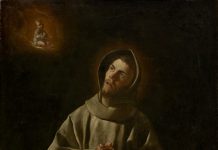

Saint Francis Borgia (1510 – 1572), whom we recall on this October 10th, was a true renaissance man, who lived two lives in one – first, as a married layman, then as a Jesuit priest, who is often described as the second founder of the Order.
Francis was from the noble family of the Borgias – ‘noble’ being used here rather broadly, for the family as a whole are renowned for their moral failings, even depravity. But we should not paint with too broad a brush. Francis was the great grandson of the Borgia pope, Alexander VI, all of whose recognized children – and we may take some small comfort in this – were born before he ascended the papal throne. Hence, Francis had a privileged upbringing, educated in the arts and sciences of his day, composing music in counterpoint even before Palestrina’s mastery.
The young man developed into a much sought-after skillful diplomat and administrator. For all his worldly success, Francis deepest desire was to become a monk and disappear into the proverbial desert. But his family, and it seems God also, had other plans. He put aside his initial plans and married Leonor de Castro Mello y Meneses, who bore him eight children, all of whom survived into adulthood. But through it all, Francis kept his eyes on eternity, and fleeting nature of this life. When he saw the decaying corpse of the once-beautiful queen Isabella II, the mother of Philip II, which he was tasked to accompany to its resting place, he murmured, sic transit gloria mundi, and his thoughts on the next life became even more vivid.
And so it was that when his good wife Leonor died in 1546, Francis, in his mid-thirties, decided now was the time to fulfil his call from childhood. He sought entrance to the Jesuits as a novice, was accepted, and quickly moved up the ranks of the militant order.
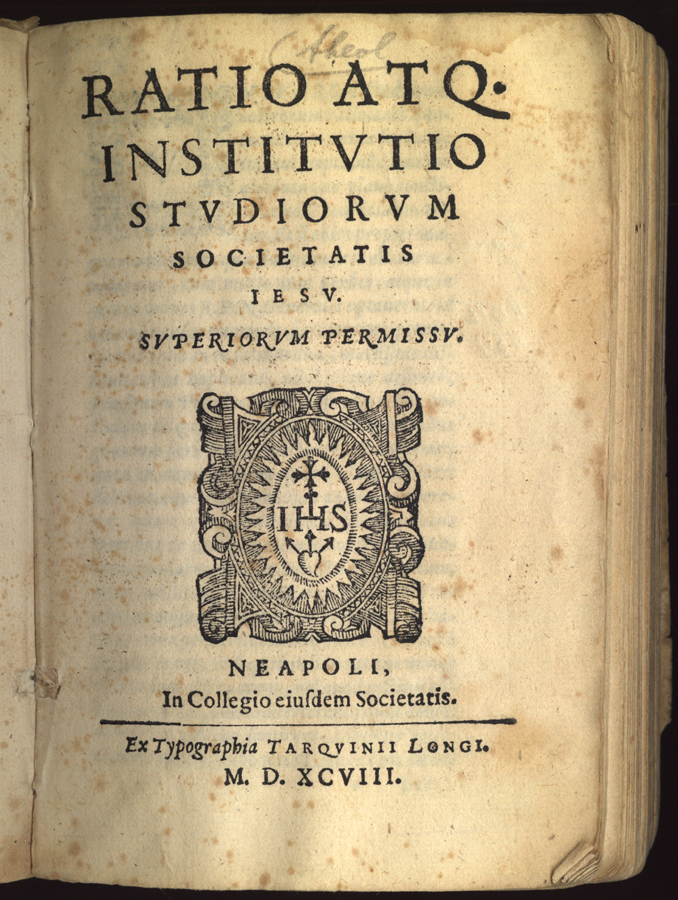
He wasted no time, founding a dozen colleges in Spain, as well as the Collegium Romanum in Rome, which became the Gregorian University in Rome. Francis was eventually appointed superior-general in 1565, and further solidified Ignatius’ band of men, which had grown by leaps and bounds (the initial idea was to cap the Jesuits at a biblical 72 members, and I will leave the reader to discern what might have unfolded had that been stuck to). Father Francis was the adviser of the great leaders of the day, of kings, potentates and princes, moving history via the great hinge of all history, the human conscience.
And it was with a good conscience that Francis Borgia, S.J. died on September 30th, 1572, his holiness recognized throughout Christendom. He was beatified by Pope Urban VIII in 1624. This was the same year that Galileo, who would come into conflict with the same pope, wrote his seminal scientific work, The Assayer, which began the scientist’s many-year battle also with the Jesuits. Perhaps things may have turned out different had Francis still been alive).
Borgia was then canonized by Clement X in 1670, and this day chosen for his memorial, as the one closest to his death not already taken. He is no longer in the universal calendar, but it’s good to remember this great saint, who did so much for Christ’s Church, and to beseech his intercession for the Jesuits, who, like the Church they served, and serve, are always in need of reform. In the midst of his own tumultuous era, Saint Francis Borgia kept his peace of soul, and his eyes on the prize, and would that all of us did the same.
Ora pro nobis! +