

The mystical literal interpretation of scripture is an avenue to powers many consider to be unusual. It is not a method they teach you in catechism class. Some of its masters, such as Venerable Mary of Agreda in her classical Mystical City of God, succumb to errors by failing to realize that although it has the word literal in the name, “mystical literal interpretation” is categorically a spiritual interpretation of scripture.[1]
What is the mystical literal method and where does it stand in terms of the four typical senses – literal, allegorical, moral, and anagogical – used to expound scripture?
A quick recap on these four anciently-recognized senses of scripture: they originate in the basic literal-spiritual duality of interpretation, the spiritual component being refined to include the three distinct aspects of allegory, morality, and anagogy. The Letter speaks of deeds; Allegory to faith; The Moral, how to act; Anagogy our destiny.”[2] “The literal sense is the meaning conveyed by the words of Scripture and discovered by exegesis, following the rules of sound interpretation“[3] The literal sense is not a blind reading but may be aptly described as the literary sense. An Epic or poem with poetic license should be read as Epics or poems not modern history. The exegete needs to find the meaning of the author’s words as expressed through the literary genera they choose to employ. The literal sense is the foundational sense.
The spiritual sense, including its allegorical, moral, and anagogical components, is the meaning brought together by the unity of God’s plan as He is the author of world events and of scripture. The allegorical sense represents an understanding of events through their significance in Christ. The moral sense understands ethical patterns to live life by. The anagogical sense views realities in terms of their eternal significance. When we interpret scripture we must be attentive to the unity of all the scriptures, read them in the living tradition of the Church and by being attentive to the analogy of faith in reference to doctrine and creeds.[4]
The mystical “literal” sense is a spiritual sense that views scripture in a prophetic, literal-anagogical sense to literally apply to future events a verse or series of verses of biblical text. It relies upon God’s uniting authorship of scripture to provide a justification for seeing a prophetic sense where this prophetic setting may otherwise be considered non-existent by the literal or other spiritual senses. It is not simply called the prophetic sense, since the future event cannot be predicted from the verses, but is only seen in hindsight. It is a mystical type of meditation, not a search for hidden meanings, or secret knowledge. It is a dabbling in pious theater, not dogmatic visions. Often the context and setting of the verses must be completely re-imagined for the prophetic sense to come alive. That being said the words of the verse are taken literally, directly, and without any alterations as much as is possible.
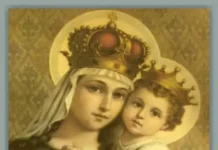
As an example we may turn to the Song of Solomon 1:13. “My beloved is to me a bag of myrrh that lies between my breasts.“. The mystical literal sense is that the verse is about Mary with baby Jesus on her breasts. You can see here that the literary literal sense is that the poem is about two romantic lovers. The mystical literal sense then takes this one verse right out of the context of the poem and the verses around it, to directly apply the words to another context and setting. This time in the context of Mary and baby Jesus. Only the bag of myrrh is not literally applicable.
We may use another example to contrast the allegorical sense from the mystical literal sense. Take Psalm 45:2. “You are the most handsome of men; grace is poured upon your lips…“. The Psalm is addressed to the king in verse 1. We may allegorical ascribe that this king could be Christ and that he will be handsome not in the sense of physical features but in terms of grace, virtue and majesty.
Using the mystical literal sense the idea of the most handsome of men, must be taken strictly for what it means (physical looks) and apply it to a future person. If we apply it to Christ that would mean he would have been physically handsome. Thus one would enter into the long standing debate if Christ had good or bad looks on the side of good looks. Isaiah’s suffering servant would disagree. “…and as one from whom others hide their faces he was despised, and we held him of no account.” Isaiah 53:3. Yet, David as a type of Christ was handsome as described in 1 Samuel 17:42. Perhaps the best mystical literal interpretation to avoid conflict with Isaiah’s suffering servant is that the glorified risen Christ in heaven is handsome. While Mary Magdalene mistook him for a common gardener, several saints have described Christ in visions as spectacular. One may think of St. Faustina who when seeing the image of Divine Mercy painted felt very said that the painting was not as beautiful as Jesus was as she saw him.[5]
“Let him kiss me with the kisses of his mouth!” Song of Solomon 1:2.
This is baby Jesus and Mary. Here we have taken the romantic context out of the verse and yet still are able to directly apply a “literal” reading of the words. Baby Jesus kissing Mary.
“Before she was in labour she gave birth; before her pain came upon her she delivered a son. Who has heard of such a thing? Shall a land be born in one day? Shall a nation be delivered in one moment? Yet as soon as Zion was in labour she delivered her children.” Isaiah 66:7-8.
Traditionally Church Fathers and even the Catechism of the Council of Trent[6] have viewed that Mary gave birth without pain. This was supported by arguments of the intactness of Mary’s virginity, the fact that the pains of birth were a punishment resulting from the fall of Adam and references to Isaiah 66:7. Many modern commentaries may fail to mention anything regarding the birth of Christ for this passage instead focusing on a symbolic birth of the messianic people and assurance of miraculous developments for God’s people. The mystical literal interpretation is clear.
The mystical literal sense offers a fresh look at the psalms. If you have heard a particular psalm one too many times, and its meaning has been dulled, I recommend doing some pious mystical re-application of its verses in your mind. Think about any one or two lines being said by Mary to Jesus, or vice versa. Think about one of the saints saying the line at a ordinary or critical moment in history. Think even about yourself saying the verse in some ordinary or even pivotal moment in your own life. Unlike the Psalter of The Blessed Virgin Mary by Saint Bonaventure avoid changing the words to make it Marian or some other theme. If the words don’t literally or nearly so apply, drop the verse and move on.
“My wounds grow foul and fester because of my foolishness…” Psalm 38:5. We can interpret this line many ways. Wounds of sin can cause mental and emotional damage. Since we are talking about the mystical literal sense, the wounds have to be literal physical wounds that can fester. There is a real visceral application of this. The prescriptive laws in the book of Numbers about clean and unclean animals have both spiritual meanings but also real world health applications. One can imagine many sins that occur today that cause real physical wounds from violence and the transmission of diseases. These sins can fester. The mystical literal sense can help ground pious mediation in reality. The world of spirituality is not always non-physical.
“On the holy mount stands the city he founded.” Psalm 87:1. Many people can recall local churches build upon hills that stand majestically around their towns. The author grew up in a small town where the highest ground for several kilometers was occupied by the church building. The mystical literal sense can rip the Jerusalem and Temple Mount out of the context and apply this even to our own day. Churches on hills are very special places. Saint Augustine in his commentary on the psalms remarks that the first verse does not define the city name but starts speaking of it. It makes the hearer beg the question to ask whose city and what city?[7] It is only natural for us to image our own churches of today, before verse two mentions Zion.
“Sing to the LORD a new song, his praise in the assembly of the faithful.” Psalm 149:1. In a literal mystical sense, we can view this as a prophetic command to ourselves. This is applied to modern times. We must sing a new song now.
I hope the mystical literal method has given you something new to ponder.
__________________________
[1] Several Saints sometimes take their private revelations as dogmatic historical events rather than piously granted mystical food for meditation. Auguste Saudreau, L’étate Mystique: sa Natureses Phases et les Faits Extraordinairies de la vie Spirituelle, (Paris, 1921), Paragraph 250.
[2] Catechism of the Catholic Church, §118.
[3] Catechism of the Catholic Church, §116.
[4] Dei Verbum, §12
[5] Saint Faustina Kowalska, Divine Mercy in My Soul, §313.
[6] Part I the Creed in Article III “Who was conceived by the Holy Ghost, born of the Virgin Mary”.
[7] Saint Augustine, Commentary on the Psalms, LXXXVII §2.