
Ecclesia semper reformanda est (attributed to Saint Augustine)
History doesn’t repeat itself…it merely rhymes (some say Mark Twain, but definitely Theodor Reik)
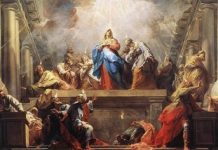
In light of the the looming episcopal consecrations of the SSPX, in light of the recent Solemnity of the Sacred Heart, I’ve been pondering the Mystical Body of Christ. We should take a step back from the legal wrangling and all the faults of the ecclesia moderna – and there are many – and meditate for a few moments on the Church as a living entity that grows and develops through space and time, until its culmination at the end of time. Pope Pius XII wrote an encyclical on this theme, Mystici Corporis, in the midst of the Second World War, promulgated on June 29th, 1943, when things also were very bad (but when have they not been?). We are all – every soul – in some mysterious way one in Christ, whether or not we choose to foster and partake in this unity. I will draw all men to Myself.
The Church is in some real sense a family. We may choose to separate ourselves from our parents and siblings, but they are still our blood, our kith and kin. How much more do the Body and Blood, and the very Sacred Heart of Christ unite us, even with all these divisions – a theme to ponder on this Solemnity!
But the Church is not just ‘mystical’, a spiritual entity transcending space and time. For Christ founded the Church as a sacramental, visible and hierarchical entity, so that we have a sensible and sure link to the deeper mystical reality. As Lumen Gentium teaches, the Church which Christ founded subsists in this Catholic Church.
Hence, the Church is a complex entity, a coalescence of the visible and invisible, of the earthly and heavenly, of body and spirit. These dimensions of the Church are distinct, but not separate. The hierarchical Church, with all the sacraments, is where we find Christ most fully, where we are most assured of salvation. To break with this visible Church – by schism, heresy or apostasy – puts our salvation in grave peril, wandering in labyrinths of one’s own, or another’s, devising.
Which brings us to reform, which is always needed, even if not always welcomed. For the visible, hierarchical Church, comprised of fallen humans prey to sin and error, has the tendency to stray. There are various means by which God brings the Church back to the right path. The first of these is the office of the papacy and the Magisterium, with the charism of infallibility when defining matters of faith and morals.
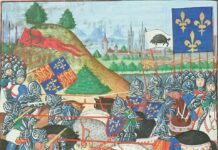
But God also inspires certain people – often saints, but they need not be – to re-form the Church, to bring her back to her principles. Such chosen souls are given ‘charisms’ – gratia gratis data – special graces freely given by God to bring others to holiness, to found a new Order or movement, to teach and preach, to exhort, rebuke, or even just to provide a vivid example for others to follow. The history of the Church is replete with them, Saint Anthony going into the desert, and the great monastic movement which followed; Dominic and Francis and their radical path of mendicancy; Joan of Arc inspiring the insipid Charles VII; Catherine of Siena exhorting Gregory XI in no uncertain terms that he must return to Rome from the sensual comfort and security of Avignon. There are countless others, hidden and known, through the centuries to our own day.
Such vivid personalities often resisted the hierarchical Church, always slow to reform; but they never rebelled, nor disobeyed a direct order from the proper, divinely instituted authority. They would often act praeter legem, as Saint Thomas would put it, ‘beside the law’, in accord with the intention of the lawmaker. But they never acted contra legem, against the law, flouting authority, as though the authority did not, in fact, have the authority.
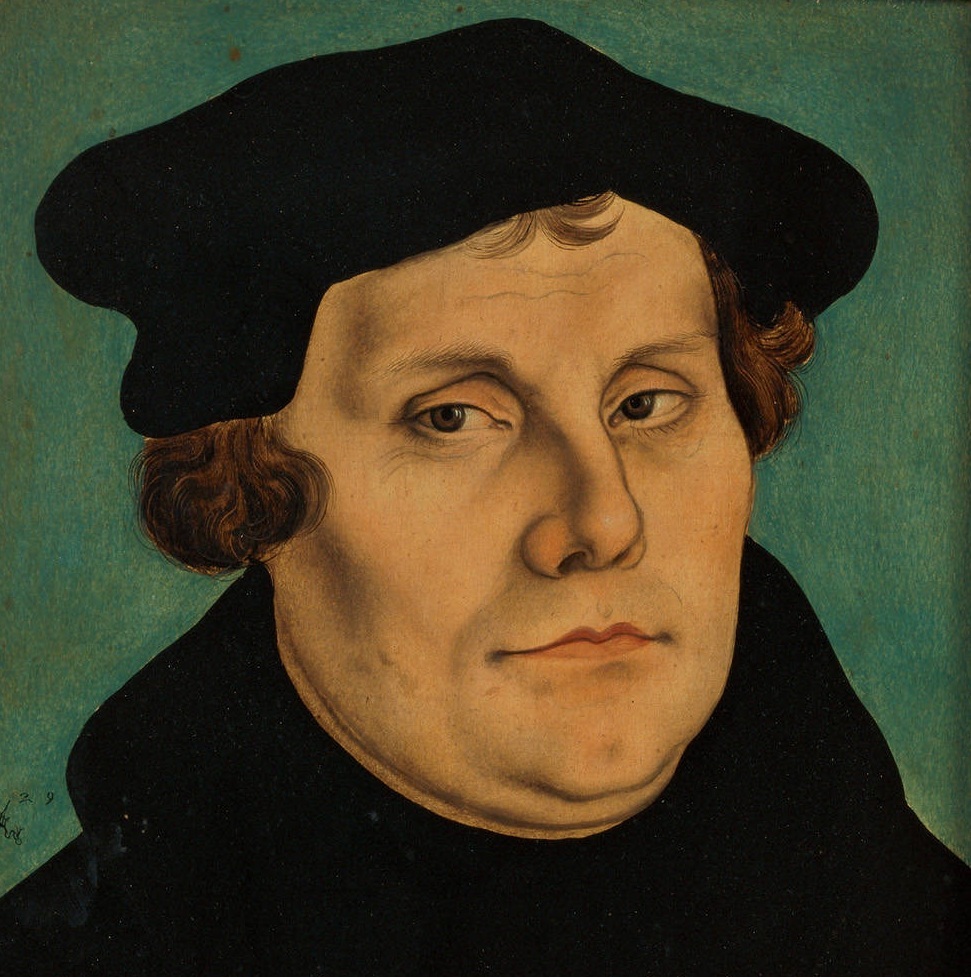
Thus did Martin Luther. In The Three Reformers, Jacques Maritain’s masterly description of the rabble-rousing Augustinian monk, the French philosopher asserts that Luther had all the makings of a great saint, had he stayed within the Church, obeyed proper authority, and had the patience to wait for the reform for which he so vehemently preached. Erasmus, a one-time fellow traveler with Luther, chose to do so. Luther did not.
The Church at the dawn of the 16th century was gravely in need of such reform, mired in nepotism, absenteeism, corruption, simony, intrigue, with a disordered devotional life too focused on externals, often lacking a proper metanoia of the heart. Pope Julius II called a Council in 1512, which was held at the Lateran basilica until 1517. Cardinal Egidio da Viterbo opened the proceedings with a famous and stirring speech calling for deep reform, which everyone hoped the Council would bring. A glorious new dawn! But a false one: Political and military affairs took precedence, alas.
The decrees of the Council remained mostly a dead letter. True reform would have to wait for the Council of Trent (1545 – 1563), in response to the disorder and destruction wrought by the Protestant revolt. Its work of reform was finally completed by the charism of Saint Charles Borromeo, Pius V, Philip Neri, the newly founded Jesuits and countless others.
Luther had no part in this, choosing to ‘reform’ the Church by his own lights and in his own way. ‘Here I stand and can do no other’. Although he claimed sola Scriptura, Luther was something of a traditionalist, seeking to go back to an earlier, simpler and purer Church, without all the ‘Romish’ rigmarole – as he saw it – of the sacrifices, sacraments, Masses, indulgences, candles, celibacy, and devotions. Of course, he went too far and astray. Unhinged from the hierarchical Church – and the Magisterium – one always does. For sola Scriptura, as applied by Luther, not only means ‘Scripture alone’, but that Luther alone could interpret Scripture properly, in its ‘clear’ sense.
The reader may already glean the analogy withArchbishop Lefebvre, who may well have been given a charism of reform, after a Council whose fruits have been uncertain. He resisted those who tried to stifle his charism, determined as he was to maintain the ancient tradition(s) of the Church.
So far, so good. But a tragic Rubicon was crossed in 1988, when Lefebvre – directly contrary to the Pope’s command, not just without a papal mandate – ordained the four bishops. He had been promised a bishop, to which he agreed. But for reasons that are obscure and debated, Lefebvre reneged, claiming he wanted four bishops whom he would choose. He claimed emergency powers and the rights of his own conscience.
Thus he stood, and could do no other.
This was not just about the episcopal ordinations, but what it means to be a ‘Church’, a unified entity, the Mystical Body of Christ, centred in and founded upon the visible, hierarchical Church and ‘rock’ of the papal office, as imperfect as these may be in any one man or given historical moment.
Had Lefebvre trusted Pope John Paul and Cardinal Ratzinger – or, more to the point, trusted Christ working through His Church – who knows what good may have derived therefrom? A personal traditional prelature, that would persist unto today? Harmonious relations with the papacy? Universal access to the TLM?
Instead, we have the division we’re now facing, and which will be perpetuated and exacerbated by the consecrations on July 1st, again contrary to direct order from the highest authority in the Church. Deliberate and sustained disobedience to papal and Magisterial authority you will not find in the annals of the saints.
Just as Luther claimed sole right to interpret Scripture, so too did his followers. Only, of course, his followers also claimed this same right, and did not follow Luther’s interpretation. In fact, it turned out that there are as many interpretations of Scripture as there are people. Hence, the tens of thousands of Protestant sects.
What Luther was to Scripture, Lefebvre and the SSPX are to Tradition. They now claim the right to say what is ‘Tradition’ – or at least, ‘traditional’ – in opposition to the Magisterium and the development of doctrine and praxis. They have just promulgated a ‘statement of faith’, addressed specifically to the Holy Father and the cardinals, but also for the rest of the Church. Sure, they may be mostly right. It’s the bit – even a smidgen – where they’re not, or are ambiguous, that makes all the difference. For without the Magisterium, in particular the papacy, there is not and cannot be any principle of proper reform or correction, except the light of our own conscience, which, to put it mildly, is not infallible.
Here’s a good summary of the SSPX’s seeming inexorable path towards separatism and schism. The author is correct – things would likely have been better had Lefebvre obeyed and maintained unity. Instead, we have bishops doing what seems right in their own eyes. Richard Williamson, one of the four ordained by Lefebvre, later thought the SSPX not ‘traditional’ enough, so founding the SSPX-MC – ‘Marian Corps’, and ordained twelve (!) bishops in his own ‘Levebvre moment’. Keep in mind that each of those bishops may in turn ordain other bishops and priests, in saecula saeculorum. What’s to stop an SSPX-MC2 and MC3?
How does one ever resolve that mess?
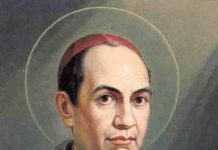
Bishop Athanasius Schneider is calling for mercy, and for the Pope to authorize the consecrations. But how would that solve anything, and would that not reward recalcitrance? Who’s to say any of those new bishops won’t also ‘go their own way’, should they decide the SSPX is straying from tradition? And what does that say to the FSSP and other traditional group who do actually strive to maintain unity with the Magisterium?
In the ‘oath of fidelity‘ that priests in the SSPX take before ordination, they declare, about the Pope:
I refuse to follow him when he departs from Catholic Tradition, especially in matters of religious freedom and ecumenism, as well as in reforms that are harmful to the Church.
But who’s to judge when the Pope ‘departs from Catholic Tradition’? Who has the final say? The SSPX? Who within the SSPX? Who gave them the charism of such discernment? What is ‘tradition’ may seem clear to them, as the ‘sense of Scripture’ seemed clear to Luther, but we should beware of such self-enlightened clarity.
In his recent ‘declaration of faith’ to Pope Leo – in the midst of reaffirming Catholic dogma and one gets the sense, of ‘schooling’ the Pope – the current superior of the Society, Father Davie Pagliari, pronounces with the full vigour of someone who knows what he’s about:
Consequently, every man must be a member of the Catholic Church in order to save his soul, and there is but one baptism as the means of being incorporated into her. This necessity concerns the whole of humanity without exception and embraces without distinction Christians, Jews, Muslims, pagans, and atheists.
On the face of it, this is Feeneyism, the quasi-heresy of Father Leonard Feeney (1897 – 1978), a sometime Jesuit who was excommunicated for holding that one must be a sacramentally baptized member of the visible, hierarchical Church to be saved. Everyone else – including every non-Catholic, every Protestant, Baptist, Hindu, Muslim, and all the millions of pagans before Christ – is damned. This the Church has never taught – even the great Augustine said there were wolves within and sheep without the Church.
In their more recent statement, the SSPX nuance this a bit, but not by much, claiming that the hierarchical Church is identical with the mystical Church, denying the teaching of Lumen Gentium, on what extra ecclesiam nulla salus really implies.
And what are we to make of the SSPX position that the Novus Ordo, although valid – (some grit their teeth even admitting this, while others deny it altogether) – is evil and spiritually harmful, and should never be attended, even to fulfil one’s Sunday obligation? I suppose in the eyes of the SSPX, most of the Church – say, 99.9% who are not in the SSPX – is also on the not-so-merry road to hell. Like the Jehovah Witnesses, the only ones saved, it seems, will be the few hundred thousand who attend the SSPX.
Distinctions must be made, and mysteries maintained, which is the task of the Magisterium. Although we are bound to the Church and the sacraments, God is not, and He can work outside of them. And as far as Mass and the sacraments go, something can be imperfect, but still spiritually fulfilling and salvific. Otherwise, why get married? After all, there is no such thing as a ‘perfect Mass’ – only those that are more or less perfect.
Whatever one thinks of such opinions of the SSPX, they are not conducive to unity or communion. It is ‘us’ versus ‘them’, a distrust and antagonism written into the very origins of the society.
This puts Pope Leo in a bind. I would imagine he is inclined to mercy and maintaining unity, but how can he just let this go? If there are new censures, the SSPX will ignore them, just as Luther did. When he was excommunicated by Leo X, Luther publicly burned the bull (some claim it was a copy, keeping the original for legal reasons).
Sure, excommunications are not infallible, but they do signify something in that coalescence between the visible and spiritual aspects of the Church. Without the link to the Magisterium – through real, practical obedience, and not just lip service – the SSPX, I fear, will become more fissiparous, drift ever-further and break apart. There are as many fracture points as there are points of doctrine and praxis: annulments, canonizations and devotions and what aspects of the ‘post Vatican II” Church they will accept. That process has already begun. I have asked some members of the Society for a book or summary of what they believe – or, more to the point, what they don’t believe – with no success. The recent statement of faith itself provides some answer, but raises many more questions Who runs the show? Father Pagliari? The ‘Council’? The members themselves all seem to have different opinions, and are only united, like the Protestants, in resisting the ‘modern Church’. One wonders where this will go.
Well, I think I’ve said what I can about this. The lines are drawn in the sand, and alea iacta est. We will end for now back where we began, with those two dimensions of the Church – hierarchical and mystical, Petrine and Marian – which coalesce to form one entity. We cannot have one without the other, and must pray that the SSPX sees their way to stay united to the papacy. Resist and stand firm in those things where they must, but don’t reject and rebel, where they should not.
To paraphrase Chesterton, if angels can fly because they take themselves so lightly, the same may be said for how we may maintain union with each other, and with God.
In necessariis unitas, in dubiis libertas, in omnibus caritas.