

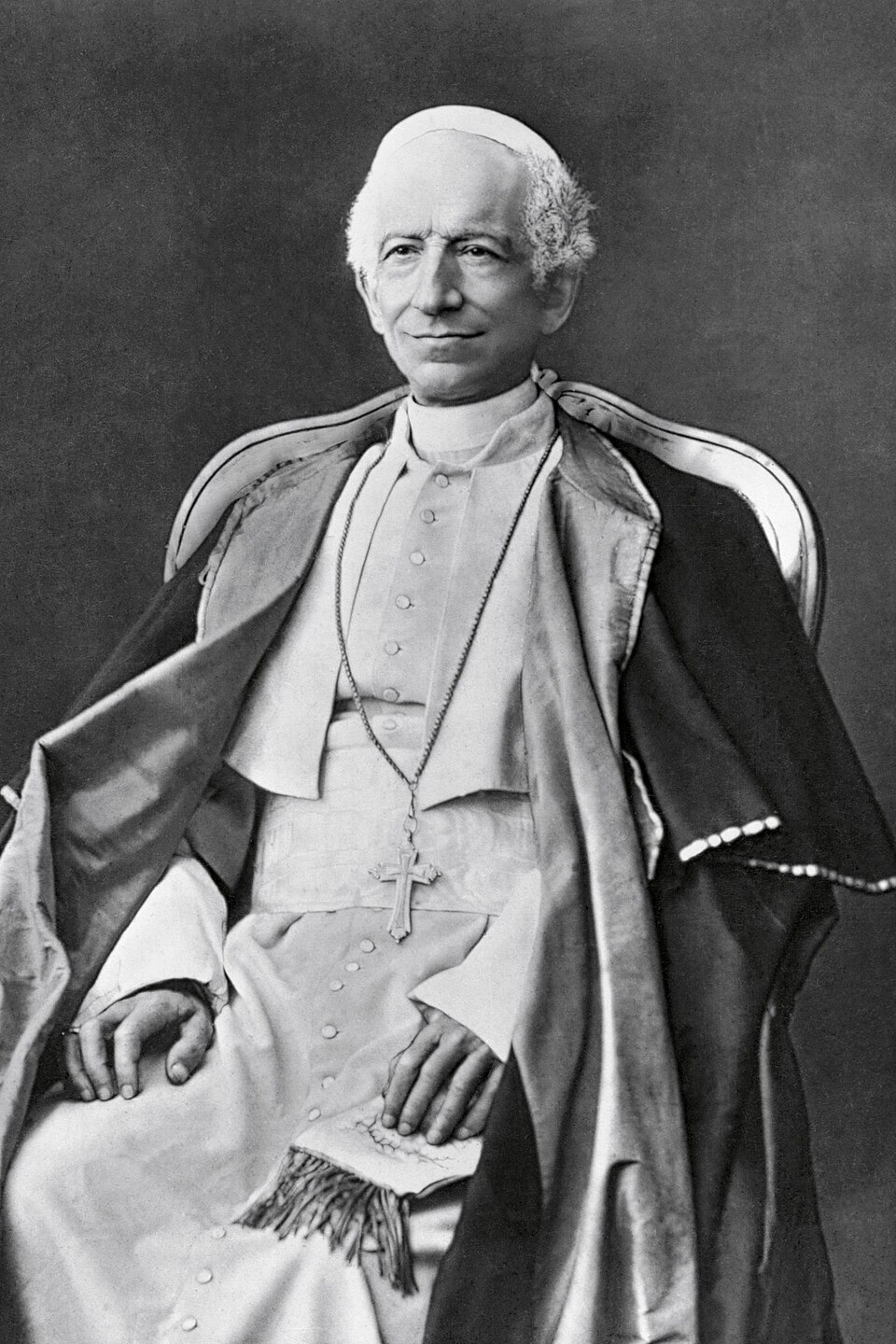
(Contributor Tadgh Quil-Manley offers a reflection here on distributism, an economic philosophy derived by Chesterton, Belloc and others from Leo XIII’s landmark encyclical, Rerum Novarum. Readers, myself included, may take some pause over the notion herein of a ‘universal basic income’, but much depends on how one understands and implements such terms and concepts, in light of the principle of subsidiarity. Read on, and may the dialogue in truth and charity continue). Editor
Introduction: Beyond Capitalism and Centralised Socialism
For much of the twentieth and twenty-first centuries, political economy has been dominated by two paradigms: capitalism, with markets and private ownership, and state socialism, with collective state control of production. Both systems promise prosperity and dignity, yet both have significant limitations. Capitalism often results in concentrated ownership, limited worker agency, and rising inequality, while state socialism or communism in its centralised form can produce bureaucratic inefficiency and ineffective allocation of resources. In this context, distributism – an economic philosophy advocating the wide, non-private ownership of productive assets – offers a compelling third way that advances both economic justice and democratic participation.
What Is Distributism?
Distributism originated in the late 19th and early 20th centuries, possessing links to Catholic social thought. Its foundational texts, including Rerum Novarum and Quadragesimo Anno, criticised both unregulated capitalism and centralised socialism or communism. These documents emphasised the ethical necessity of broad ownership, human dignity, and social solidarity. Distributism holds that economic justice requires that land, tools, and businesses be owned widely, so individuals, families, and communities can participate fully as economic agents rather than merely as wage labourers or dependents of the state. Furthermore, distributism embodies the principle of subsidiarity, whereby decisions are made at the most local level feasible, and the ideal of economic democracy, in which workers participate meaningfully in decision-making processes at their workplaces.
Why Neither Capitalism Nor Centralised Socialism Suffices
While capitalism has proven highly effective at generating wealth and innovation, it has structural weaknesses. In most advanced economies, wealth is increasingly concentrated in the hands of a few corporations and investors, leaving ordinary workers, farmers and their dependants with little control over the productive assets that generate the value they create. As Thomas Piketty argues in Capital in the Twenty-First Century, capital accumulation often outpaces wage growth, creating persistent inequality and social tension. Moreover, workers in conventional capitalist firms typically have limited input into decisions that shape their work environment and income, which diminishes both economic and democratic agency.
State socialism, by contrast, eliminates private ownership of productive assets, placing them under central control. While this can reduce certain forms of inequality, it often results in bureaucratic inefficiency, reduced innovation, and a disconnect between economic decision-making and local needs. Historical experiences in the Soviet Union and other planned economies show that centralised planning struggles to match the responsiveness and creativity of decentralised, locally governed economic systems. Both extremes – concentrated private capitalism and blunt communism – therefore fail to adequately empower individuals or promote broadly shared prosperity.
Distributism as a Third Way
Distributism rejects the extremes of both capitalism and centralised socialism. Instead, it advocates an economy composed of diverse, widely owned enterprises rooted in local communities. This includes small and medium-sized enterprises, family-owned farms, co-operative businesses, and community finance systems. By distributing ownership broadly, distributism ensures that individuals are not merely wage-dependent consumers, but active participants and owners in the economic processes that shape their lives. In this way, distributism seeks to combine the innovation and efficiency benefits of markets with the fairness, dignity, and social embeddedness that centralised ownership models often fail to deliver.
Worker Co-operatives: Realising Distributist Principles
One of the clearest modern embodiments of distributist thought is the worker co-operative – businesses that are owned and democratically governed by their employees. In worker co-operatives, each worker-owner has an equal vote in decision-making, profits are equitably shared, and the enterprise is firmly embedded in its local community. This structure aligns closely with distributist principles by giving workers control over both the process and the rewards of production, fostering economic and social stability.
Concrete examples demonstrate the viability of this model. The Mondragon Corporation in Spain is a federation of over 80,000 worker-owners operating in multiple sectors, from manufacturing to finance, and has maintained long-term stability while promoting democratic workplace governance. In the United Kingdom, co-operative enterprises documented by Co-operatives UK illustrate how local businesses can thrive under worker ownership, creating stable employment and wealth circulation within communities. Similarly, the US Federation of Worker Cooperatives tracks numerous worker-owned enterprises across North America, demonstrating that democratic governance and co-operative ownership can scale effectively while maintaining strong social and economic outcomes.
Complementary Policies: Universal Basic Income and National Dividends
Distribution’s focus on universal ownership may be supported by social policies like a modest Universal Basic Income (UBI) and national dividends that boost economic stability and agency. Universal basic income (UBI) would provide all residents with a monthly, unconditional cash stipend that considerably supports their basic living expenditures without replacing earned income. Because progressive taxation finances the universal payment, wealthier incomes must be net contributors, while lower- and middle-income families get most of the benefits. This proposal avoids the problems of means-tested assistance and provides cash where they are required.
If even the poorest have an income floor, may distributism’s ownership basis be undermined? True economic agency and dignity come from competent wealth management, not unfair reliance. This is a big dilemma for Catholics who consider labour as creation. However, several research and pilots seem to show the reverse. Long-term initiatives like GiveDirectly’s Kenyan experiment, Finland’s national pilot, Stockton, California’s guaranteed income program, and Alaska’s Permanent Fund Dividend have demonstrated little to no labour supply decline. Recipients expressed interest in small enterprises, were self-employed, went to school, or moved from low-paying, precarious positions to more gratifying ones. A basic income allows people to say “no” to exploitative occupations and “yes” to true ownership possibilities, which is what economic democracy and distributism seeks. Universal basic income (UBI) encourages productive employment by eliminating the desperation that leads many people into dependent wage labour. It enables families to invest in co-ops, family farms, workshops, or community companies. It promotes subsidiarity by giving individuals and local communities the tools to own their work rather than rent it.
The national dividend is another distributist policy ally. By sharing profits from jointly stewarded assets like natural resources, public infrastructure, and sovereign wealth funds, a national dividend relates citizen wellbeing to shared public wealth rather than private philanthropy or governmental bureaucracy. Alaska Permanent Fund Dividend, which pays all inhabitants an annual oil profit dividend, is the most visible example. It promotes communal ownership without centralising production management. National dividends and a small universal basic income (UBI) help create a distributist economy, not replace it. They enable responsible, broad ownership.
Policy Frameworks for Distributist Outcomes
For distributism to flourish in modern economies, public policy must support widespread ownership and democratic enterprise. Corporate law reform is essential to shift from shareholder primacy toward models that value stakeholders, including workers and communities, as described by the Harvard Law School Program on Corporate Governance. Taxation and incentive structures should encourage co-operatives, employee stock ownership plans (ESOPs), and small enterprise creation. Access to capital is also critical; co-operative banks and community finance systems, such as Crédit Agricole, can provide the funding necessary for worker co-operatives and small businesses to thrive. Finally, education and culture play a key role in normalising democratic and community-based enterprise models, fostering long-term adoption of distributist principles.
Addressing Common Criticisms
Critics often argue that distributism is impractical or nostalgic. However, federated co-operatives can achieve economies of scale without sacrificing democratic governance, while empirical evidence demonstrates that worker-owned firms often outperform conventional enterprises in resilience and employee satisfaction. Additionally, modern technologies – including peer-to-peer platforms, digital marketplaces, and crowdfunding – make distributist outcomes far more feasible today than when the philosophy was first articulated. Distributism is not a rigid blueprint; it is a flexible framework prioritising equitable ownership, democratic governance, and human dignity in economic life.
Conclusion
In a world marked by widening inequality and concentrated corporate power, distributism offers a compelling alternative. By promoting widespread ownership, democratic participation in the workplace, and policies that enhance financial security such as UBI and national dividends, distributism provides a framework for a fairer and more inclusive economy. It ensures that people are not just workers or consumers, but owners and decision-makers, and that prosperity is shared across communities rather than concentrated in the hands of a few. It seeks to provide the remedies that centralised communism attempts, but often fails to do. By combining historical principles with modern policy tools, distributism demonstrates that a third way between contemporary capitalism and communism of old is not only possible, but essential for sustainable economic justice and human flourishing.