

Latest
Euthanasia in the Land Down Under: An ‘Apparent’ Good, but Actual Evil
The culture of death is voracious. Once it begins to feed, it is never satiated; the categories of the killable are never finally enough.-...
Madonna of the Stairs
One star-lit night she gave Him birth,
the son of Mary fair.
God-sent to hammer nails in wood
and build the Master stair.
For men had lost their...
Pope Benedict and Saint Ignatius of Antioch
BENEDICT XVI
GENERAL AUDIENCE
St Peter's Square
Wednesday, 14 March 2007
Saint Ignatius of Antioch
Dear Brothers and Sisters,
As we already did last Wednesday, we are speaking about the...
What ever happened to hell?
There was a time when the thought of hell motivated Catholics to seek God and his mercy. Mortal sin was seen as something to...
Editor's Corner
Casting Stones with a Log in the Eye
Conservative commentator and writer George Weigel in a recent column makes some rather damning – and I use that term advisedly – accusations against...
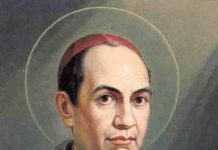
Anthony Mary Claret, On Fire for God
Anthony Mary Claret died on this day, October 24th, 1870, after a long, full and adventurous life, demonstrating how much one man can do...
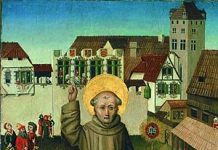
The Fightin’ Friar of Capistrano
John of Capistrano (+1456), whom we celebrate on this 24th of October, lived a life very much in the ‘world’ at first, studying law,...
The Late, Great Saint John Paul II
Today marks the memorial of Pope Saint John Paul II, who was beatified on May 1st, 2011 by Pope Benedict XVI, and canonized three...

There are many ways to stay informed. One convenient way is to receive free Weekly Updates via email from Catholic Insight.
Weekly Feature
Featured Audio Articles
Community Events
Support Catholic Insight
Further our mission through your prayer and contribution.

NOTA IN BREVIS

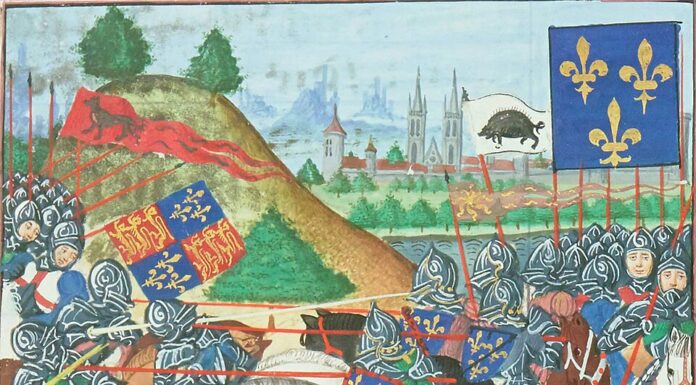
Saint Crispin, Agincourt and the Forty Martyrs of England and Wales
This day, October the 25th, is Saint Crispin's Day - or, rather, the feast of Saint Crispin and Crispianus, for let us not forget that there were two brothers put to death during the reign of Diocletian in the middle of the third century, circa 285, during the same...
Energy Devouring Claude
Claude is a hungry beast. No, not someone's croissant-and-cheese devouring boyfriend - well, let us rephrase that, for he might be, given modern people's artificial romantic proclivities. Rather, Claude is the 'personification' of Anthropic AI, which has announced it is building a massive data centre in remote Cape Breton,...
Saint Margaret Mary Alacoque and Saint Hedwig
(Here in Canada, Saint Margaret Mary Alacoque and Saint Hedwig - normally celebrated on the 16th - are moved to October 20th, to make room on the 16th for the first Canadian-born saint, Marguerite d'Youville. So here is a re-post of a few words on the two saints of...
Pilgrimage

A Pilgrimage By the Saint Lawrence
The mighty Saint Lawrence River is intertwined with the history of Canada and the United States, and forms a natural border between the two...
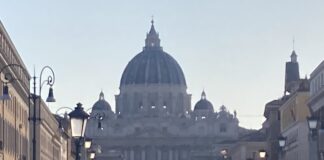
All Roads Lead to Rome
On this feast of Saint Bridget of Sweden, one of the four co-patrons of Europe (along with Saint Benedict, Saint Catherine of Siena and...

There and Back Again
I returned from Rome late last night, around about midnight – at least, all the way back home, which required an hour’s walk through...
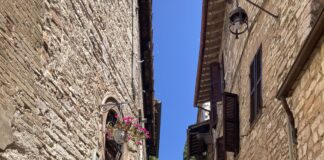
The Profound Peace of Assisi
I wasn’t quite prepared for Assisi, even if it was just what I needed. I suppose God works like that. When I got off...
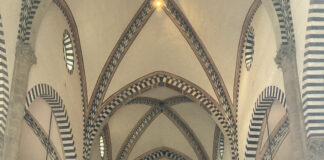
Florence: Art, Beauty and Truth
Firenze! Even the name - at least in Italian - signifies energy, exuberance, enthusiasm. What is one to say of Florence in a few words?...
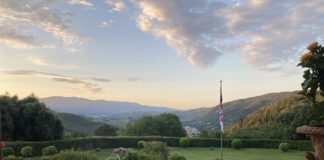
Le Sieci and Christ the King
I left off these reflections with my arrival in Florence, after the Purgatory - I will not say hell, for it had its end...

Swtizerland and Frauenthal
Upon arriving in Zurich from Vienna, I had an hour or so before I caught a connecting train down to Knonau and the convent....
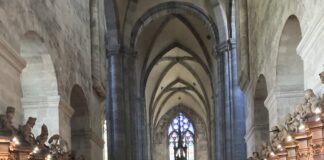
A Pilgrimage from Vienna to Rome
I decided to make a pilgrimage to Rome, prompted by the Jubilee year, and walking through the Holy Doors. But I couldn’t just show...
Series

Apologetics 101
Apologetics is the art of defending religious doctrines through systematic argumentation and discourse, making reference to both faith and reason as appropriate, in light of Saint Peter’s admonition to ‘Always be prepared to make a defense to any one who calls you to account for the hope that is in you, yet do it with gentleness and reverence’ (1 Peter 3:15).