
(These remarks are developed from a talk I offered at the Saint Gregory the Great Institute during their annual conference on October 3th, 2026)
SUNDAY IN THE BEGINNING
When my family arrived here in Canada from Scotland when I was but a little lad, life was different. No internet, no cell phones, more prosperity, better music, a higher trust society, and on Sundays, all the stores were closed, with few exceptions, like gas stations, and Mac’s milk.
What that meant was you could ride your bike or play football – soccer – or our newly-discovered road hockey wherever you liked. The streets were deserted, and one could run wild and free.
We didn’t think of it back then, but such Sundays were as they were meant to be. It was leisure – in Greek, ‘schola’, signifying space and time to do things that did not have a specific, servile, earthly, human purpose. Free to do what you are truly meant to do and for which we were made: to worship God, to help others, to feast and re-create ourselves. The Sabbath was the day God ‘rested’ after all His work in creation, which was good, and in creating Man in His own image, very good.
I’ve often wondered what was meant by God ‘resting’, for He is pure act, and as Christ says, His Father is always working. One answer may be that when we speak of God, we are speaking via analogiae – by the way of analogy, using His creation which points to Him. Hence, this ‘rest’ is resting quoad nos – from our perspective, and not in se, How God really is in Himself.
Hence, God may have ‘rested’ in the sense of leaving creation unfinished. The Sabbath, the seventh day, was a ‘sign’ pointing beyond itself, in expectation, like a 7th chord in music, which provides a note of anticipation, waiting for a resolution. Sundays signify that we are not made for this world, but for something greater, to be manifested in the fulness of time.
To enter that state of expectations, we must become like little children, waiting for Easter. Ratzinger in his Spirit of the Liturgy, compares liturgy to play. Not in the childish sense, but rather in the child-like sense, that we do things not for any earthly or practical purpose but just because they’re worth doing in themselves. They are re-creative in the true sense of that word.
To do so, we must see things the right way. Aristotle says that we were created standing and looking up, unlike animals on all fours looking down, so that we could contemplate the cosmos, and see that great beyond, to which all things point.
We are by nature sacramental beings, as Ratzinger also says. For humans, made in God’s image and called to eternal life with Him, things are more than things. They not only point us to something greater’ but give us the grace to reach this greater place. We forget this and forget to strive for what we were made.
This state of expectation is embedded in the very cosmological cycle, to which the Liturgy is intentionally linked. We count the progress of our life by the movements of the Earth and Moon, we remember that the days, weeks and years of our lives are leading us to our final end. The form of this world, and the form our own bodies, are passing away, but that is a grace, for we await their renewal in the new heavens and earth. In that cosmological cycle, Sunday provides the centre and core of that anamnesis.
God saw this at the very beginning. He created the world for Man, as the Catechism says (par. 355). Written into the very fabric and harmony of the cosmos is the nature of Man: Our circadian rhythms are cosmological – we sleep and wake and work on a daily cycle, the rotation of the earth; the seasons and much of our biology is lunar; and the years go by with the Earth’s journey around the Sun, by which we count our birthdays. All is ordered according to number, measure and weight. (Wisdom 11:20)
Even at a natural level, we need weekly rest. Revelation perfected this natural necessity, which is why the Jewish week culminates and ends with the day of rest on the Sabbath.
We won’t delve into all the rules and regulations grew up surrounding this day of rest. Letu’s just stay that the ‘traditions of men’ grew to make it more a burden than leisure. The Sabbath was made for Man, not Man for the Sabbath, as Christ warns.
SUNDAY IN THE NEW COVENANT
For freedom Christ has set us free (Gal 5:1). Christ revealed the true nature of the Sabbath, to free us from the burden of this world, subject to sin and death. He elevated and perfected its very nature and purpose, no longer linked to natural creation, but to supernatural re-creation, by His Passion, Death and Resurrection, by which, as He promised, all things are made new. (Rev 21:5).
Hence, Sunday became both the first and the last day of the week – the first and eighth, the Alpha and Omega, the completion of the scale and balance, a sign and prelude of the eternal ‘rest’ – leisure – of heaven, where, as Pope Benedict put it in his second encyclical, Spe Salvi, we will be like God, immersed in pure Being, a state of unimaginable happiness.
From the beginning, the Church insisted on keeping Sunday, even – one might say especially – in those first centuries in the age of persecution. Saint Justin Martyr has a beautiful description of the Sunday Eucharist, and the charity and joy of those early Christians.
Some did dispute this, as they always do. In the earliest centuries of the Church, The Quartodecimians insisted that Easter be celebrated on the fourteenth of Nisan, in accordance with Jewish custom, regardless of which day of the week upon which it fell.
Not so: The Council of Nicaea in 325 decreed that Easter be celebrated on the ‘first Sunday, after the first full moon, after the vernal equinox’, and each Sunday throughout the year flows from and leads back to Easter, an image of the exitus and reditus of all things going from, and back to, God, their source and end.
Not only is Sunday a liturgical reminder of why we’re here, and where we’re going, but at each Mass we receive the strength and grace to persevere to the end, especially through the Holy Eucharist, the Bread of Eternal Life.
He who eats my flesh and drinks by blood has eternal life (John 6:54)
SUNDAY AND THE CHRISTIAN STATE
With the legalization of Christianity by Constantine in 313, and its codification as the official religion of the empire in 391 by Theodosius, the ‘keeping of Sunday’ became part of civil law as the Roman Empire developed, and spread across Europe in that complex entity we know as ‘Christendom’, the alliance between Church and State, Altar and Throne, which held sway, more or less, until the twentieth century.
Here is the decree of Emperor Theodosius in 383:
Th. XI.vii.13: Let the course of all lawsuits and all business cease on Sunday, which our fathers have rightly called the Lord’s day, and let no one try to collect either a public or a private debt; and let there be no hearing of disputes by any judges either those required to serve by law or those voluntarily chosen by disputants. And he is to be held not only infamous but sacrilegious who has turned away from the service and observance of holy religion on that day.
It may seem counterproductive to coerce Sunday observance, so we should pause here to distinguish here between public and private societies, and the laws governing each. A public society is one to which we all must belong, namely, the state at its various levels. A private society, on the other hand, is voluntary: We may join or not, and may leave when we want, unless we have bound ourselves by vow, as in the Church, or marriage or religious life.
In this sense, Sunday became not just a private thing for Christians, but a public holy-day for all.
Our conduct in each society is guided by both law and custom. Law are ordinances of reason, for the common good. They work either pedagogically – teaching us the right thing to do – or coercively, by force and fear, if we resist.
By custom, on the other hand, is meant the habits and mores of a society, built up over time, which are followed more or less voluntarily, as we do our own personal habits. Both law and custom are applied by our conscience to each particular moral choice.
The various laws and customs of both public and private societies should be informed and shaped by revealed truth has been the consistent teaching of the Church. This includes supporting Sunday rest and worship. This coalescence between Church, state and society is what is meant by ‘Christendom’, which developed over the ages. Leo XIII emphasized in his 1885 encyclical Immortale Dei on the divine constitution of states:
the State, constituted as it is, is clearly bound to act up to the manifold and weighty duties linking it to God, by the public profession of religion.
not such religion as they may have a preference for, but the religion which God enjoins, and which certain and most clear marks show to be the only one true religion—it is a public crime to act as though there were no God. So, too, is it a sin for the State not to have care for religion as a something beyond its scope, or as of no practical benefit; or out of many forms of religion to adopt that one which chimes in with the fancy; for we are bound absolutely to worship God in that way which He has shown to be His will.
This was repeated, if in more muted terms, by the Second Vatican Council in the controversial Dignitatis Humanae, the declaration on religious freedom:
Religious freedom, in turn, which men demand as necessary to fulfill their duty to worship God, has to do with immunity from coercion in civil society. Therefore it leaves untouched (integram) traditional Catholic doctrine on the moral duty (officio) of men and societies toward the true religion and toward the one Church of Christ. (DH, 1)
At the very least, laws should provide ‘space’ for those who want to be virtuous, by keeping those not so inclined from disturbing just public order and undermining the rights of others (cf., DH, 2). Keeping Sunday by keeping businesses closed is one big step in the right direction, as we will see.
Through all the travails of serfdom and fiefdom, Sundays, and all the various ‘holy days’, enforced by the state, provided not only a relief from work, but that liturgical reminder that there was a true life after this life, that true happiness was not to be found here, that sickness and death were not the final answer. Heaven awaited, for those who persevered to the end in the Faith.
THE UNHINGING OF SUNDAY
Then came what I like to call the ‘great unhinging’ – of society, and the souls therein, from the Church and from the Truth of which she is the pillar and bulwark. How did we get to the point where Sunday is just another day of the week?
We will offer some causes:
The first was the inaptly named Protestant reformation, of which Luther was the will, but Calvin was the brains and the ‘system’, via his ‘Institutes of Religion’. The dour Genevan offered what Hilaire Belloc called a ‘religion of doom’ – you were doomed to hell or to heaven, and there’s not much you can do about either. Calvin kept Sunday, but not in a Catholic way. Gone was the joy and true sense of rest and recreation, and there too much glum austerity. Enjoyment was ‘bad’, for such tended to sin, if not sinful itself. Games, wine, sumptuous food, Christmas, saints’ and holy days and the all the other ‘pagan’ feasts – fodder for the devil. Life was work and drudgery, for as wretches we deserved no less, or no more. However, economic prosperity was good, signifying predestination and God’s favour. But you couldn’t enjoy it much, even on Sunday. See the 1987 film Babette’s Feast for a vivid cinematic presentation of the difference between Catholicism and Calvinism.
Then there was the ‘Enlightenment’, culminating in the French Revolution and the triumph of ‘reason’ over faith. In the midst of the bloodshed, decapitations and martyrdoms, Robespierre founded his ‘Cult of Reason’, which instantiated and enforced a new liturgy, unhinged from the old – and from God and His Church – including a new calendar: Three weeks a month of ten days each, named after the seasons, and nothing supernatural. One of the main purposes was to get rid of Sunday. It was inhuman (as was the metric system the revolution also imposed). It never caught on and was abolished by Napoleon for practical reasons.
Sunday returned, but the damage was done. Sunday had been fractured, and that spirit of rigorism and pessimism – Calvin – along with rationalism and atheism – the revolution – lingered underground, simmering, awaiting its moment.
The industrial revolution, with its inhuman pursuit of efficiency, and worship of work for wealth’s sake, further fractured Sunday. A ‘day of rest’ was seen as impractical. After all, running the machinery of the great factories was expensive to run.
Then came socialism and its cousin, atheistic communism, with Marx touting homo economicus in ironic contrast to the industrial milieu: Man was on this earth to perfect this earth. Even if Marx saw himself as a champion of the worker against the exploitation of the capitalist, his communist philosophy – all for the state and nothing outside the state – made Sunday rest all but impossible for the worker. He simply traded one slavemaster for another.
But what really disintegrated Sunday was the sexual revolution of the Sixties, wherein Nietzsche’s prophecy about the ‘death of God’ came to fruition, and nihilism began its long slouch towards Bethlehem.
Saint Thomas says that nothing so corrupts the mind or weakens the will as lust. Immersion in such sensuality destroys our taste for the spiritual, and even for the beautiful. People claimed to ‘get nothing out of Mass’, because they can’t get anything out of Mass, just as they stopped appreciating Bach and Mozart, Rembrandt and Caravaggio.
Atheism went along with its close cousin, hedonism. Both became not only more explicit, but socially acceptable. At least of a practical sort, as Pope Saint John Paul warned. People may profess some vague belief in ‘God’, but live as though He did not exist, and if He did exist, He made no demands upon us.
This was the point at which Sunday Mass attendance began its precipitous decline, even if Sunday laws were still maintained – for a time, right up to my own childhood and beyond. Yet few lived Sunday, and few attend Mass (or some religious servile). Servile work is now customary on Sundays. It’s often just another day, as the French Revolutionaries wanted.
THE LOSS OF SUNDAY IN CANADA
Following this loss of custom, the laws also soon broke down. Stores were still required to close on Sunday, but violations began. The first to do so was the Big M Drug Mart in Calgary, founded in 1978, which started to open on Sunday, in violation of the law. Police officers went in on May 30th, 1982, noticed transactions of various items, and charged the proprietors. The case wound itself to the Supreme Court, which on April 24th 1985 “struck down the Lord’s Day Act on the grounds that it contravened the freedom of religion and conscience provision in the Canadian Charter of Rights and Freedoms”.
Thus ended nearly two thousand years of laws – and customs – supporting societal Sunday rest and worship. The story did not quite end there, for the very next year, the same Supreme Court re-instantiated laws against opening stores on Sunday, arguing that workers needed a day off per week, and why not Sunday, as the traditional day of rest?
The Supreme Court of Canada tackled the former issue in the Edwards Books case in 1986. At stake was the constitutionality of Ontario’s Retail Business Holiday Act, a law which made it an offence to carry on retail business on Sunday and other holidays. The Court was satisfied that the purpose of the impugned law was the provision of uniform holidays for retail workers and dismissed claims that the statute was a colourable attempt to promote the religious observance of Sunday. Consideration was also given to the effect the Retail Business Holiday Act had on business, consumers and others in society.
Well, what of those who argued that this was against religious freedom, and that those of other religious preferred another day of rest, say, Saturday?
The Court appreciated that those with a religious obligation to rest on a day other than Sunday paid a higher price for religious fidelity than those who observed Sunday or no day. This was true for retailers and consumers who observed Saturday as the Sabbath. The latter would be open for business one less day a week than the Sunday observer and the former would find few stores open for business on Sunday. However, as significant as these burdens were on Saturday observers, they did not deter the Court from adjudging that the state interest in a common pause day was of overriding importance and that the Act was valid. Of vital importance was the fact that the Act provided an exemption for those businesses which closed on Saturday.
The cases winded themselves through the courts as ibid custom and practice now rebelled against enforced Sunday closure. The law still held, and still does, from what I can tell, but the NDP in Ontario in 1992 permitted abrogations of the law and various other provincial courts followed suit. Sunday shopping was soon widespread.
There is still a vestige of the ‘Lord’s Day Act’, insofar as certain days are enforced holidays – Christmas, Good Friday, Easter, and even Thanksgiving Day – but the state is also adding also secular, made-up ‘holy days’ – Truth and Reconciliation Day, ‘Family Day’, Labour Day.
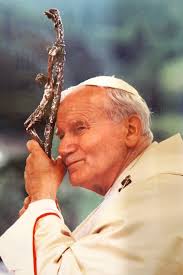
Pope John Paul in his 1998 encyclical Dies Domini laments this loss of Sunday and warns against a kind of quasi-pagan ‘weekendism’, a vague two-day break from work, filled with shopping and sports, forgetful of God, of heaven, of the point of it all.
Until quite recently, it was easier in traditionally Christian countries to keep Sunday holy because it was an almost universal practice and because, even in the organization of civil society, Sunday rest was considered a fixed part of the work schedule. Today, however, even in those countries which give legal sanction to the festive character of Sunday, changes in socioeconomic conditions have often led to profound modifications of social behaviour and hence of the character of Sunday. The custom of the “weekend” has become more widespread, a weekly period of respite, spent perhaps far from home and often involving participation in cultural, political or sporting activities which are usually held on free days. This social and cultural phenomenon is by no means without its positive aspects if, while respecting true values, it can contribute to people’s development and to the advancement of the life of society as a whole. All of this responds not only to the need for rest, but also to the need for celebration which is inherent in our humanity. Unfortunately, when Sunday loses its fundamental meaning and becomes merely part of a “weekend”, it can happen that people stay locked within a horizon so limited that they can no longer see “the heavens”.(7) Hence, though ready to celebrate, they are really incapable of doing so. (par. 4)
Josef Pieper claims that the notion of a ‘feast’ is requisite to any functioning society, and certain in any society leading its members to heaven. If we cannot celebrate, then we cannot worship.
CONCLUSION AND SIGNS OF HOPE
All is not lost, for we still have custom and our conscience. Saint Thomas says that custom ‘has the force of law, interprets law and abolishes law’, and hence is far more power than law. We can’t wait for the state to reinstantiate Sunday laws. Christendom is not coming back anytime soon, it seems. So, we must do our part on our own, and in the small societies that we join, and help build.
Live Sunday in your own life, in your families and in whatever societies to which you belong. Start with yourself and God, in your conscience – the smallest society, where we are ‘alone with God’ – and grow from there.
Attend Mass, without coercion – for need should we have of such? – as beautiful a one as you can find, or make it more beautiful and transcendent. To paraphrase Saint John of the Cross, where you don’t find beauty, put beauty. Join the choir, gradually introduce chant and polyphony. We should not underestimate the sacramental efficacy of simply attending Sunday Mass faithfully, each week, without fail. As Christ promised, he who perseveres to the end will be saved (Mt 24:13)
Don’t shop on Sunday or do your best not to. Live as though it were those good old days of 1970’s – or 1270’s. I live right across the road from our local grocery store, and I see many families wandering in to get their groceries on Sunday morning after Mass. I know, who am I to judge, and perhaps this is due to ‘necessity’, but that’s a rather fluid concept, such soon becomes convenience.
Live Sunday in leisure. Re-create yourselves. Get out for a walk or hike. Spend time with family and friends. Visit the sick and shut in, at least now and again. One such visit will be in their memories for a long time. Play music and games. Rejoice and sing. Feast.
I’m always inspired by our students here at Our Lady of Seat of Wisdom College, their joie de vivre, seeing them walk to Mass in their Sunday best, then to brunch at each other’s houses, then off for some adventure or another.
Extend this through the week, for every day should be tinged with Sunday. As Catherine Doherty, the founder of Madonna House, said, we should live ‘from Sunday to Sunday’. Maybe like Spiderman swinging from skyscraper to skyscraper, high above the grime and crime of the city. The analogy is limited, for we must also live amongst our fellow humans and help them ‘go higher’. We must also live the Passion, do what penance is asked of us and carry our Crosses. But always with our eyes and hearts upward, in the light of the Resurrection, which gives hope and joy to life, by Life Himself.