
The death penalty has been in the news of late. There was the ‘botched’ execution of Christa Pike on September 30th, the memorial of Saint Jerome. I’m not sure the hermit saint had an opinion on capital punishment – at least, I don’t recall him writing about it, with his mind on other things. But by ‘botched’ here, we don’t mean ‘messy’, as in the case of William Kemmler, the first person executed by electric chair, on August 6th, 1890 – the feast of the Transfiguration (make of that what you will). All to say that the procedure, so to speak, did not go well. It took far longer than anyone had expected, the voltage had to be ramped up a second time, taking eight full minutes to kill him. Witnesses reported the rancid smell of burning flesh. In the end, it was ‘successful’, if one wants to put it that way. We hope what Kemmler suffered was expiatory for his eternity.
No, ‘botched’ in the case of Ms. Pike means the execution didn’t work. She was given not one but two lethal doses of pentobarbital, either one of which should have effective. Instead, she fell into a deep sleep – there were reports of snoring – after which she was rushed to hospital for treatment and has now recovered. What happens next is anyone’s guess. The governor of Tennessee, Bill Lee, has halted all planned executions for the rest of the year.
Now, we’re facing the punishment of Nidal Hasan, the perpetrator of the Fort Hood massacre back in 2009. Hasan is (or was) a psychiatrist, who expressed openly violent ‘jihadist’ sympathies, which were tolerated out of fear of being condemned and punished as racist, or culturalist, or Islamophobic or something. Sure enough, on a fateful November 5th, 2009 – Guy Fawkes Day – he went full Allahu akbar, killing 13 people in cold blood, including a pregnant woman – so make that 14 people – and seriously injuring another 33. Hasan himself was shot five times, resulting in his own paralysis. He’s now slated to be put to death by firing squad on December 3rd – Saint Francis Xavier, whom we hope intercedes for his conversion.
Peter Hegseth, the Minister of War, or Defense as the case may be, planned to livestream his death, but this has just recently been canceled by President Trump. Firing squad, although more vivid and visceral than lethal injection, is, as far as this writer can determine historically, almost always 100% surefire to result in death.
What’s a Catholic to think? The Church’s stance on the death penalty has undergone a development of doctrine. To be clear, the Church herself has never put anyone to death, at least not officially. That is not her task nor her office. Rather, she has permitted, even supported, the state’s right to administer capital punishment, for various crimes that were deemed to deserve death. That is the Church’s traditional teaching.
Pope John Paul II, in his 1995 encyclical, Evangelium Vitae, outlines three reasons for punishing offenders: To rehabilitate the offender, to defend society, and as proportionate retribution for the crime. These are all distinct but not separate. They flow one into the other.
The Pope limits the death penalty to its defensive purpose, that we “ought not go to the extreme of executing the offender except in cases of absolute necessity: in other words, when it would not be possible otherwise to defend society. Today however, as a result of steady improvements in the organization of the penal system, such cases are very rare, if not practically non-existent”. (56)
Pope Francis, controversially, limited the practice of the death penalty even further, altering the Catechism teaching to the following:
Recourse to the death penalty on the part of legitimate authority, following a fair trial, was long considered an appropriate response to the gravity of certain crimes and an acceptable, albeit extreme, means of safeguarding the common good.
Today, however, there is an increasing awareness that the dignity of the person is not lost even after the commission of very serious crimes. In addition, a new understanding has emerged of the significance of penal sanctions imposed by the state. Lastly, more effective systems of detention have been developed, which ensure the due protection of citizens but, at the same time, do not definitively deprive the guilty of the possibility of redemption.
Consequently, the Church teaches, in the light of the Gospel, that “the death penalty is inadmissible because it is an attack on the inviolability and dignity of the person”,[1] and she works with determination for its abolition worldwide”. (2267)
We’ll get back to this development, but, for now, we should dwell on that curious word, ‘inadmissible’, for it is not really a theological term, but a legal one, as in, evidence may be ‘inadmissible’ in a court of law even though it exists, and everyone knows it exists. But it cannot be admitted here and now, due to some contingent circumstances.
Perhaps, just so with the death penalty. Yes, it’s theoretically permitted, and the Catechism is still quite clear that one may inflict lethal harm in self-defence if it’s the only way to stop an aggressor.
So, if people were to ask if I’m against the death penalty, I say, well, it depends. If there’s no other way to defend society, or ourselves, or those who depend upon us, then perhaps it’s the only option. Maybe on some ‘survivor’ type desert island – or other primitive society – where one deranged psychopath has threatened to kill each of us in our sleep, and has already made good on his threat.
But are we really defending society by killing convicted criminals now? The fact that it takes decades on ‘death row’ for the sentence to be meted out answers that question. If Christa Pike or Nidal Hasan have not posed a threat for decades, why would they pose one now?
One might say that the example of capital punishment would deter others, but I doubt that. Most violent crimes are done either out of overwhelming passion, like Pike, where the person isn’t thinking rationally, or, as in Hasan, brainwashed by some ideology, tunnel visioned and thinking – using that term ironically – only about one thing.
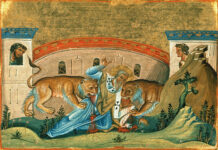
What of retribution? There are several limits to this purpose for capital punishment. Whatever harm these people have done cannot be undone, and an eye for an eye, and life for life is an Old Testament proviso no longer binding. If we take retribution to its reductio ad absurdam: Christa Pike beat and stabbed her victim to death (as Pike purportedly put it, she ‘refused to die’). Should Ms. Pike in turn receive the same fate? That’s what pagan societies did. Today’s Saint (as I write) Ignatius of Antioch was ‘fed to the lions’, which one surmised was not all that pleasant, even if the would-be martyr looked forward to suffering for Christ. Then we have Henry VIII’s England, with its ‘hanging, drawing and quartering’, the details of which scarcely bear recounting. After all, why make it painless, when the death of their victims was often not so?
And what of the accomplices in the crime? In Hasan’s case, many army officials overlooked his obvious jihadist tendencies – whether through cowardice or complaisance – allowing this avoidable tragedy to happen. Should they be considered aiders and abetters? There are any number of potential ‘Hasans’ in America, Canada, Britain, Germany, Sweden…
And what are we to say of so-called ‘physicians’ here in Canada and across the world, who have killed hundreds more people by abortion and euthanasia than any convicted murderer? Seen in this perspective, the relative handful of people on death row pale in comparison to the victims of such crimes against life. The only reason they’re not seen as such is that they have the protection of law, and people are primed to think that what’s legal is moral. Of course, as history attests, this leads to grave and abiding perversions of justice, and most monstrous evils.
On that note, perhaps there is some providence in the Church’s current stance. After all, would you want to give authority to modern states – increasingly secular and totalitarian –to put its citizens to death for what it considers ‘grave crimes’? How long before killing a tree or a whale, or even some kind ‘treasonous speech’, is deemed deserving of death? To put it mildly, we no longer live in Christendom, where states can be assured of upholding the natural moral law.
But at a deeper level, whatever physical punishment is imposed on malefactors – even death – will never be proportionate to the moral gravity of their crimes. The two are incommensurable. As John Paul II vividly put it, crimes against life “do more harm to those who practise them than to those who suffer from the injury. Moreover, they are a supreme dishonour to the Creator” (Evangelium Vitae, 3). Strong words, those.
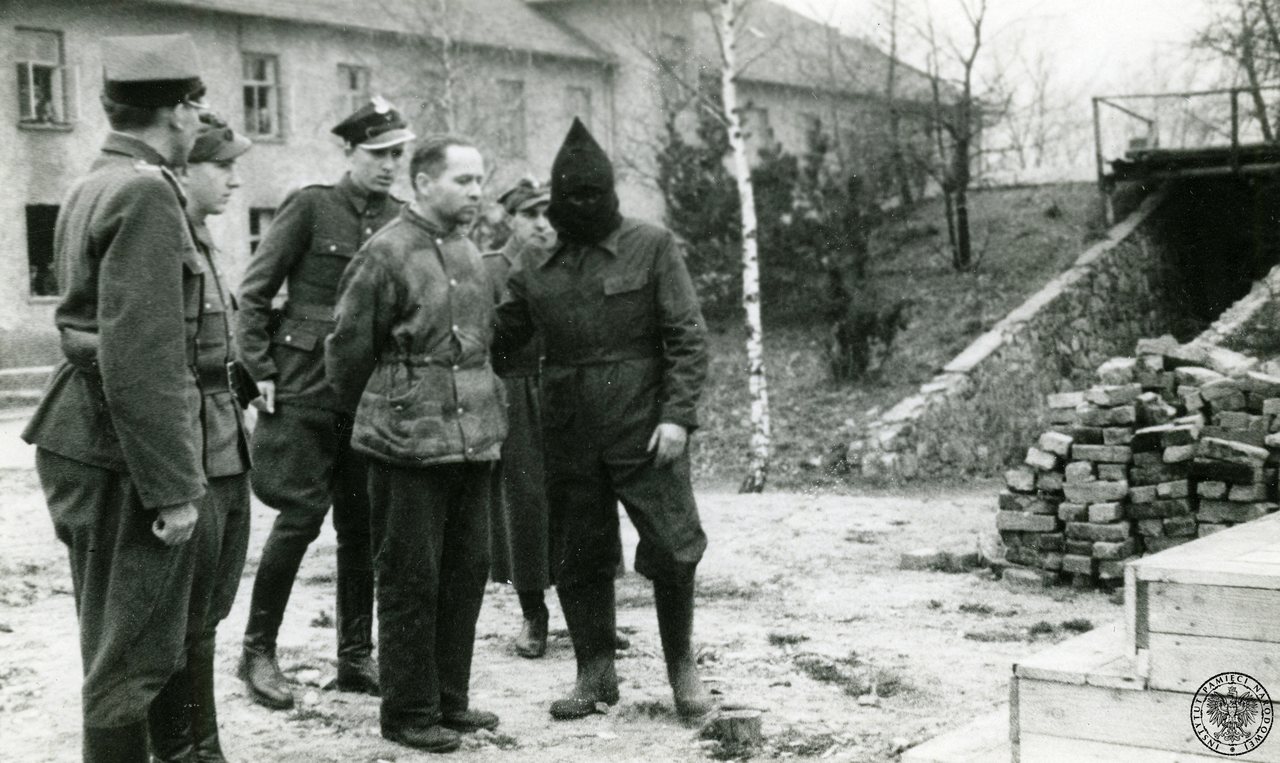
What of rehabilitative? One might argue that nothing so focuses the mind than the prospect of imminent death, and there’s some truth in that. See the case of Rudolf Hoess, the commandant of Auschwitz, condemned to death for his crimes against humanity, and who returned to the Church just before his hanging. But for many, such may only cause impenitence and hardening of the heart.
For one could also argue that years in prison also have a way of ‘focusing the mind’, for there’s not a whole lot else to do. Alessandro Serenelli, the pornographically-addicted murderer of Maria Goretti, had decades to ponder his heinous crime. After Maria appeared to him in a vision, he eventually repented and converted. The first place he went after being released from prison as an older man was to Maria’s mother to beg forgiveness. She gave it – maybe a bit more reluctantly than her daughter – and Alessandro went on to live a life of prayer and penance, being present at his victim’s canonization.
Again, I’m not against capital punishment, per se, and the Church still holds that lethal means can be used in self-defence. Still, we shouldn’t underestimate the difficulties raised by Pope Francis’ recent formulation. As Sean Fitzpatrick alludes in a recent article, the Pope could just be wrong, or off base, and the Church’s stance may require further nuancing. Such has happened before, say, when Pope John XXII (1316-1334) surmised in a series of four sermons in 1332 that the faithful who died did not see the beatific vision until the final judgement. He retracted this opinion before his death, and the teaching was clarified in 1336 by Pope Benedict XII in his Apostolic Constitution Benedictus Deus, that the saints do indeed see God in their very much alive souls when they die.
Here, however, things are more complex, as Francis’ teaching has been put into the Catechism. I for one am trying to assimilate this (apparent) development of doctrine, or at least of praxis. I do share with the Church reservations about the prudence of the death penalty in our modern era. I suppose the point is that ultimately life’s not about this life, but the next, and that God is ultimately the master of life and death. Perhaps He has seen fit to stop delegating part of that authority to the state, as the state has forgotten Him and His law.
Seen in the light of eternity, this life – which is, again to John Paul II, but a penultimate prelude to the ultimate good of eternal life – is but a passing reality. For all of us, it’s going to end, and we’re all under the sentence of death since that original sin. On the hopeful side, we’re all on a pilgrimage to heaven, and life eternal. The greatest tragedy is that so many (seem to) reject that end, refusing the love that God offers. We may hope that many, if not most, of the victims of these crimes, especially the children, made it to heaven. May we hope and pray the same for those who committed them.