

‘Oh what a tangled web we weave/ When first we practice to deceive’ (Sir Walter Scott, from Marmion: A Tale of Flodden Field, 1808)
I had not heard of Jason Arday until last week, and what little I now know of his tragic life and times is disconcerting. Not just, or even primarily, for what it says of his life, but what is signifies about our most ‘elite’ institutions. How could they have participated in his delusions? Cambridge being the main culprit:
A nine-person panel dominated by professors of education and the sociology of education hired Arday at Cambridge. Media reports indicate that their decision was unanimous, with one newspaper reporting that the panel simply “went through the motions”.
Arday taught at the venerable university, lofted up to the highest echelons, until he resigned in the face of accusations of plagiarism, followed by his apparent suicide a few days ago. I hope in the midst of that turmoil he somehow found the mercy of God. Requiescat in pace.
This nine-person panel was composed of highly educated people, or at least well-credentialed, which are not always the same. As Thomas More put it back in the 16th century, but which may ring even more true today: One of the greatest problems of our time is that many are schooled, but few are educated.
Why did no one on this panel, or any other panel that assessed Arday, point out to him the obvious, that he was living in near-total unreality? Either they were blinded to the falsehoods before them, or too afraid to say anything, which is in some sense worse. The motto of Cambridge is hinc lucem et pocula sacra – literally, here (be) light and sacred draught. One might be reminded of Alexander Pope’s line of drinking deep from the Pierian spring – but the venerable university now seems to be offering heavily diluted Kool-Aid.
Then again, the curious case of Jason Arday is simply a flashpoint, the tip of a gigantic submerged iceberg, for there are any number of other falsehoods which our institutions and those who inhabit them have adopted: contraception, abortion, transgenderism, revisionist history and on it goes. We are all living in a fantasy hall of mirrors.
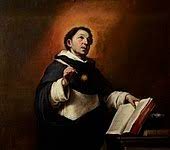
Truth is defined by Saint Thomas as an adequatio rei et intellectus – a conformity between the mind and reality. Seeking the truth – that is, being conformed to how things really are – is therefore an ongoing relationship and a lifelong quest. We must seek the truth in things, but also in ourselves, to be and to become who we really are and are meant to be. That, dear reader, is the question. Chesterton said that the in-sane man – the mentally unwell and unhinged – has not lost their reason – he’s lost everything except his reason.
Jason Arday, like Icarus, was sent wafting towards the Sun – floating on fatuous flattery – with no hope of getting there. Like the doomed Greek hero, he hit reality hard. We don’t know how much he believed the fiction he propounded or received. The labyrinth in our souls goes deep indeed. What might he have been if he had lived more in the truth, of who he was, and his actual (and very real) capabilities and potential?
The author is right: Lies are not merciful, but decidedly merciless, which is why the Church has declared them intrinsically wrong, semper et ubique. The devil is a liar, and a murderer, as Christ warned, for lies ultimately lead to death, and death is covered up with lies. For if truth is our connection to reality, falsity is a dis-connection from that same reality, and, in the end, from the source of that reality, God Himself.
Our universities and schools are no longer bastions of truth. They’ve lost the plot, the very core of their identity. At this point, they’re corrupt at their very core, even if their prestige persists. There’s a lot of ruin in a nation, quipped Adam Smith. Long-time name brands die hard. But die they do, if they forsake their purpose.
But it’s not just institutions, for what are to say of those individuals who surrounded Jason Arday, his friends and admirers, along with so many others, who did not – for whatever reasons – point out the truth to him? When some few eventually did ask some questions, Arday responded defensively and litigiously. Now, as may be expected, it’s those who did point out the truth about Arday who are now being cast as the villains.
How many of us avoid speaking such ‘obvious truths’ to those whom we love, or facing them ourselves, out of fear? Do we not owe each other the truth, which is the only thing that can set us free, and, in the end, save us from the deceits of the ‘world, the flesh and the devil’? Caritas in veritate, et veritas in caritate.
Be not afraid. The truth is stronger, and in the end far more comforting, than we think. As Catherine of Siena put it, be who God meant you to be, and you will set the world on fire.