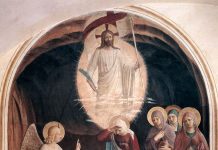

We don’t know a whole lot about Pope Saint Victor I (+199), one of the earliest of pontiffs, usually listed as the 14th to hold the seat of Peter. Even his dates of office are not certain, but generally accepted that he had about a ten year reign, beginning in 189 and ending with his death in the penultimate year of the third century. He has two claims to fame as Pope: He excommunicated a certain ironically named Theodotus of Byzantium, who taught that Christ was simply a mere man, which is not far from what is still taught in too many modern universities. Victor also corrected the Quartodecimians, who insisted that Easter be celebrated on the ’14th of Nisan’ in the Hebraic calendar, regardless of what day of the week that happened to be. Not so, said Victor: Easter must be held on a Sunday, commemorating the Resurrection of Christ on the first and last day of the week, the alpha and omega, the beginning and the end. The Council of Nicaea (325) would eventually fix the date of Easter as the first Sunday, after the first full moon, after the vernal equinox, which ties together the Old and New Covenants, as well as the cosmological flow of the Liturgy. As well, of course, this signifies the Pope’s role as determining the Liturgy, in its own development, unto the end of time.
Pope Innocent I, who governed the Church from 401 to 417, clarified the supreme authority of the papal office, involved in the disputes with Constantinople, and its controversial, but saintly, patriarch, John Chrysostom, whose rights, and innocence, Innocent defended, against the encroachments of the emperor, Arcadius, and especially his wife, Aelia Eudoxia, on episcopal privilege. Innocent also battled the Pelagians, supporting Saint Augustine and the African bishops, and their synods, against the pernicious and insidious heresy, that salvation is our work, not God’s, nor the work of grace.
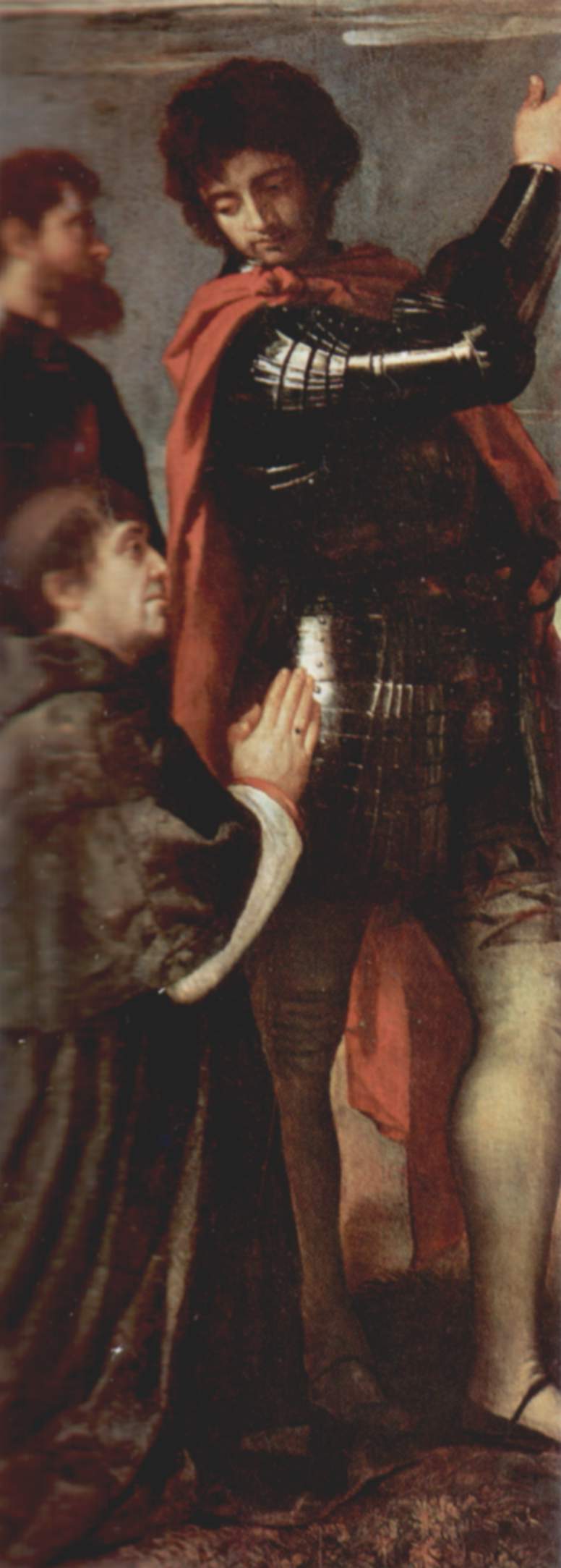
Finally, today, we also remember two martyrs, Nazarius and Celsus, of whom almost nothing is known for certain, but around whom legends abounded. Their beheaded bodies were discovered by none other than Saint Ambrose of Milan (+397), towards the end of his own life. In a life written long afterwards, Nazarius was a disciple of Saint Peter himself, and eventually adopted Celsus as a protégé as he evangelized northern Italy and into the Alps. Both were condemned several times, beaten, whipped, imprisoned, until they were finally put to death in Milan, during the diabolical persecution of Nero. There are a number of churches named after them, and may they intercede for us in our own battles against the neo-paganism of our own time.