
BENEDICT XVI
GENERAL AUDIENCE
Saint Peter’s Square
Wednesday, 3 October 2007
Saint Cyril of Alexandria
Dear Brothers and Sisters,
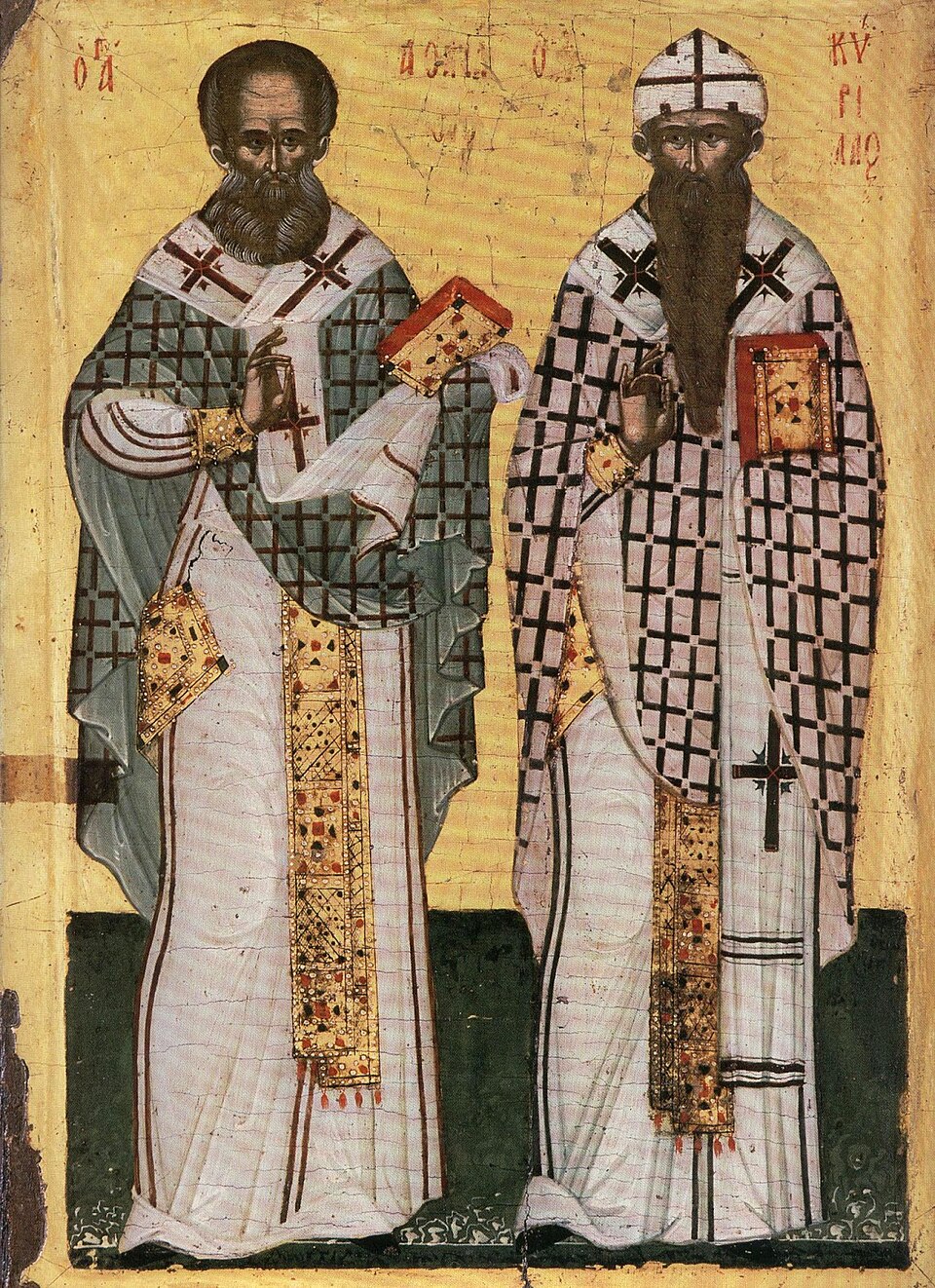
Today too, continuing our journey following the traces left by the Fathers of the Church, we meet an important figure: St Cyril of Alexandria. Linked to the Christological controversy which led to the Council of Ephesus in 431 and the last important representative of the Alexandrian tradition in the Greek Orient, Cyril was later defined as “the guardian of exactitude” – to be understood as guardian of the true faith – and even the “seal of the Fathers”. These ancient descriptions express clearly a characteristic feature of Cyril: the Bishop of Alexandria’s constant reference to earlier ecclesiastical authors (including, in particular, Athanasius), for the purpose of showing the continuity with tradition of theology itself. He deliberately, explicitly inserted himself into the Church’s tradition, which he recognized as guaranteeing continuity with the Apostles and with Christ himself. Venerated as a Saint in both East and West, in 1882 St Cyril was proclaimed a Doctor of the Church by Pope Leo XIII, who at the same time also attributed this title to another important exponent of Greek Patristics, St Cyril of Jerusalem. Thus are revealed the attention and love for the Eastern Christian traditions of this Pope, who later also chose to proclaim St John Damascene a Doctor of the Church, thereby showing that both the Eastern and Western traditions express the doctrine of Christ’s one Church.
We have almost no information on Cyril’s life prior to his election to the important See of Alexandria. He was a nephew of Theophilus, who had governed the Diocese of Alexandria as Bishop since 385 A.D. with a prestigious and iron hand. It is likely that Cyril was born in this Egyptian metropolis between 370 and 380 A.D., was initiated into ecclesiastical life while he was still very young and received a good education, both culturally and theologically. In 403, he went to Constantinople in the retinue of his powerful uncle. It was here that he took part in the so-called “Synod of the Oak” which deposed the Bishop of the city, John (later known as “Chrysostom”), and thereby marked the triumph of the Alexandrian See over its traditional rival, the See of Constantinople, where the Emperor resided. Upon his uncle Theophilus’ death, the still young Cyril was elected in 412 as Bishop of the influential Church of Alexandria, which he governed energetically for 32 years, always seeking to affirm her primacy throughout the East, strong also because of her traditional bonds with Rome.
(To continue reading, please see here)