
The core doctrine of Catholicism teaches that the bread and wine at Mass become Christ, His body, blood, soul, and divinity. This truth is celebrated every Sunday. However, the Solemnity of the Most Holy Body and Blood of Christ offers special focus. The feast, originating in the 13th century, was inspired by the visions of Saint Juliana of Belgium (1193-1258). She shared her experiences with her bishop, later Pope Urban IV. In 1264, he formally established the feast for the Latin Church, with the inaugural celebration at Orvieto Cathedral.
I treasure two memories from this feast day. The first came when I joined a Corpus Christi procession with Pope Benedict XVI in Rome. After Mass at the Archbasilica of Saint John Lateran, thousands walked together along Via Merulana to the Papal Basilica of Saint Mary Major. I remember the crowd journeying with Jesus as day turned to night, singing psalms, praying, and carrying candles. Immersed in this event, I felt deep gratitude for being in Rome and knowing Jesus within his Church.
My second memory is a Eucharistic procession with the Benedictine monks of Mount Angel Abbey in Saint Benedict, Oregon. The Abbey sits high above the Willamette Valley, about 18 miles from Salem and an hour from Portland. Mount Angel Abbey is my spiritual home, where I made my oblation in 2023. The peaceful procession was led by the abbot and monks on the hilltop. Unlike Rome’s bustle, it was serene yet still celebrated the same Christ we followed on pilgrimage.
What does bringing Christ into the streets mean? To answer, I look to Joseph Ratzinger, who teaches three lessons through the posture of processions. First, the Eucharist is not private. Ratzinger introduces statio urbis, where “we open parish churches and bring together every part of the city to the Lord, becoming united through him.”[1] As we open churches to welcome the Eucharistic Lord, we stand together, recognizing each other as brothers and sisters who desire to build up humanity and life. Standing together with the Lord lets us be fully alive. Second, we need procession to walk with the Lord. Walking with Him moves us toward Him and others, helping transcend prejudice and barriers so we meet each other. Walking toward the Lord is our new Exodus. Finally, standing and walking in procession lead to our kneeling before the Lord. Jesus knelt to wash my feet, and I owe him my genuflection, worshiping him as king whose Sacred Heart was pierced for me.
Both experiences of the Corpus Christi procession remind me that we are pilgrims with Jesus. Adoring him in the Sacrament is central to discipleship. As Abbot Jeremy Driscoll, OSB, said, “It is not possible to love Christ without adoring him.”[2] Indeed, adoration of Christ, whether in the tabernacle, during procession, or in perpetual adoration, is “evidence that a community has celebrated the Eucharist.”[3] In all of these, Jesus is present to nourish us for life’s journey.
Pope Benedict XVI reflects on the Eucharist as the source of mission: “The love that we celebrate in the sacrament is not something we can keep to ourselves. By its nature, it must be shared with all.”[4] The Eucharist is the source and summit of our lives.[5] To become saints and respond to our call, we must share in the Eucharist and bring Jesus to others. Only then can every hunger be satisfied.
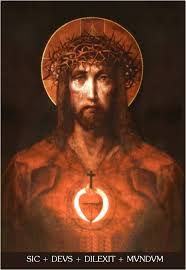
As we celebrate this Eucharistic feast, we should highlight its connection to the Sacred Heart of Jesus. From his pierced heart flowed blood and water, symbols of the Church’s sacramental life. In his encyclical, Delexit nos, Pope Francis wrote, “In contemplating the pierced heart of the Lord … we too are inspired to be more attentive to others’ sufferings and needs.”[6] Devotion to the Sacred Heart must move beyond private piety to action. Pope Francis added, “As we contemplate the Sacred Heart, mission becomes love. The greatest danger in mission is failing to foster a joyful encounter with the love of Christ who embraces and saves us.”[7] As disciples, we are called to serve Jesus with love and witness to that love in every person. This consoles Christ’s Sacred Heart, which, as Pope Francis said, is reparation: social and concrete action toward justice, charity, and the restoration of broken relationships. By doing so, we foster reconciliation and peace, offering the world the flames of Christ’s love.[8]
In a world where individuals are often isolated by digital sensationalism, it is fitting to bring Jesus into the streets as a silent witness to our happiness and love, in the monstrance and in our hearts. Love for the Eucharist leads to love for the Sacred Heart, awakening faith and calling us to make our hearts a throne for Jesus, re-aligning our desires with his burning love. This shift moves us from isolation to authentic love, compassion, and Christian community. Live Jesus in our hearts forever.
[1] Ratzinger, God is Near Us. Ignatius Press: 109.
[2] Driscoll, Theology at the Eucharistic Table. Gracewing: 237.
[3] Driscoll, Theology at the Eucharistic Table. Gracewing: 242.
[4] Benedict XVI, Sacrementum caritatis: 84.
[5] Catechism of the Catholic Church 1324.
[6] Pope Francis. Delexit nos 171.
[7] Pope Francis. Delexit nos 208.
[8] Pope Francis. Delexit nos 200.