
BENEDICT XVI
GENERAL AUDIENCE
Saint Peter’s Square
Wednesday, 18 October 2006
Judas Iscariot and Matthias
Dear Brothers and Sisters,
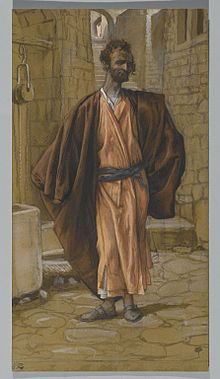
Today, concluding our walk through the portrait gallery of the Apostles called directly by Jesus during his earthly life, we cannot fail to mention the one who has always been named last in the list of the Twelve: Judas Iscariot. We want to associate him with the person who is later elected to substitute him, Matthias.
Already the very name of Judas raises among Christians an instinctive reaction of criticism and condemnation.
The meaning of the name “Judas” is controversial: the more common explanation considers him as a “man from Kerioth”, referring to his village of origin situated near Hebron and mentioned twice in Sacred Scripture (cf. Gn 15: 25; Am 2: 2). Others interpret it as a variant of the term “hired assassin”, as if to allude to a warrior armed with a dagger, in Latin, sica.
Lastly, there are those who see in the label a simple inscription of a Hebrew-Aramaic root meaning: “the one who is to hand him over”. This designation is found twice in the Gospel: after Peter’s confession of faith (cf. Jn 6: 71), and then in the course of the anointing at Bethany (cf. Jn 12: 4).
Another passage shows that the betrayal was underway, saying: “he who betrayed him”; and also during the Last Supper, after the announcement of the betrayal (cf. Mt 26: 25), and then at the moment of Jesus’ arrest (cf. Mt 26: 46, 48; Jn 18: 2, 5). Rather, the lists of the Twelve recalls the fact of the betrayal as already fulfilled: “Judas Iscariot, who betrayed him”, says Mark (3: 19); Matthew (10: 4) and Luke (6: 16) have equivalent formulas.
(To continue reading, please see here).