
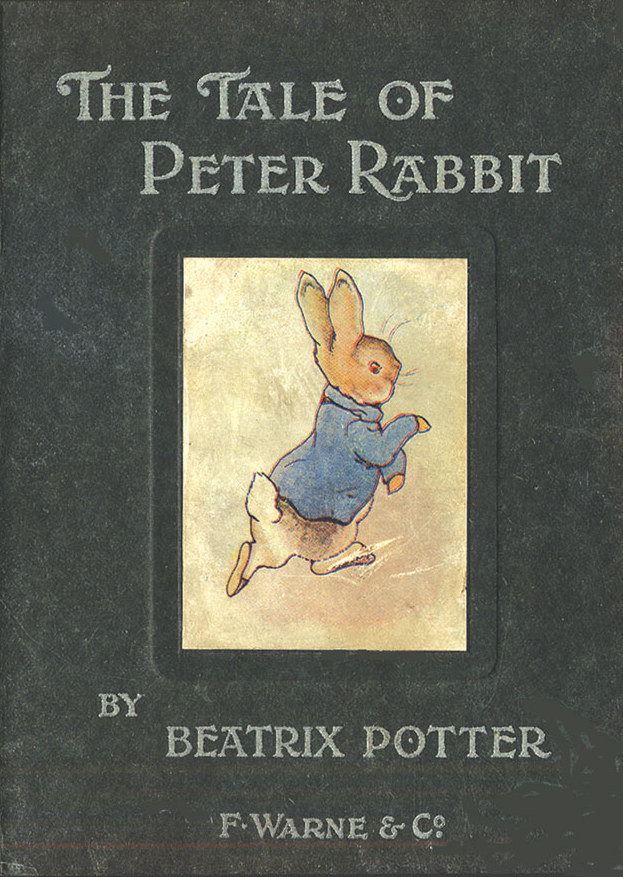
I read a biography about Beatrix Potter, and I was amazed at how much I learned about virtue from her life. She was an amazing woman. She respected her family heritage, traditions, but she also had a very independent spirit. She had a poor education and lived quite a lonely life with her brother and parents for many years. Despite these limitations her brilliance, talents, and interests were vast, and her sense of identity was deep. She accepted life’s challenges with such grace. As a child she started painting and had a love of animals, archeology, and fungi. Her watercolours and knowledge of fungi led her to become widely respected in the field of mycology. She was in no rush to marry, and thought she would make a career out of selling her painting. Then at 36, she got inspired by the stories she used to write to her old governess’s children. She decided to create illustrations for one story she wrote about four little bunnies. This began her writing career as well as her work as an artist since she did all her own illustrations.
Then she fell in love with her editor, Norman Warne, a sweet bachelor, doting uncle, woodworker and moth enthusiast. They seemed like the perfect match, he was the first person to truly support and inspire her writing and painting. Then Norman suddenly died after they had just got engaged. This is where Beatrix’s character is really shown. She wrote “I thought my story had come right with patience and waiting like Anne Elliott (from Jane Austen’s Persuasion). It was always my favourite. I read the end part of it again last July, on the 26th the day I got Norman’s letter. She (Anne Elliott) had held fast to the ephemeral hope of happiness.” As I read the rest of Beatrix’s biography I realized she had the same steadfast virtue of hope as Anne Elliott. She wrote Norman’s sister Millie after his death “I try to think of the golden sheaves, and harvest. He did not live long, but he fulfilled a useful and happy life. I must try to make a fresh beginning next year.”
A fresh beginning is exactly what Beatrix did. Although devastated by the death of the love of her life, and the death of so many hopes and dreams, she did not wallow in self pity. As St. Paul says in Romans 5:3-5 “We rejoice in our sufferings, knowing that suffering produces endurance, and endurance produces character, and character produces hope, and hope does not put us to shame, because God’s love has been poured into our hearts through the Holy Spirit who has been given to us.” Suffering indeed produced endurance in Beatrix and God poured into her heart. Beatrix spilled her grief into her love of the countryside and started a new passion. She bought a farm and began farming and renovating farm houses, as well as conserving the country landscape. She would end up working with the National Trust in preserving the beauty and functionality of some of the loveliest English countryside. Beatrix still continued to write, paint and take care of her elderly parents during this time. Then at 47, she ended up marrying a sweet local solicitor William Heelis, they shared a passion for the land and had a happy 30 year marriage.
Beatrix never defined herself by her career or interests – her identity was her own, there seemed to be a deep understanding of her personhood, developed through relations with others. The Catholic Catechism says that we are “Created, which is to say, willed by God; on the one hand, in perfect equality as human persons; on the other, in their respective beings as man and woman. Being a man or being a woman is a reality which is good and willed by God.” (CCC 369) This reality which is ‘good and willed by God’ was the way that Beatrix lived life, as a blessing and a gift. She seemed to have lived almost five lifetimes; she was a daughter, aunt, biologist, writer, painter, conservationist, and wife.
I think we see in the life of Beatrix Potter the greatness that we can accomplish by surrendering to each season of life with grace and vigour. She never rushed through any season or defined herself to one interest; she was open to life and surrendered to where the Divine wished to take her. She met every gift and obstacle that God gave her with hope and perseverance. May we all do the same.