

Although I have been a lifelong Catholic Christian, grace has always been to me a rather nebulous term. I may have recited its definition verbatim from the Baltimore Catechism for “Sister Mary Inquisition” as “…a supernatural gift of God bestowed on us through the merits of Jesus Christ for our salvation.” (Question 109), but I know she didn’t ask me to elaborate further on its meaning since the next classmate was lined up behind me in the dock, sweating and near syncopal. Although that traumatic experience and others unfairly tainted my view of these good women through the 12th grade, that was more than 75 years ago. I only wish Sister was here now to read my rather sophomoric understanding of grace and what it means for everyone.
Most importantly, for those of us who believe in some kind of afterlife, our eternal happiness apparently depends on it. People of many faiths believe that if they are generally law-abiding citizens, congenial to others, kind to children and old dogs, pray or worship at least occasionally, and respectful of the planet, they will pass muster with the Creator in this life and enter the next. However, with the exception of praying and worshiping, their life is actually like most atheists. They are also like some misinformed Catholic Christians who “try to work their way to heaven” and are lampooned by other denominations. It turns out that a happy afterlife is actually dependent on the grace of God. It is His free and undeserved help to respond to his call (I guess that means if we want it), to become children of God… (CCC 1996).
What is difficult to understand is why He would ever want to give us this help in the first place. According to Preface IV of weekday masses in Ordinary Time, “You have no need of our praise, yet our desire to thank You is itself Your gift.” Huh? The answer seems to lie in some unfathomable affection God has for Homo sapiens whether cis- or trans-gender, gender-fluid, non-binary male or female more than all living things. No matter how we define ourselves or others see us, it is the Creator who loves us and reaches out to us first at some point in our lives.
The circumstances of that first hint of His existence are as varied as Earth’s population, but eventually the name of a stepson of a Hebrew carpenter should emerge. The impact of Jesus on the ancient world and the one we live in has been duplicated by no one else in history. Period. Historian Philip Schaff described this overwhelming influence which Jesus had on the subsequent history and cultures of the world in these words: “This Jesus of Nazareth, without money and arms, conquered more millions than Alexander, Caesar, Mohammed, and Napoleon; without science […] he shed more light on things human and divine than all philosophers and scholars combined; without the eloquence of schools, he spoke such words of life as were never spoken before or since, and produced effects which lie beyond the reach of orator or poet; without writing a single line, he set more pens in motion, and furnished themes for more sermons, orations, discussions, learned volumes, works of art, and songs of praise than the whole army of great men of ancient and modern times.”(1)
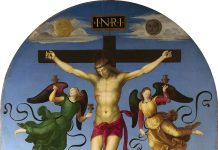
How could a simple carpenter’s son accomplish all this without the press, the internet, money, connections to famous people, or coercion of anyone? People who interacted with him must have witnessed some astounding things like turning water into wine, immediate cleansing of some chronic skin diseases at least resembling leprosy, healing a paralyzed man, restoring a deformed hand, bringing sight to a person born blind, and raising three people from the dead including Lazarus who had been in the tomb for four days. There were apparently countless others than those described in detail in Scripture. Raising himself from the dead after an unquestionably cruel torture and crucifixion would trump everything. There are too many feats like these to explain them away as slight-of-hand, exaggerations, false reports, or manufactured conspiracies by a few malevolent followers. In any case, why would these “conspirators” travel throughout the known world afterward and willingly suffer persecution and death as martyrs to the cause of a dead “moral teacher”? Wouldn’t even one of them be expected to deny that these occurrences ever happened? Countless others, not from his time, suffered unthinkable tortures and death for the love of Jesus. Yet some of the most learned men and women of today simply dismiss Him out of hand. Their lack of even a little curiosity is truly bewildering.
Jesus not only uniquely claimed to be one with God (Jn 10:30) and referred to Him as Father, but introduced his disciples and us to the concept of a Trinitarian God telling his followers to “Go, therefore and make disciples of all nations, baptizing them in the name of the Father, and of the Son, and of the holy Spirit” (Mt 28:19). Apparently, that means that through the merits of Jesus’ death and resurrection, we begin to participate in his saving grace in that immersion in or pouring on of water. We can then actually mean it when we call God our Father.
What most of us believers want from Him is a ticket to a joyful eternal life because that is what Jesus promised (Jn 3:16, Jn 5:24, Jn 10:27-28, 1Jn 5:21, Romans 5:21). Some, like St. Alphonse Liguori in 1761 had a rather unique, humble, and less presumptuous message to the faithful during ceremonial stops to remember 14 separate events of Jesus’ painful walk to his death on Calvary in his The Way of the Cross:
I beseech You, by the merits of this sorrowful journey, to assist my soul on its journey to eternity. I love You, beloved Jesus; I love You more than I love myself. With all my heart, I repent of ever having offended You. Grant that I may love You always; and then do with me as You will.
(my emphasis).
Even with all that fervor, he didn’t assume his prayers and his focus met the Good Lord’s requirements. As a bishop, Alphonse was undoubtedly aware of Leviticus 11:44: “For I the Lord am your God; and you shall make and keep yourselves holy, because I am holy.” He was most certainly familiar with St. Peter’s admonition “…for it is written, ‘Be holy because I am holy.’(1Peter1:16).
Holiness is on an altogether higher plane than Saturday or Sunday worship, being kind and likeable, being a good parent, a good friend, honest and generous in dealings with others. It requires more– an internal transformation to reflect God in every aspect of our lives. Such a transformation isn’t simply an act of the will and personal effort. It depends on the Creator’s help—grace. Indeed, we are saved (sanctified) by it. Each of the seven Roman Catholic sacraments is a source of this sanctifying grace and some may be received only once, Baptism, Confirmation, Holy Orders, and others more than once, the Eucharist, Reconciliation, Matrimony, and Anointing of the Sick.
Each is a special encounter with the risen Jesus himself, but the two most accessible are the Eucharist and Reconciliation and are required at least once a year. Frequent reception of both are encouraged of all Catholics. Pope St. John Paul II went to confession weekly!
However, my particular focus in this piece is the Eucharist.
Arguably, Our Lord’s twelve apostles were having a grace-giving encounter with Almighty God for three years day and night, even though they may not have realized it at the time. That is almost 1100 days of sanctifying grace.
What’s more, it transformed these ordinary men from simple backgrounds into an extraordinary life. Their impact on this planet can still be felt daily.
The importance of the Supper of the Lamb in sanctification was introduced to the twelve by Jesus in this way: “Amen, Amen I say to you, unless you eat the flesh of the Son of Man and drink His blood, you do not have life within you.” (Jn 6:53) Sounds pretty calamitous without it!
Our Lord knew that we of the 20th Century and you millennials wouldn’t live in his time on earth; so it seems unfair for us not to have this “life” the apostle speaks of and not to have a grace-giving encounter akin to the apostles. However, that same Eucharist is available for reception every day except Holy Saturday for the modern Catholic Christian. After consuming either or both, presumably the actual molecules of Jesus’ body and blood, soul and divinity become a few of our own carbon-, oxygen-, and hydrogen-atom building blocks at least momentarily and for who knows how long. Received with that understanding and faith, we really do have his life within us. It would be impossible to understand how we could not be well on our way to holiness with such a sanctifying start to our day with Jesus himself an actual part of us. Like the disciples, most of us will inevitably let him down later that day in our humanness, but we did have an encounter with almighty God that day. In a year’s time we could have 363 more sendoffs to begin our day. It would only take three years to overtake the number of encounters the twelve had. In 20 years of daily Mass, we could have 7280 occasions for sanctifying grace—more than six times those of his apostles! Arguably, we can prayerfully claim to be another disciple. Armed with such help against the teeth of the roaring lion (1Peter 5: 8), our adversary, how could we not grow in holiness? Received with the right heart, a transformation in our relationship to Jesus is bound to occur like it did with the twelve. Day after day the people in whatever sphere we find ourselves could and should be witnesses of such a metamorphosis and recognize in us the love of God and the love of others. It is likely to be that contagious! What’s more, the Eucharist has the potential to transform the world along with us. Dare I suggest that this one sacrament might be the solution to all (Yes, I said all) of the world’s problems?
Nevertheless, in my declining years, I have come to align myself more with St. Alphonse Liguori’s “Do with me as you will” and with the publican’s, “Oh God, be merciful to me, a sinner” (Lk 18:9-14), and leave our final destination to Jesus—to be holy not simply for a reward, but because our one role model is holy and because we love him above all and love others because He loves them and they are Jesus (Mt 25:40). He will review our curriculum vitae at His convenience. In a baseball analogy, our salvation may be a close play at home, but I have to believe that with the help of the Supper of the Lamb, we will be called, “Safe” at the plate in the end.

(1) Schaff, Philip; The Person of Christ: The Miracle of History (1865)