

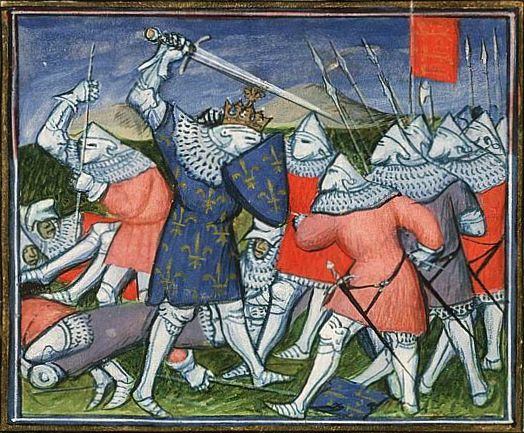
‘Epic Fury’, the attack on Iran by the United States, may last for some weeks yet, according to President Trump. Whether this is justified and proportionate is open to some doubt. The reader may peruse also some of my thoughts on just war theory, and make up their minds whether the criteria fit this conflict.
Here are some thoughts, or perhaps, questions, for now:
To the minds of many, Trump was elected to stop the ‘forever wars’ across the globe, and certainly, it seems, JD Vance believed this, and promised so. In this current conflict, Trump did not seek nor receive congressional approval, but his team argues that he doesn’t need it. According to the 1973 War Powers Resolution, the president is required to notify Congress before an act of war. Should such a fateful crossing of the Rubicon be up to one man – with or without counsel – deciding such actions, which could cascade into a much-wider conflagration? Saint Thomas warns against such ‘animate justice’, stating that momentous decisions in any society should be based on what laws are written, framed by wise men, who deliberate a long time, free from passion or the exigencies of the moment.
Even if the President does claim the authority for what he may describe as a ‘limited conflict’, the purpose for such isn’t clear, and seems to be shifting. To stop Iran’s nuclear capability? Regime change? To teach the mullahs a lesson? To protect the United States? (besides troops stationed in the Middle East, it is difficult to make a case that Iran poses any sort of immediate threat to America itself). To make Iran more like America, and what might this imply? WalMart and Amazon, democracy and spiraling deficits and politicos enriching themselves at public expense, IVF clinics, sexual confusion, widespread porn and all the rest of it? Is it simply to protect Israel, as this clip from Marco Rubio implies?
I’m with Mark Steyn on this, that these far-away wars neglect, and may even be some sort of deliberate distraction, from the deep systemic societal problems on the home front. The West is quite literally dying, demographically, morally and spiritually, and it’s no longer clear precisely what we’re fighting for. As Chesterton quipped, the true soldier fights not because he hates what is in front of him, but because he loves what is behind him. But what, exactly, is that? In this unfolding conflict, what any American soldier ‘loves’ – insofar was what he loves still exists – is a long, long way behind him.
What is the U.S. soldier or pilot or drone operator fighting for? What is the end point of this war, and who decides? The U.S. spent twenty years in Afghanistan, with nothing to show for it, only to leave in humiliation, their Taliban enemies unfazed and now far better armed than any other third-world regime, with all the first-world weaponry the U.S. just left behind. The war against Iraq was not much better, the removal of Mr. Hussein leaving a power vacuum into which the seven devils of ISIS rushed, who gleefully began to persecute and crucify Christians. Now, apparently, the U.S. strikes have killed Iran’s supreme leader and his aides, and just recently also obliterated those meeting to choose a successor. Who’s now in charge in Iran? Who decides the terms for a ceasefire, or enough’s enough, or some sort of resolution? What sort of ‘regime change’ is acceptable, and to whom? Should we bring back the Shah?
Trump is now calling for an ‘armed uprising’. By whom and against whom? Would this not imply a long and very bloody civil war? How would one stem the ensuing chaos?
What are the conditions for any end to this, or any conflict that follows, and is this also up to Trump? He says ‘four to five weeks’, which sounds suspiciously like the ‘two weeks to flatten the curve’. Now, the president is boasting that wars can be fought ‘forever‘. How many lives – American and otherwise – will this cost? Are others behind the scenes calling the shots? Is there some sort of globalist agenda? Wheels within wheels, and mere anarchy is loosed upon the world.
In the meantime, we should keep in mind and heart that missiles, drones – indeed any long-range weapon whose targets and victims are unknown – are morally fraught. ‘Collateral damage’ does not excuse widespread death of civilians, especially women and children. I’ve written more than once on the grossly immoral proportionalist position of such as George Weigel, legitimizing the bombings of Hiroshima and Nagasaki, an extension of the indiscriminate carpet bombings of numerous European cities towards the end of the last World War. Initially the Allies abhorred such actions, and claimed they would not stoop to the barbarity of the Nazis – but, well, things change, the fog of war, proportionalism, and all that. Now we have AI and Palantir and unmanned drones choosing where and whom to bomb, which lack even the damaged and seared conscience – but still a conscience, through which God may speak – of us ordinary humans.
Pope Leo’s words in his Angelus the day after this all began should at least be taken to heart, that we should find some sort of way out of this mess, before we descend into an infernal abyss from which there is no return:
I am following with deep concern what is happening in the Middle East and in Iran during this tumultuous time. Stability and peace are not achieved through mutual threats, nor through the use of weapons, which sow destruction, suffering, and death, but only through reasonable, sincere, and responsible dialogue.
Faced with the possibility of a tragedy of immense proportions, I make a heartfelt appeal to all the parties involved to assume the moral responsibility of halting the spiral of violence before it becomes an unbridgeable chasm. May diplomacy regain its proper role, and may the well-being of peoples, who yearn for peaceful existence founded on justice, be upheld. And let us continue to pray for peace.
You may have heard the old adage, si vis pacem, para bellum.
But more true is, si vis pacem, ora ad Deum. Today is the feast of Saint Casimir, a prince of Poland who saw through the passing turmoils of this world. May he intercede for all of us.
Miserere nobis, et dona nobis pacem.