

This penultimate day of the month of October – the eve of all hallowe’ed eve – is the memorial of the Irish bishop and martyr, Terence O’Brien (1601-1651), put to a brutal death on October 30th for his hand in resisting the siege of the notorious Oliver Cromwell, grand-nephew of Thomas Cromwell. Both Cromwells were bitterly anti-Catholic ideologues, who dispatched many of the faithful to heaven, by the sword, fire and noose. A summary of his life may be found here (and, as mentioned in a previous post, because this link is from a rad-trad website, does not mean we here at C.I. subscribe to all of their views). Intriguing was the fact that the Calvinist Roundhead soldiers beat the bishop’s body for three hours after his death, to an unrecognizable pulp. Hmm. The British General who condemned the good bishop to death, Henry Ireton, died painfully of the plague three weeks later, racked with remorse that he had put an innocent man to death. We may hope that the Bishop O’Brien interceded for his soul, and we may hope the same for ourselves. My Scotch-Irish grandmother was an O’Brien, so here’s praying for all those of Irish descent on this day.
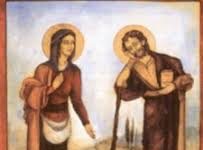
We also commemorate Saint Alphonsus Rodriguez (1532-1617), whose first vocation was to the married state, marrying Maria Suarez at the age of 26. They had three children. By the time Alphonsus was 31, his wife had died, along with two of his children. Soon afterwards, his last child died. His lot was much like of Job, and like the Old Testament patriarch, Alphonsus remained faithful. In fact, he increased his devotion, adopting a life of deeper prayer and asceticism, which may be more admired than imitated by us lesser folk.
He applied to join the newly-founded Jesuit Order, but could not make up the lost time in studies for the priesthood, no matter how hard he tried. But they recognized his sanctity, so was admitted as a lay-brother, and spent the rest of his long life – 46 years – as door-keeper at the newly-founded Jesuit college at Mallorca. He was severe with himself – his bodily mortifications and rigour of conscience were renowned – but always patient and kind with others, gifted with ecstasies and miracles. His life bears much similarity to our own Canadian Saint André Bessette, the porter of Montreal. As the Second Vatican Council’s decree on the religious vocation says, the contemplative life is as effective as it is hidden. Saint Alphonsus lived the motto of his contemporary, Philip Neri: Amare nesciri – love to be unknown. Just so, the example of Saint Alphonsus resounds throughout the world.
The future Jesuit poet, Gerard Manley Hopkins – who also suffered in his vocation – wrote a poem on the saint, which the reader may find here.
As the poem ends, so may we:
Those years and years by of world without event
That in Majorca Alfonso watched the door.
What reward he had in heaven, we will one day, Deo volente, find out. But pray to him in the meantime. +