
ADDRESS OF HIS HOLINESS JOHN PAUL II
AT THE CONCLUSION OF
THE STATIONS OF THE CROSS AT THE COLOSSEUM
Good Friday, 13 April 1979
- When we make the Way of the Cross from one station to the next, in spirit we are always at the spot wherethis journey had its “historical” place: where it took place along the streets of Jerusalem, from the Praetorium of Pilate to the hill of Golgotha, or Calvary, outside the city walls.
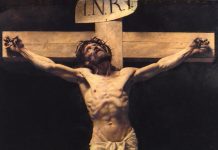
And so today too we have been, in spirit in the City of the “Great King”, who, as a sign of his kingship chose the crown of thorns instead of a royal crown, and the cross instead of a throne.
Was not Pilate right when—as he showed Christ to the people who were awaiting his condemnation in front of the Praetorium “so that they might not be defiled, but might eat the passover” (Jn 18:28)—he did not say “Here is the king” but “‘Here is the man” (Jn 19:5)? And in this way Pilate revealed the programme of Christ’s kingdom, which is to be free from the attributes of earthly power in order to reveal the thoughts of many hearts (cf. Lk 2:35) and to bring near to them the Truth and Love that come from God.
“Mine is not a kingdom of this world…
I was born for this, I came into the world for this:
to bear witness to the truth” (Jn 18:36-57).
This witness has remained at the corners of the streets of Jerusalem, at the windings of the Way of the Cross—where Christ walked, where he fell three times, where he accepted Simon of Cyrene’s help and Veronica’s veil, where he spoke to some women who were weeping for him.
We still desire this witness today. We want to know all its details. We follow the traces of the Way of the Cross in Jerusalem and in many other places on our earth, and every time we seem to repeat to this man condemned to die, to this Man of sorrows: “Lord, to whom shall we go? You have the words of eternal life” (Jn 6:68).
- As we make the Way of the Cross at the Colosseum in Rome, we are still following the footsteps of Christ, whose cross was planted in the hearts of his martyrs and confessors. They proclaimed the crucified Christ as “the power and the wisdom of God” (1 Cor 1:24). Together with Christ they took up the cross daily (cf. Lk 9:23), and when it was necessary they died like him on the cross, or died in the arenas of ancient Rome, torn to pieces by the wild animals, burnt alive, tortured. The power and the wisdom of God revealed in the cross were thus more powerfully manifested in human weakness. Not only did they accept suffering and death for Christ, but together with him they also gave themselves to love for their persecutors and enemies: “Father, forgive them; they do not know what they are doing” (Lk 23:34).
For this reason, upon the ruins of the Colosseum there stands the Cross.
(To continue reading, please see here).