
Among the many devotional images scattered across Central Europe, in a world shattered by regional conflicts, ideological disputes, and economic upheavals, two small figures—the Infant Jesus of Prague in the Czech Republic and the Infant Jesus of Kraków in the Republic of Poland—may be adopted as spiritual guides, proverbial lights in the tunnel for weary Christians. Though separated by many miles and molded by different historical backgrounds, both statues point to a shared intuition that God’s tenderness and power can be encountered not only in the crucified Savior but also through the vulnerability of a Child—the same Christ who is substantially present in the Eucharistic Host. Every Eucharist is like Christmas where the bread and wine are transformed into His flesh, His Body and Blood, and, in a sense, He is born anew on the altar.
These reflections fit naturally within the Holy Season framed, on one side, by the historical event of the Nativity, and, on the other, by the theological mystery of the Epiphany, when Christ is revealed to all nations.
Miraculous Figurines
The image of the Infant Jesus of Prague is believed to have originated as a gift from St. Teresa of Ávila to a Spanish noblewoman, who later passed it to her daughter, Maria Manrique de Lara. When Maria married the Czech nobleman Vratislav of Pernštejn in 1556, she brought the statue with her to Prague. Maria’s widowed daughter, Polyxena Lobkowicz, entrusted the image to the Discalced Carmelites, uttering prophetic words: “As long as you honor this image, you shall not want.”
In Kraków, a parallel devotional tradition developed around a late-Gothic figure of the Infant Jesus known as the Colette Child, venerated today in the Church of St. Joseph served by the Bernardine Sisters. This statue, formerly kept in the convent of St. Colette—suppressed in 1823—has origins shrouded in legend. The earliest and only written account was composed at the beginning of the eighteenth century at the direction of Fr. Bonawentura Świerkliński, Provincial of the Bernardine Fathers.
The figure reached Kraków borne upon the current of the Vistula, from an unknown place. It came to rest along the riverbank opposite the convent of the Colettine Sisters, who lived according to the rule of St. Francis of Assisi. The sisters retrieved the figure from the water and placed it upon a small altar in their refectory. From that moment onward numerous wonders began to occur, especially extraordinary healings.
During the Thirty Years’ War (1618-1648), Saxon troops stormed into Prague and plundered both the church and its adjoining monastery. The statue, its little hands broken off, was discarded among the rubbish behind the altar and remained there forgotten for several years.
Only when Father Cyril, renowned as a devoted admirer of the Holy Infant, arrived in Prague after many years did he discover the neglected figure. As he knelt to pray, he heard the Child say: “Have pity on Me and I will have pity on you. Give Me My hands and I will give you peace.” He restored it, and before long the devotion revived with remarkable strength, rekindled by countless miracles and graces experienced by the faithful, including the defence of Prague during the Swedish siege.
Since 1628, the statue has been kept in the Carmelite Church of Our Lady of Victories in the historic Malá Strana district. It was crowned in 1655 and came to be affectionately known as the Merciful Infant, or the Golden Little Jesus. Its veneration spread so widely that during the Swedish invasion, the Protestant King Charles Gustav not only spared the church housing the image but even donated three hundred ducats for candles.
Similar upheavals affected the Kraków figurine as well. When the Protestant Swedes attacked Kraków during the Deluge (1655–1660), they plundered the city and destroyed its churches. The Colettine convent also burned; only the walls of the church and the altar bearing the Infant Jesus remained. The invaders, astonished by this, did not dare to turn the place into a stable for their horses. One of the soldiers was ordered to remove the figure from the altar and throw it into the Vistula. Several times he attempted to carry out the order, but he could not, for the statue clung to his hand in a wondrous manner. As he struggled, a Jew of Kraków approached. Recognizing the miraculous image—having been employed at the convent on many occasions—he asked the soldier to sell it to him. The Swede agreed. When the occupiers withdrew, the Jew brought the figure to the convent of St. Joseph, where the Bernardine Sisters joyfully redeemed it. Word of this reached the Colettine Sisters, its former guardians.
Despite the pleas of the Colettines, the Bernardine Sisters were unwilling to part with the Divine Child. Then, in the night, Our Lord appeared in a dream to the superior, the vicaress, and four other sisters—each individually—saying: “My daughters, if you do not return Me to the place that has found favour with Me, you shall all fall gravely ill and die.” The sisters immediately became seriously ill. At dawn, without waiting for further consequences, they dressed the figure in festive garments and carried it back to the Colettine convent in solemn procession with candles. The ailing Bernardine Sisters recovered at once.
For centuries, the Prague figure has been dressed in a variety of garments—robes, capes, dresses, and lace vestments. The treasury holds more than seventy outfits sewn from different materials, adorned with pearls, gold, and silver, and embroidered with religious motifs that bear the marks of the nation or culture from which they originate (including: Australia, Brazil, China, India, Italy, the Philippines and Vietnam). The oldest preserved dress dates from 1700 and is the handiwork of Empress Maria Theresa, who offered it as a personal gift.
In modern times, devotion to Pražské Jezulátko remains vibrant. Each year, thousands of pilgrims from around the world—laypeople, clergy, bishops, and even national leaders—travel to honour the miraculous statue. Special liturgies, novenas, and processions accompany the feast celebrations, particularly on January 14 and the third Sunday of May.
The Bernardine Sisters of Kraków maintain extensive correspondence with the devotees of the Divine Child, and before His altar the faithful from all parts of the country gather in prayer. Linked to Kraków since his student days and then as a seminarian, Karol Wojtyła made private visits to the Church of St. Joseph. The statue is known not only in Kraków but also in distant corners of Poland and even beyond its borders.
History of the Veneration
The devotion to the Child Jesus is hardly a modern development; on the contrary, it is as old as Christianity itself. According to the Gospel of Matthew, after their long and arduous search, the Magi found the Child and “they were overjoyed at seeing the star, and on entering the house they saw the child with Mary his mother. They prostrated themselves and did him homage.” (Mt 2:10–11). Their simple gesture is instructive for every subsequent generation, including ours. The Christ Child was also honoured by the aged Simeon, who took Him into his arms in the Temple, praising God and giving thanks for what he had seen: “for my eyes have seen your salvation, which you prepared in sight of all the peoples, a light for revelation to the Gentiles, and glory for your people Israel.” (Lk 2:30–32). From the years of Jesus’ childhood in Nazareth, we have the account of the episode in the Jerusalem Temple and the beautiful description: “And Jesus advanced in wisdom and age and favour before God and man” (Lk 2:52).
Numerous Fathers of the Church—among them St. Irenaeus, St. Ambrose, St. Jerome, St. Augustine, John Chrysostom, St. Leo the Great, and St. Gregory the Great—left writings that were gradually incorporated into the liturgies of Christmas, Epiphany, and the Presentation of the Lord.
The pilgrimage movement to the Holy Land, already alive in antiquity, intensified in the Middle Ages as numerous believers longed to reach the sacred sites and to pray in the Grotto of the Nativity.
St. Bernard of Clairvaux, in his Sermones, offered reflections that were later absorbed into liturgical formularies. Through his influence, devotion to the Child Jesus became a distinctive element of Cistercian spirituality. Other theologians—such as Nicholas of Clairvaux, Aelred, Guerric, and James of Vitry—also contributed significantly to the development of the doctrine and devotion surrounding the Holy Infant.
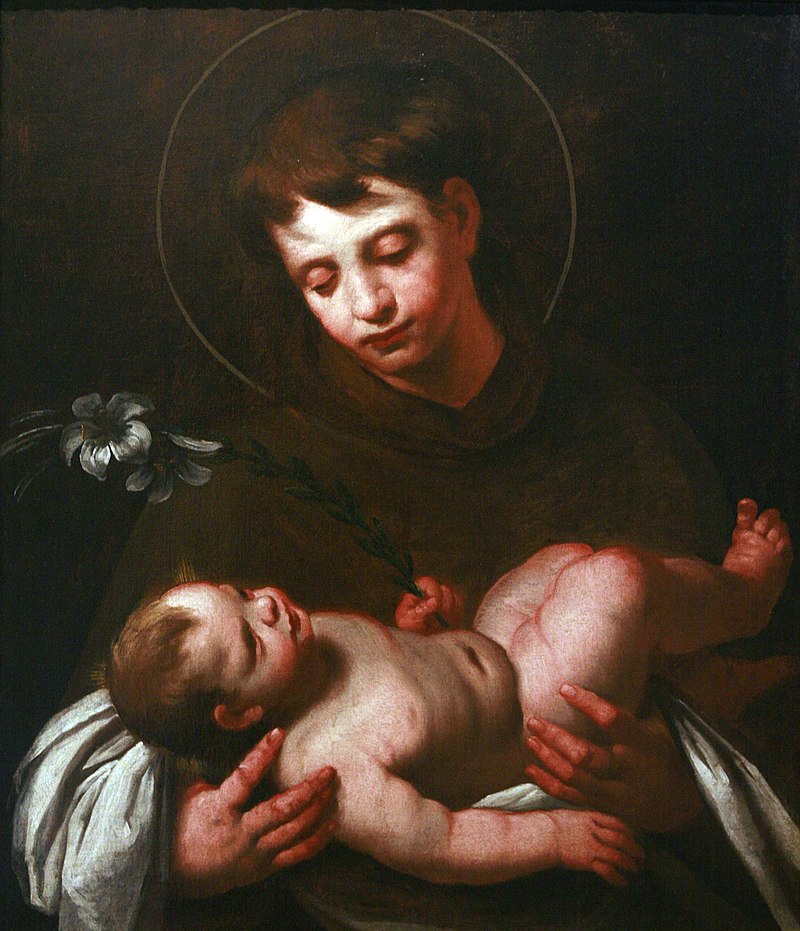
It hardly needs repeating that St. Francis introduced new forms of devotion, including the liturgical drama known as the crèche. The Franciscan school played a major role in fostering devotion to the Child Jesus, led by St. Bonaventure, author of Lignum vitae and De quinque festivitatibus pueri Jesu, and by St. Anthony of Padua, the great preacher filled with tender devotion to the Infant Jesus wrapped in swaddling clothes and laid in a manger.
During the Protestant Reformation and the Catholic reforms of Trent, devotion to the Child Jesus flourished above all in Carmelite circles associated with St. Teresa of Jesus and St. John of the Cross. The reformer of Carmel, St. Teresa of Jesus, organized processions with the Infant’s statue in her monasteries. One day, while walking down the stairs in the convent of the Incarnation in Ávila, Teresa saw a beautiful child standing there. The little boy asked, “Who are you?” She answered, “I am Teresa of Jesus.” Then she asked him, “And who are you?” The child replied, “I am Jesus of Teresa,” and disappeared.
St. Thérèse of Lisieux, for her part, built an entire spiritual path on the mystery of divine childhood—later known as the “Little Way.”
For in God’s economy—as Cardinal Karol Wojtyła once remarked in a Discalced Carmelite monastery in Poland— “that which is great, the greatest, is precisely what is small. And conversely, that which is small and seemingly insignificant is the greatest.”
In 2009, Pope Benedict XVI crowned the statue for a second time during his visit to Prague. St. John Paul II visited the shrine in 1995, calling the Infant Jesus “an eloquent sign of God made man”.
The devotion to the Infant of Prague, especially as a source of help in both temporal and spiritual needs, remains alive in Ireland. Reproductions of the statue were traditionally given as wedding gifts and later placed in a prominent window of the home.
Reflecting on an image of the Divine Infant, I turn to St. Teresa Benedicta of the Cross. Just a few months before her deportation to Auschwitz, she wrote in a letter dated February 2, 1942:
„Yesterday, when I looked at a picture of the Infant of Prague, it suddenly occurred to me that he is wearing imperial coronation dress and surely it was not accidental that his efficacy should come to the fore precisely in Prague. After all, Prague has been the court of the old German or Roman Emperors, respectively, and the city makes such a majestic impression that no other city known to me can compare with it, not even Paris or Vienna. The Little Jesus came exactly when the political and imperial grandeur came to an end in Prague. Is he not the secret Emperor who will someday put an end to all misery? After all, He holds the reins even though people believe they are the rulers.”
[The earth trembles under artillery fire, and death is a constant companion. Yet on one extraordinary night in December 1914, the violence fell silent, and a true miracle of the Divine Child broke through the darkness. I believe my interpretation is not unique among readers. Author`s note.]